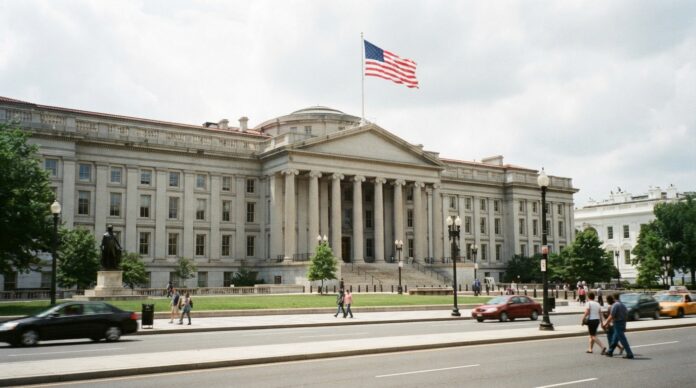
The U.S. Treasury Department has introduced a regulatory proposal that will define which entities can legally trade stablecoins in the country. This move seeks to establish a stricter control framework for exchanges and platforms that operate with these digital assets, marking a new direction for regulatory compliance in the region.
The new regulatory framework for 2027
The US administration is making steady progress in overseeing the crypto ecosystem. According to the official document, Platforms and exchanges will face new restrictions on offering stablecoins to US customers starting in 2027.This measure aims to mitigate systemic risks, standardize reserve requirements, and protect consumers from the volatility of unregulated issuers. The Treasury Department seeks to establish a level playing field where only entities that meet rigorous compliance standards can operate legally. The proposal underscores the need for issuers to maintain transparent and auditable backing, ensuring that each token in circulation is backed by low-risk assets.
Operational requirements and the 4 million threshold
One of the most relevant technical aspects being debated regarding these regulations is their scope regarding large-scale operations and emission limits. The proposed regulations include specific metrics to determine which platforms fall under the strictest federal scrutiny. Among these parameters are operational thresholds that could affect entities managing up to 4 million (4M QTY) in transaction volume or specific reserves. Exceeding this level of activity will require companies to adapt their compliance infrastructure, undergo recurring audits, and report their financial status more frequently. This tiered approach aims to avoid stifling small innovators while applying the full regulatory weight to actors with the capacity to generate a systemic impact on the economy.
The importance of transparency in reservations
The core of the proposed regulation revolves around the quality and transparency of the reserves backing stablecoins. For one of these assets to maintain its peg to fiat currency, the issuer must hold equivalent assets in secure accounts. The new regulations aim to eradicate opaque practices by requiring that reserves consist of highly liquid assets. Furthermore, they propose mandating periodic independent audits. This measure is crucial to prevent liquidity crises and ensure that, in the event of massive withdrawals, the platform can respond to user requests without compromising the system's stability.
The regulatory contrast: United States versus Europe
While the United States is still defining its rules and establishing a long-term timeframe, the European Union already has a clear and applicable framework thanks to the MiCA Regulation. This European legislation establishes strict guidelines on the issuance and marketing of crypto assets, classifying stablecoins and requiring specific licenses for their distribution. Europe has taken the lead by ensuring that users operate in an audited and transparent environment, reducing the legal uncertainty that still persists in other jurisdictions. If you want to learn more about how regulation protects your wallet and defines the future of digital money, you can explore the educational resources available at [link to resources]. Bit2Me Academy.
Impact on institutional adoption
Regulatory clarity is the catalyst that traditional financial institutions have been waiting for to integrate blockchain technology into their daily operations. By establishing precise rules on who can issue and trade stablecoins, the U.S. Treasury reduces the risk associated with these assets. This opens the door for banks, investment funds, and large corporations to use stablecoins for cross-border settlements, corporate payments, and treasury management. Although the implementation horizon lies in the future, the mere existence of a regulatory draft allows companies to begin designing compatible infrastructures.
How to prepare for the future of the crypto market
In an ever-evolving regulatory landscape, it's vital to use platforms that comply with current regulations in your region and prioritize the security of your assets. Legal clarity not only protects the user but also fosters institutional adoption and the development of new financial products. As a leader in Spain, Bit2Me aligns with European requirements to offer you a secure and compliant environment where you can build your portfolio with confidence. You can review the available options and manage your digital assets directly from your account. WalletKnowing that you are operating in a suite that respects the highest compliance standards.
FAQ
When will the new rules come into effect in the US?
The restrictions proposed by the Treasury Department are projected to be implemented starting in 2027. During this transition period, platforms and regulators will work to define the technical details necessary to comply with the new regulations.
Does this regulation affect users in Europe?
Not directly. European users are protected under the MiCA Regulation, which already establishes clear rules for the issuance and sale of stablecoins in the European Union. US regulations apply exclusively to platforms with US customers.
What is a stablecoin and why is it regulated?
It is a cryptocurrency designed to maintain a stable value, usually pegged to a fiat currency. They are strictly regulated because they act as a financial bridge; authorities seek to ensure that issuers have real reserves to back each token issued.
The US Treasury's proposal marks a turning point in the maturation of the global crypto market. As major economic powers define their rules of the game, standardization and transparency are solidifying as the fundamental pillars of the financial future.
The contrast between different regulatory approaches demonstrates the complexity of governing borderless digital assets. Staying informed about these changes is essential to understanding the technological evolution and institutional adoption of stablecoins in the coming years.
Investing in cryptoassets is not fully regulated, may not be suitable for retail investors due to high volatility and there is a risk of losing all invested amounts.
Generative artificial intelligence tools were used to create this article.