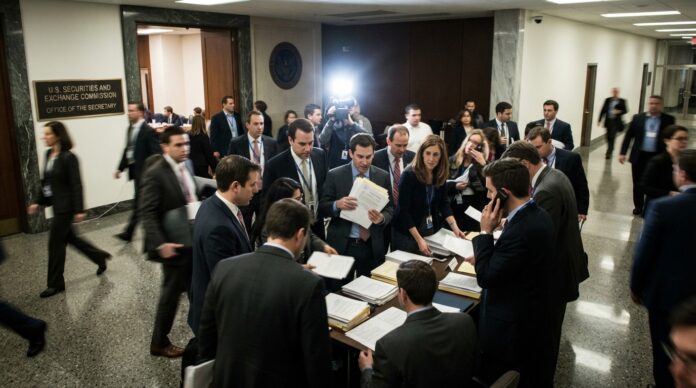
The U.S. Securities and Exchange Commission (SEC) has proposed a significant shift in its regulatory approach. Under the new proposal, crypto projects could Raise capital by selling tokens without requiring full registration as traditional values. This move marks a milestone in the relationship between regulators and the digital ecosystem.
An unexpected turn in SEC policy
For the past several years, the US agency has maintained a strict stance toward the digital asset industry. The consistent application of the Howey Test has led to the classification of the vast majority of crypto assets as unregistered securities, generating tensions and lengthy legal processes. However, this new proposal seeks to establish a much more flexible framework, better adapted to current technological realities.
The initiative includes specific exemptions that would allow startups in the sector to issue tokens to legally raise funds. This paradigm shift recognizes that decentralized networks operate differently from traditional corporations and require regulations that foster innovation without neglecting transparency and user protection.
Details of the proposal and the 25 million limit
One of the most significant aspects of this draft regulation is the creation of a safe harbor or volume exemption. According to the data supporting the proposal, fundraising limits would be established, allowing projects to raise up to $25 million under certain simplified conditions. This cap is designed to make it easier for early-stage startups to launch operations and develop their networks without facing the prohibitive costs of a traditional IPO.
In exchange for this flexibility, issuers will be required to comply with technical and financial disclosure requirements. The goal is to ensure that users assume a known and managed risk, having access to fundamental project data, token distribution, and the technology roadmap before deciding to build their portfolio with these assets.
Impact on the decentralized finance ecosystem
For developers and entrepreneurs, this measure represents a crucial way to structure their projects with greater legal agility. By reducing the bureaucratic burden of full registration, tech startups could access capital more efficiently. Historically, many projects have avoided the US market due to legal uncertainty, opting instead for more business-friendly jurisdictions.
This exemption could reverse that trend, attracting talent and capital back to the United States. It doesn't eliminate oversight, but rather adapts the requirements to the nature of blockchain technology, mandating audits and transparency without stifling innovation in its most critical stages. Furthermore, it fosters the concept of progressive decentralization, giving networks time to mature before being evaluated under stricter standards.
The contrast with the European framework and the MiCA Regulation
While the United States debates these new exemptions and seeks its own regulatory path, the European Union has already established a robust regulatory framework through the MiCA Regulation. This regulatory clarity in Europe has allowed platforms like Bit2Me, a leader in Spain, to operate under strict, audited, and transparent standards.
The existence of clear rules from the outset provides a significant competitive advantage for the European market, establishing precise guidelines on token issuance and service provision. If you want to delve deeper into how regulation protects users and structures the market, you can explore the free resources at Bit2Me Academy, where the operation of crypto assets is detailed under clear and up-to-date regulations.
Market reaction and current context
Regulatory announcements of this magnitude typically generate movements and debates in the prices of major market assets. In the context of this news, the ecosystem has shown remarkable resilience. For example, Bitcoin (BTC) has remained trading around $64.591 with a slight variation of 0.50%, while Ethereum (ETH) has hovered around $1.912, reflecting a movement of 0.30%.
Although volatility is inherent in the sector, the prospect of clearer rules in the world's largest economy brings a much-needed degree of institutional maturity. You can follow the performance of these assets and the latest developments in the sector at [link to relevant information]. news.bit2me.com, your source of information to keep you up to date on the impact of these policies.
Future prospects for the crypto industry
The path to final approval of these exemptions still requires passing through periods of public comment and institutional review. However, the mere fact that the SEC is officially proposing an alternative route for token sales demonstrates an evolution in the understanding of blockchain technology.
If this proposal comes to fruition, we could witness a new wave of technological innovation, where projects can focus on developing real-world applications instead of dedicating most of their resources to legal defense. This would benefit the entire ecosystem, creating a safer and more dynamic environment for all participants.
FAQ
What exactly is the SEC proposing?
The agency proposes creating regulatory exemptions so that crypto projects can sell tokens and raise funds without having to meet all the registration requirements of a traditional securities issue, thus facilitating technological innovation and reducing barriers to entry.
Does this mean there will be no regulation in the US?
No. The proposed exemptions would include capital limits, such as caps of $25 million, and strict disclosure requirements. The goal is to balance user protection with ecosystem development, while maintaining a transparent environment.
How does this affect users in Europe?
In Europe, the MiCA Regulation already establishes the rules for the issuance and marketing of tokens. The SEC's decisions primarily affect US projects, although they signal a global trend toward the adoption of more defined and pragmatic regulatory frameworks.
The evolution of regulations in the United States will be a determining factor for the future of the industry globally. As government agencies adapt their approaches, the ecosystem is moving toward greater integration with traditional financial markets, laying the groundwork for widespread and structured adoption.
This paradigm shift demonstrates that the dialogue between regulators and developers is beginning to bear fruit. It remains to be seen how these exemptions will ultimately be implemented and what real impact they will have on the competitiveness of the US market compared to more legally advanced jurisdictions, such as the European Union.
Investing in cryptoassets is not fully regulated, may not be suitable for retail investors due to high volatility and there is a risk of losing all invested amounts.
Generative artificial intelligence tools were used to create this article.


