The Solana Foundation has published a report on the level of decentralization of its network in response to criticism from the community.
During 2021, Solana (SOL) was one of the crypto projects that received the most attention from users. This decentralized blockchain, focused on speed and scalability, became the home of some large Web 3, DeFi and NFT projects, reaching position itself as a Ethereum killer.
The growth of the blockchain in 2021 was so great that its SOL token came to accumulate gains of almost 20.000%.
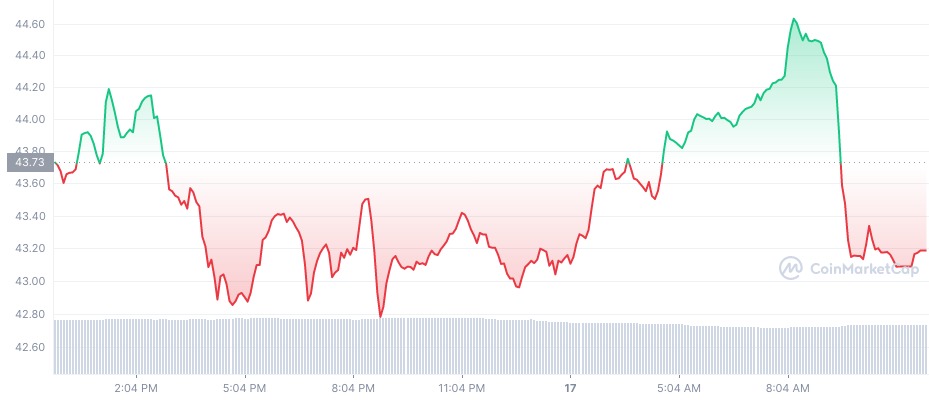
However, heavy market losses during 2022 and continued performance issues, as well as attacks and hacks that the network has suffered, have caused the price of SOL to collapsed by almost 80%, to 43,16 dollars which it is trading at the time of writing this article.
Is Solana a decentralized blockchain?
In response to these criticisms, especially to all those that have recently emerged and which point out that It is a highly centralized network with serious security flaws., the Solana Foundation has published a report on decentralization and validator nodes.
According to the report, SOL has more than 3.400 validators spread around the world, which play an essential role in maintaining a “resilient, distributed, and credibly neutral network.” Solana validators are responsible for verifying transactions made by users and storing their records on the blockchain ledger.
Solana validators are classified into consensus nodes, who are responsible for creating and proposing new blocks in the network once they have been verified, and the RPC nodes which act as a gateway for applications, while also performing some of the functions of validator nodes.
In this sense, since June 2021, they have joined the network 95 new consensus nodes and 99 RPC nodes.

Security issues in Solana
One of the problems Solana has is a “Nakamoto Coefficient” of 31, which is low for this type of network. The “Nakamoto Coefficient” is a metric used to report the Minimum number of validators required to compromise the networkIn this case, it only takes 31 malicious actors to compromise Solana's security.

The Foundation explains that this coefficient is due to its Proof-of-Stake mechanism, which grants greater influence to all those users who deposit their SOL tokens in staking on the network. On the other hand, although it may seem like a low number, it is higher than that of Avalanche (28), Thorchain (27) or Binance Chain (7).
On the other hand, the “Nakamoto coefficient” does not provide enough information to get an idea of the security of the blockchain. In case the nodes were compromised, Solana could recover by removing all affected validator nodes and restarting the network consensus without them.
On the other hand, CoinMarketCap data indicates that only 100 users hold over 30% of Solana's total asset supplyHowever, none of these users come close to surpassing the 33% active participation required to corrupt the network.
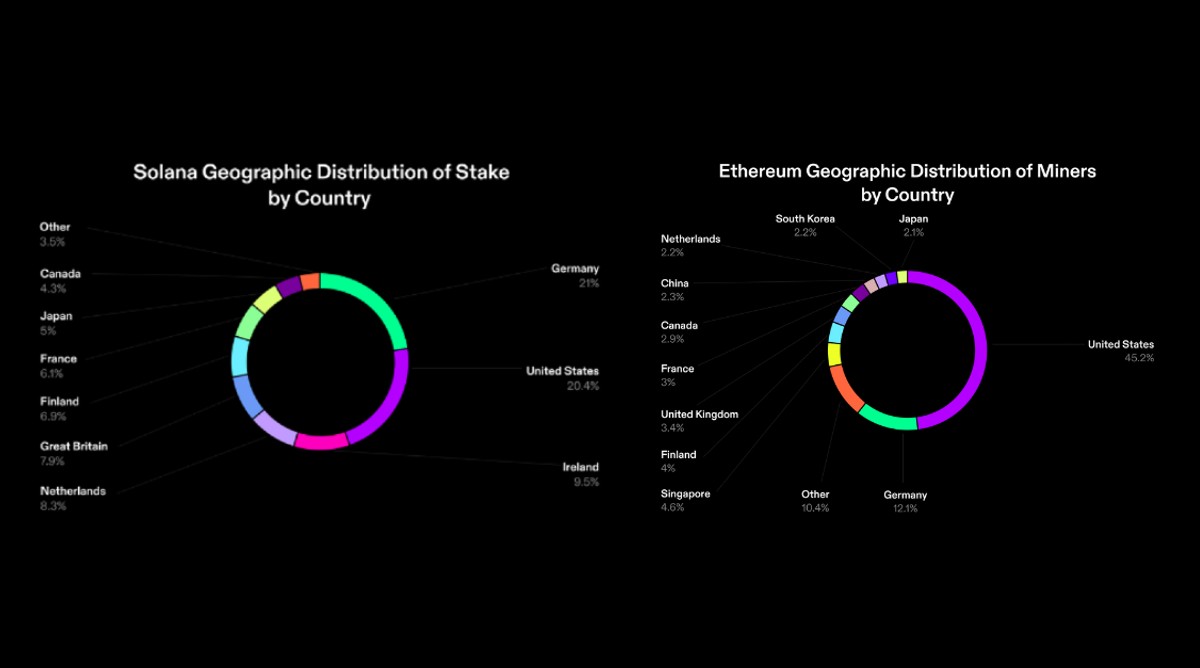
Another factor that could affect the security of the network is the geographical distribution of the validator nodes. In this sense, Solana is much more geographically distributed than other chains like Ethereum.
On the other hand, the Solana Foundation has verified (as of August 1, 2022) that of the 1915 validator nodes that are adding blocks to the chain, at least 1688 (88,14% of them) are controlled by independent users or entities.
Implementing improvements in Solana
To improve security for the future, Solana has partnered with Jump Crypto, a company specializing in Web 3 infrastructure, to create a new validator client that prevent groups of validators from taking over transactions, ensuring greater stability for the network as a whole.
Jump Crypto has also committed to create significant updates to Solana's open source core software, since the current performance of the network is limited by some inefficiencies in its software, so improvements are needed to increase scalability.
The infrastructure company has worked with Solana before, as they have been behind the Phantom wallet and the Pyth oracle, as well as the bridge that connects Solana to Ethereum.
[hubspot type=cta portal=20298209 id=38fb28e1-1dc1-40e3-9098-5704ca7fcb07]