
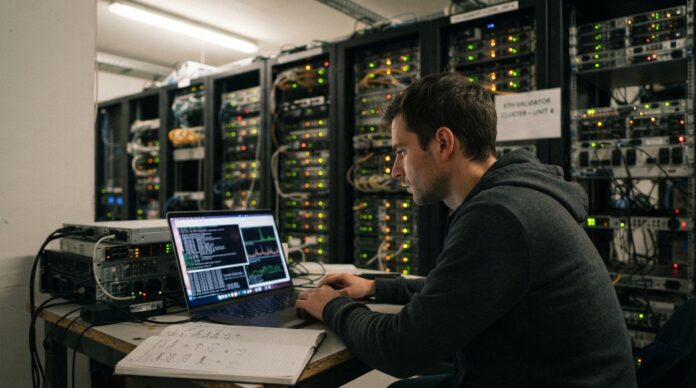
The Ethereum ecosystem is facing an unusual scenario in its consensus mechanism. Currently, users wishing to withdraw their ETH from staking are encountering an exit queue of up to two weeks, marking the longest waiting period recorded in 2026.
The current status of withdrawals on the network
The Ethereum main network is experiencing significant congestion in its validation processes. Participants seeking to withdraw their assets are facing a exit queue that reaches two weeksThe longest recorded all year. Simultaneously, recent historical data shows that the queue to participate reached wait times of up to 25 days, with approximately 1,5 million ETH waiting to be activated. If you are thinking about acquire ETH To build your portfolio, it is essential to understand how these technical and structural timeframes work.
Why do the entry and exit queues fluctuate?
The Ethereum protocol uses a security mechanism known as churn limit or turnover limit. This system regulates how many validators can enter or leave the network per epoch (approximately every 6,4 minutes). The main objective of this restriction is to maintain blockchain stability and prevent abrupt changes in consensus that could compromise security.
Since the beginning of September, the amount of Ether waiting to be staked has fallen by more than a quarter. This indicates a shift in participant behavior, with exit requests now exceeding new entries, creating the current withdrawal bottleneck.
The legacy of the Shapella upgrade
To understand the current situation, it's helpful to remember that mainnet withdrawals were enabled with the Shapella upgrade in 2023. Before this milestone, assets transferred to the consensus smart contract were locked. The implementation of withdrawal queues was a deliberate design measure by the developers to prevent a sudden mass exodus. Today, seeing a prolonged wait demonstrates that the containment system is working exactly as programmed, orderly managing the flow of capital.
Impact on rewards and the ecosystem
When the amount of ETH locked in the network changes, so does the APY, or annual percentage reward. A larger number of validators generally dilutes the rewards, while large-scale exits can increase them for nodes that choose to remain active. To fully understand these technical concepts about how these passive rewards are generated and how block validation works, you can consult the free educational resources available at [link to resource]. Bit2Me Academy.
Transparency under the MiCA Regulation
In the current European landscape, the implementation of the MiCA Regulation establishes a clear framework for user protection and transparency in crypto assets. Operating through regulated platforms ensures that technical processes, such as waiting times on blockchain networks, are clearly communicated. This allows users to manage their assets with known and managed risk, focusing on the technological robustness of decentralized networks like Ethereum.
FAQ
What is the churn limit in Ethereum?
It is a protocol rule that limits the number of validators that can join or leave the network within a given time. Its main function is to protect the network against attacks and ensure that consensus remains stable without extreme fluctuations in participation.
Do these queues affect normal ETH transfers?
No. The incoming and outgoing queues of up to two weeks only affect the activation and deactivation processes of validator nodes. Regular ETH transfers between wallets continue to be processed normally in a matter of seconds or minutes.
How does waiting time impact APY?
While a validator is in the exit queue, it continues to participate in the network and earn rewards until its withdrawal is fully processed. However, in the entry queue, ETH does not earn rewards until the node is officially activated by the network.
The evolution of Ethereum continues to demonstrate the complexity and robustness of its network architecture. Fluctuations in validator wait times are a direct reflection of supply and demand within the ecosystem, as well as the security design of the protocol itself.
Understanding these technical mechanisms is essential for any user who wants to interact with the blockchain at a deeper level. As the ecosystem matures, transparency regarding these technical processes is becoming a fundamental standard in the crypto industry.
Investing in cryptoassets is not fully regulated, may not be suitable for retail investors due to high volatility and there is a risk of losing all invested amounts.
Generative artificial intelligence tools were used to create this article.