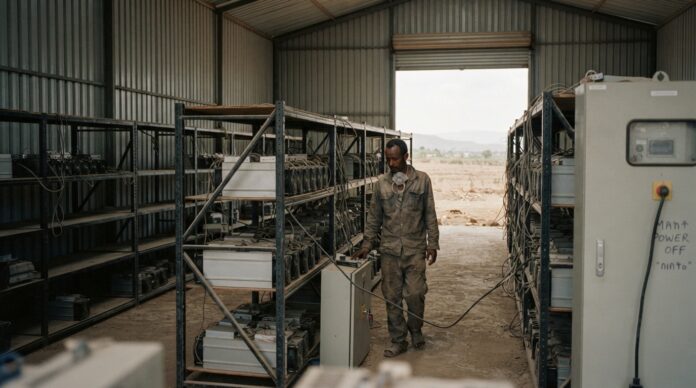
Ethiopia has drastically reduced the electricity supply allocated to Bitcoin mining, limiting it to just 23% of contracted capacity. This decision comes in the wake of a severe drought caused by El Niño, which has lowered water levels in the country's hydroelectric reservoirs.
Local energy authorities have chosen to prioritize residential and manufacturing supply, highlighting the climate and infrastructure challenges facing digital asset data centers internationally.
The impact of drought on hydroelectric infrastructure
Water supplies to Ethiopian hydroelectric reservoirs have fallen by nearly 20%. Relying heavily on hydroelectric power for its national grid, the state-owned Ethiopian Electric Power Company (EEP) implemented a phased plan of cuts, first reducing service to 75%, then to 50%, and finally to 23% of contractually agreed levels.
For Bitcoin mining companies, which seek regions with abundant renewable energy and low rates to keep their computing equipment running uninterrupted, this scenario represents a major operational disruption.
Energy priorities and the economic weight of the crypto sector
Ashebir Balcha, CEO of Ethiopian Electric Power, stated that safeguarding the electricity supply to homes and ensuring continued manufacturing activity are the top priorities during this weather emergency. The situation will be reassessed after reservoir levels are reviewed in the coming weeks.
Despite the restrictions, the cryptocurrency mining sector has established itself as a strategic client for the state-owned company, contributing approximately 35% of its revenue in the last fiscal year and absorbing nearly a third of its total electricity generation. This model demonstrates how miners act as flexible energy buyers during periods of surplus, although they are also the first to disconnect during periods of scarcity.
Global transformations: halving and artificial intelligence
Internationally, Bitcoin mining is undergoing significant changes. Following the last halving, which halved the reward per block mined, profitability demands greater operational efficiency and a sustained market value for the cryptocurrency.
At the same time, the growing demand for data centers for artificial intelligence (AI) creates direct competition for energy capacity, offering mining operators the alternative of converting part of their facilities towards advanced computing workloads.
FAQ
Why did Ethiopia reduce the supply to Bitcoin miners?
The reduction is due to a prolonged drought that reduced the flow of water in hydroelectric dams, forcing the prioritization of essential domestic and productive consumption.
How much has energy been cut to these facilities?
A 77% cut was applied, so that operators are currently only receiving 23% of the power originally contracted.
What relevance did mining have for the Ethiopian electric company?
During the last fiscal year, mining companies generated about 35% of Ethiopian Electric Power's total revenue.
The situation in Ethiopia highlights the interdependence between natural resources, the stability of electrical grids, and Bitcoin's decentralized infrastructure, underscoring the importance of geographical and operational diversification within the industry.
Investing in cryptoassets is not fully regulated, may not be suitable for retail investors due to high volatility and there is a risk of losing all invested amounts.
Generative artificial intelligence tools were used to create this article.