
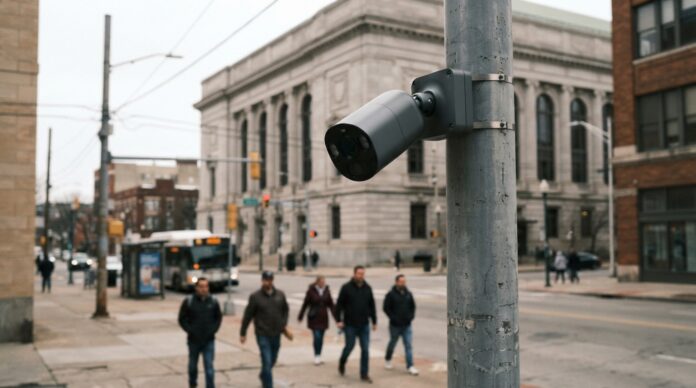
Donald Trump has expressed his support for Flock Safety's AI-powered surveillance cameras during a recent flight on Air Force One. This support comes at a time of heightened political tension, as automated license plate readers face a severe Senate investigation amid growing concerns about public privacy.
The debate on automated surveillance in the United States
The use of advanced technology for public safety has always generated intense debate between police efficiency and civil rights. During a recent trip, Donald Trump showed his support for AI-powered license plate recognition systemsDefending its usefulness for law enforcement, this statement aboard Air Force One puts companies like Flock Safety, which are leading the deployment of this infrastructure in thousands of American communities, in the media spotlight.
The endorsement of a political figure of this stature is no small matter. It acts as a catalyst, accelerating the adoption of surveillance technologies by local and state agencies, often before a clear regulatory framework exists to protect citizens' data. In this context, technology advances far faster than legislation, creating gray areas where information is collected massively and constantly, disrupting the traditional dynamics of urban security.
What are Flock AI cameras and how do they work?
Unlike traditional radar or conventional CCTV cameras, Flock Safety devices are equipped with artificial intelligence and edge computing. This means they don't just passively record video, but actively analyze each frame to extract valuable metadata: license plate numbers, vehicle make, model, color, and even distinctive features like stickers, roof racks, or body damage.
The scale of this surveillance network is staggering, and its architecture is designed for maximum efficiency. The systems are built to scale and process massive volumes of information, managing up to 41 million (41M QTY) records and reads to create interconnected databases. This immense processing capacity allows authorities to track a vehicle's movement across multiple jurisdictions in a matter of seconds. If you're interested in understanding how decentralized networks and the underlying technology manage data at scale, you can explore the educational resources available at [link to resources]. Bit2Me Academy.
The Senate investigation: Privacy under scrutiny
Despite the purported benefits of expediting crime resolution, the deployment of these AI cameras has raised alarm bells at the highest legislative levels. The United States Senate is currently conducting a comprehensive investigation into the practices of automated surveillance companies. What is most noteworthy about this initiative is its bipartisan nature: legislators from across the political spectrum agree that the lack of oversight poses an unacceptable risk to civil liberties and constitutional rights.
The main concerns center on data retention and access. How long are images of innocent citizens stored? Who has access to this vast database? Are these records being shared with federal agencies or private companies without the explicit consent of the people using public space? These are the questions the Senate seeks to answer, attempting to establish clear limits on a technology that, until now, has operated with considerable freedom and little regulatory oversight.
The regulatory contrast: United States versus Europe
To understand the magnitude of this debate, it is helpful to look at how similar technologies are managed in other jurisdictions. While in the United States the adoption of AI cameras has been fragmented and subject to widely varying local regulations, the European Union maintains a much stricter approach based on the General Data Protection Regulation (GDPR) and the recent Artificial Intelligence Act (AI Act).
In Europe, the mass and indiscriminate collection of biometric data or tracking of citizens in public spaces faces significant legal barriers. Transparency, data minimization, and specific purpose are non-negotiable pillars. This contrast highlights the importance of building robust regulatory frameworks, something the European tech ecosystem is already successfully implementing in various sectors, from data privacy to the regulation of digital assets through regulations such as MiCA. To stay up to date on how regulation is shaping technology and finance, you can follow updates at [link to updates]. Bit2Me News.
The future of smart urban infrastructure
The Flock Safety cameras case is just the tip of the iceberg in the transformation of our cities. The cities of the future will increasingly rely on interconnected sensors and artificial intelligence algorithms to manage traffic, prevent crime, and optimize resources. However, the great challenge of this decade lies in implementing these innovative solutions without turning public spaces into environments of constant and oppressive surveillance.
Donald Trump's expressed support underscores a vision where security takes precedence over absolute privacy, a stance that resonates with many sectors of society demanding swift results against crime. However, the Senate investigation demonstrates that the democratic system requires safeguards and checks and balances. The outcome of this political and legal battle will likely define the surveillance industry's standards for the next decade, compelling companies to integrate privacy by design into their future technological developments.
FAQ
What technology do Flock surveillance cameras use?
These devices use artificial intelligence and advanced computer vision to identify not only license plates, but also vehicle makes, models, and colors. They process the information locally to send real-time alerts to authorities about suspicious or wanted vehicles.
Why is the US Senate investigating these companies?
The bipartisan investigation stems from deep concerns about citizens' privacy. Lawmakers are questioning the mass collection of data, the length of time information is retained, and the lack of transparency regarding who has access to the records of millions of innocent drivers.
What impact does the support of political figures like Trump have?
Public support from high-profile political leaders legitimizes and accelerates the adoption of these technologies by local governments. However, it also intensifies public debate and attracts greater media and legislative scrutiny of the operational practices of these technology companies.
Balancing public safety with the fundamental right to privacy remains one of the most complex challenges of our digital age. As artificial intelligence becomes more sophisticated and deeply integrated into our cities' infrastructure, the need for transparent public debate and clear regulation becomes absolutely essential.
The evolution of the Senate investigations and the stances of political leaders will set a crucial precedent globally. They will define not only how surveillance companies operate in the future, but also what kind of society we are building: one where technological innovation serves citizens securely, is audited, and does not compromise their individual freedoms.
Investing in cryptoassets is not fully regulated, may not be suitable for retail investors due to high volatility and there is a risk of losing all invested amounts.
Generative artificial intelligence tools were used to create this article.