

The Spanish Tax Agency will carry out, in the year 2025, a reinforcement in the control of natural persons whose external and noticeable signs of wealth and ostentation do not clearly match their declared income and assets. On the other hand, it will focus its attention on the regularization of income or profit from real estate and the really large withholdings related to the declaration of income from artists, famous public figures and non-resident athletes.
These measures are included within the main strategies of the general guidelines of the Tax Control Plan 2025 that were published in the Official State Gazette (BOE).
The magnifying glass on tax fraud
One of the pillars of Tax Control Plan 2025 It is seen in the field of research and fight against fraud. In this sense, we seek to intensify the supervision of operations that may involve major changes in the misuse of tax benefits designed to maintain neutrality in corporate restructuring, in the assets and the concealment of the true beneficiaries who may be behind relevant economic transactions.
In this context, the Tax Agency's Inspection Department has established a specific line of action. This line is aimed at those taxpayers (individuals) who They present a notable discrepancy between their real and evident standard of living and that declared in your tax obligationsThis is how more conventional assets are differentiated.
In the document published in the BOE, reference is made to very specific situations in which the taxpayer with average returns and rather modestly maintains an ostentatious standard of living that It has no relation to the declared income before the Treasury or with the legally known assets.
 Certificate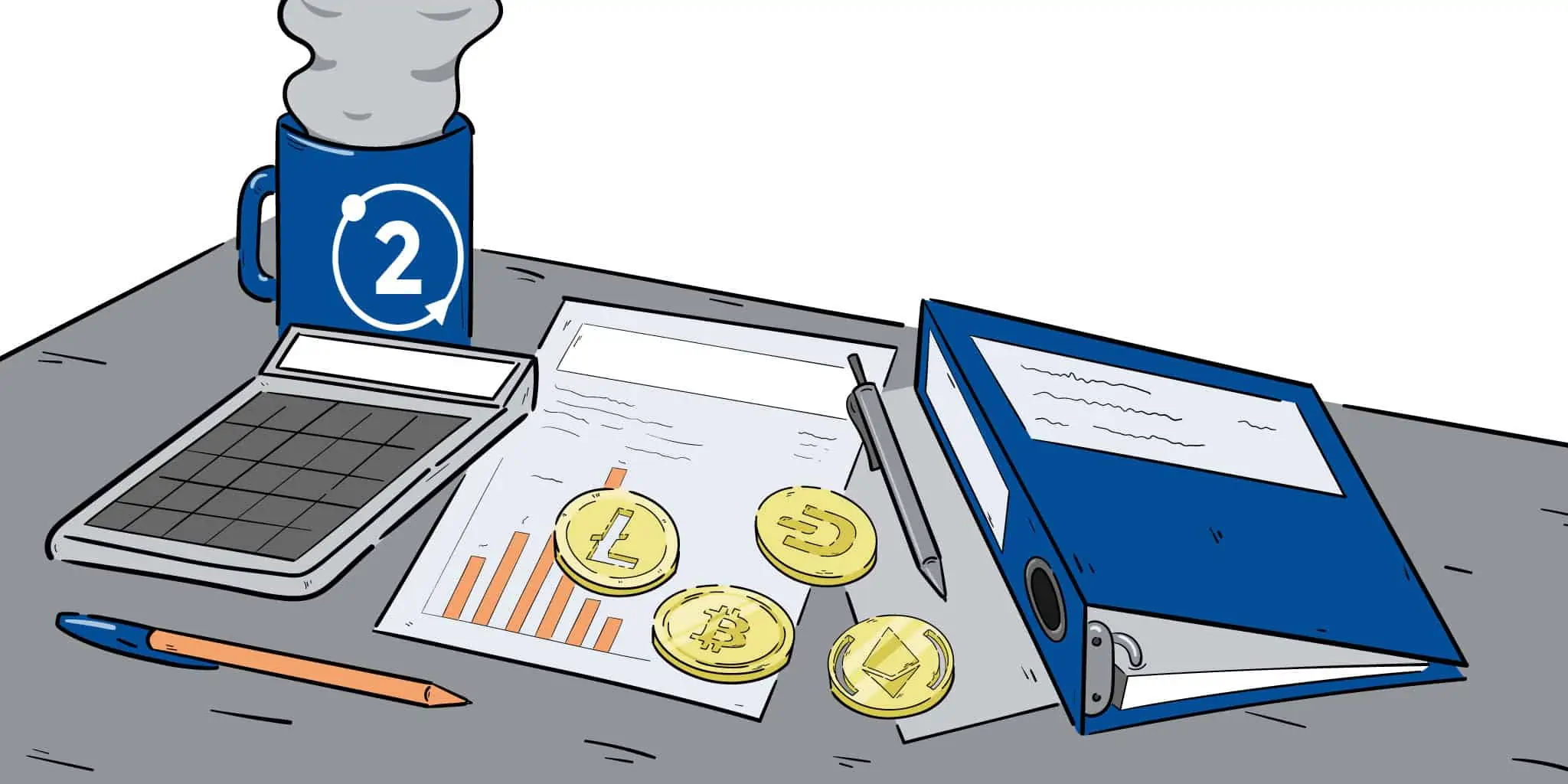
Course on Taxation of Bitcoin and other Cryptocurrencies in Spain (only in Spanish)
Medium levelLearn from experts in the Tax area all the details about the taxation of cryptocurrencies in Spain.
The Tax Agency clarifies that, for cheat the tax authorities, these people often resort to the misuse of instrumental companies, which they use to divert expenses from personal use, assign them assets for their own use, conceal income through fictitious loans or simulate rentals of goods and services.
In such circumstances, the authorities will focus their control, among other aspects, on examine the structures created which may have the purpose of imputing to natural persons as income all those expenses and investments which, being for their exclusive enjoyment, are declared as deductible or that in documentation are declared as operations carried out through the organizations designed and with fraudulent intentions.
Illegal invoices and the use of cash
Another aspect that will be under the supervision of the Treasury is the performance of certain groups (businessmen or professionals) that do not record income from cards in sectors where this payment method is common.
Included in this list are those people who appear to be carrying out an economic activity and issue irregular invoices that do not comply with current regulations. In particular, special attention will be paid to those who receive these invoices, those who obtain improper VAT refunds, and those who generate fictitious expenses.
Also, the Tax Agency will examine the role of investors who are part of financing organizations. That is, they will see the history of economic interest groups, which serve as vehicles for taking advantage of tax benefits.
Sales terminals and cryptocurrencies
La Tax Agency It will also continue to focus on sectors with a high risk of the underground economy. In this regard, inspection plans will focus especially on monitoring terminals. point of sale or POS and other billing systems to the public that they must have implemented new regulations, according to the schedule on the use of authorized software programs which are designed to prevent double counting.
At the same time, controls will be intensified on those taxpayers who have made operations with virtual currencies or cryptocurrencies without having declared the profits or income obtained from its possession or operation.
E-commerce, its massification and tax evasion
E-commerce, virtual payment systems and tourist rentals are in the spotlight this year to improve control mechanisms and prevent tax evasion. In the area of e-commerce, The agency will use any new information on cross-border payments and customs data related to the single window regime. All this in order to detect Possible under-reporting of VAT returns.
On the other hand, thanks to the international exchange of information under the DAC7 regulation of the European Union, In order for digital platforms to report their transactions, the aim is to advance both in the identification of owners as well as intermediaries within the rental market for personal property or tourist real estate. This effort, along with the rise of the electronic media economy, however, poses additional challenges for fiscal control.
INVITE AND WINThe growth of the so-called neobanks, banks whose services are only provided and obtained online, represents another new challenge. This is why fiscal controls will be strengthened to prevent these alternative means from becoming tools for evasion or fraud.
Less bureaucracy and payments via Bizum
The year 2025 will also be the instrumentalization of the second stage to simplify administrative language. This means an impact on more than 4,1 million documents annually and will put an end to areas such as VAT and corporate tax verification, both penalties related to personal income tax and others. procedures in Collection and Customs.
Regarding payment facilitation, This year Bizum will gradually begin to be accepted., including telephone and in-person assistance, and payment options by credit or debit card will be expanded. However, under secure e-commerce conditions, thus allowing for broader user access.
Certificate
Cryptocurrency Technical Analysis Course
Medium levelIn this training we have Iván González, a professional expert in investments and cryptocurrencies, to teach you how the market works and how prices affect the behavior of investors.
Supervision in collection
Regarding the collection, Preventive supervision and early monitoring will prevail of the risks associated with collection, especially those linked to tax crimes and the concealment of assets or income. Similarly, procedures will be modernized embargo, by establishing more agile rules adapted to what these processes demand today.
The creation of National Bankruptcy Proceedings Team will strengthen collection management and work will be done to identify fraudulent competitions. Finally, the 2025 Tax Control Plan will a thorough analysis of the debtors, emphasizing practices such as asset stripping to simulate insolvency, the existence of international connections, the use of "safe haven companies" or the formation of controlled corporate structures by a single entity.