
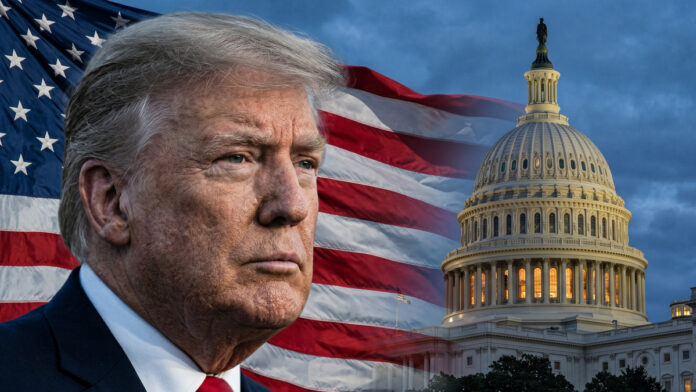
The Clarity Act advances in the Senate amid tension: Donald Trump's crypto businesses spark ethical criticism. Is the legal security of cryptocurrencies and stablecoins at risk?
The Donald Trump administration faces a scenario of skepticism marked by the contradiction between its electoral promises and the perception of governmental integrity.
Although the administration insists on transforming the United States into the global epicenter of digital assets, the data reflects a fracture in voter confidence. According to the results of a recent survey conducted by CoinDesk, 62% of voters express doubts about the Government's ability to oversee the sector impartially.
According to the results report, this uncertainty persists despite the creation of figures like the "Crypto Tsar"—a position that was held by David Sacks until March of this year—or the issuance of executive orders designed to make the regulatory environment more flexible.
The rejection of Trump is exacerbated by observing the presidential family's personal ties to their own business ventures, such as World Liberty Financial (WLFI)a situation that the 73% of US citizens rate high-ranking officials as unacceptable responsible for drafting the rules of the digital financial game in the country.
Enter and trade crypto with confidenceClarity Act advances amid political tensions and doubts
El Digital Asset Market Clarity ActThe bill, known as the Clarity Act, is advancing as a direct reflection of the current political climate in the United States. Following its passage in the House of Representatives in 2025, the bill has entered a crucial stage in the Senate.
The regulatory text is expected to be finalized during the week of May 11. At this point, the process focuses on reviewing and potentially approving the content, a step that was slowed for months, according to the planned schedule, due to intense debate between the banking and crypto industries about a potential run on deposits if native crypto platforms could offer interest on stablecoin accounts, and due to concerns from some legislators such as Elizabeth Warren y Cory Booker regarding the massive conflict of interest with Trump and his business dealings in the industry.
Experts expect the bill to reach the president's desk this summer, but conditions set by the Democratic bloc could change the pace of negotiations. Their support hinges on the inclusion of stricter ethical standards that limit high-ranking officials' financial involvement in digital assets under their regulatory purview.
Meanwhile, the official discourse of the Executive insists on presenting cryptocurrencies as a fundamental tool to ensure the nation's global leadership and, moreover, essential in the daily lives of citizens.
Crypto, politics, and trust at stake
The climate of distrust toward cryptocurrency regulation is also developing in parallel with a sustained decline in approval of Donald Trump's administration, which currently stands at 40%. According to the report, within the United States, There is growing concern about the real effect of economic policies on everyday life.Nearly half of the population, 48%, perceive that the president's recent decisions could affect the country's stability in the short and medium term.
This internal unease is also reflected outside the United States, albeit with greater intensity. The trade policy based on tariffs and a more closed approach to international trade has generated critical reactions in various markets. According to the report, 61% of international analysts anticipate a negative impact on global trade flows by the end of 2026, adding further pressure to an already uncertain environment.
In Europe, the concern is evident in countries like Spain, where 40% of the population believes that Washington's economic decisions could affect their own economic balanceEven long-standing allies are showing signs of strain. In Canada, disapproval has reached 81%, driven by diplomatic tensions and doubts about fiscal policy.
In this context, the strategy that initially sought to strengthen financial sovereignty through the use of blockchain technology and cryptocurrencies is now interpreted as part of a broader foreign policy that is generating friction on the international stage. In fact, 54% of the global community believes that this approach is damaging bilateral relations.
The community now expects the evolution of the Clarity Act to be key for the current administration to balance its technological goals with greater institutional transparency and stability. The fate of this law this May will not only define the legal framework for stablecoins, but also the Trump administration's ability to separate private interests from public policy. With a divided Senate and a watchful public, transparency will be the most valuable asset for restoring trust in the American digital financial ecosystem.
Add crypto to your wallet at Bit2Me