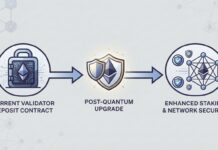
Starkware has completed the first experimental transaction on the Bitcoin network designed to withstand future quantum computing attacks. This technological milestone utilizes the existing protocol rules, demonstrating that it is possible to protect funds without requiring an upgrade or fork on the main network.
The challenge of quantum computing in the crypto ecosystem
The evolution of quantum technology raises questions about the long-term security of traditional cryptographic systems. In the case of Bitcoin (BTC), the elliptic curve digital signature algorithm (ECDSA) could be vulnerable in the future if quantum computers become powerful enough to run complex algorithms capable of decrypting private keys from public keys. Anticipating this scenario is crucial for maintaining network robustness and trust in the global crypto ecosystem.
Starkware's solution: security without forks
To address this challenge, the Starkware team has The first experimental quantum-resistant transaction has been completed on the Bitcoin network. The most remarkable aspect of this advancement is that it was achieved using existing consensus rules. This means the network can adopt advanced security measures without requiring a hard fork or a complex structural update that divides the community. Starkware has applied its cryptographic expertise to demonstrate that Bitcoin's base layer possesses greater technical flexibility than previously estimated.
Metrics and scope of the experiment
The development of this proof of concept required a controlled environment to verify the viability of post-quantum cryptographic signatures. During the experiment, technical logs documented the processing of a test magnitude of 4M QTY (4 million), a volume of data and operations designed to stress and validate the underlying mathematical model. This milestone demonstrates that Bitcoin's current infrastructure has the capacity to process more complex data structures, adapting to the technological threats of tomorrow.
The future of your portfolio in the face of new technologies
Constant innovation is what allows assets like Bitcoin to remain a fundamental pillar in building your portfolio. Knowing that developers are already testing effective solutions against future threats provides peace of mind to those participating in the ecosystem. If you decide to explore the crypto sector, it's vital to use platforms regulated under European regulations such as the MiCA Regulation. You can manage your assets transparently and with known and managed risk using tools like Bit2Me Wallet, your secure and leading exchange in Spain, or access advanced markets through Bit2MePro.
FAQ
What is a quantum-resistant transaction?
It's a blockchain transaction that uses advanced cryptographic algorithms, specifically designed to withstand decryption attempts by quantum computers. These transactions ensure that, even with exponentially greater computing power than currently available, the funds remain protected and inaccessible to attackers.
Does Bitcoin need an update to implement this?
Starkware's recent experiment has shown that this isn't strictly necessary. They successfully executed this transaction using rules and procedures. scripts that already exist in the Bitcoin protocol, thus avoiding the need to make drastic updates or forks on the main network.
Are my current funds in Bitcoin at risk?
Currently, quantum computing lacks the technical capability to break Bitcoin's cryptography. Experts estimate that it will be years, or even decades, before a real risk exists. Experiments like this ensure that, when the time comes, the network will be prepared to protect your assets.
Bitcoin's adaptability remains one of its most valuable attributes. Its ability to anticipate potential technological vulnerabilities demonstrates the maturity of an ecosystem that is not content with its current state, but actively researches to ensure its long-term viability.
As quantum technology advances from laboratories to practical applications, the crypto industry will continue to develop more robust cryptographic standards. This first experimental step marks the beginning of a gradual transition toward a digital environment prepared for the challenges of the coming decades.
Investing in cryptoassets is not fully regulated, may not be suitable for retail investors due to high volatility and there is a risk of losing all invested amounts.
Generative artificial intelligence tools were used to create this article.