
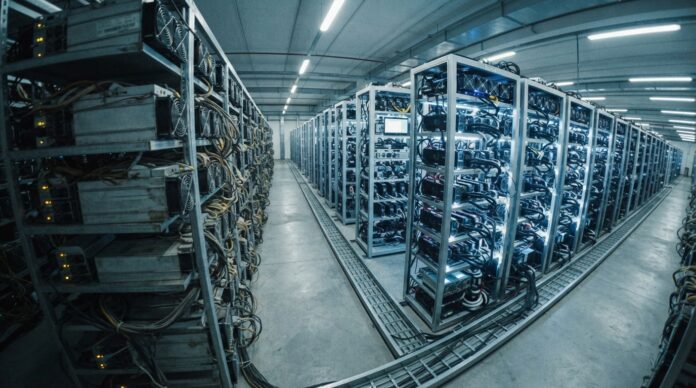
Nine of the leading Bitcoin mining companies have allocated more than $5.000 billion to artificial intelligence infrastructure during the first half of 2026. This strategic move seeks to diversify their operations in the face of industry challenges, although capital expenditures currently far exceed the revenue generated by these new technology business lines.
The convergence between blockchain and artificial intelligence
The relationship between cryptocurrency mining and artificial intelligence is redefining the data center landscape globally. Historically, mining facilities have been designed to maximize energy efficiency and processing capacity. Now, these same characteristics make them ideal candidates for hosting high-performance computing (HPC) operations.
The need for diversification doesn't arise from nothing. Scheduled events on the network, such as difficulty adjustments and halving cycles, force companies to seek maximum efficiency and new sources of profitability. In this context, artificial intelligence offers long-term computing contracts that mitigate the inherent volatility of the crypto market.
Despite the initial imbalance between capital expenditures and current revenues, analysts believe this transition favorably positions mining companies to lead the next era of global IT infrastructure.
Investing in cryptoassets is not fully regulated, may not be suitable for retail investors due to high volatility and there is a risk of losing all invested amounts.
Generative artificial intelligence tools were used to create this article.