
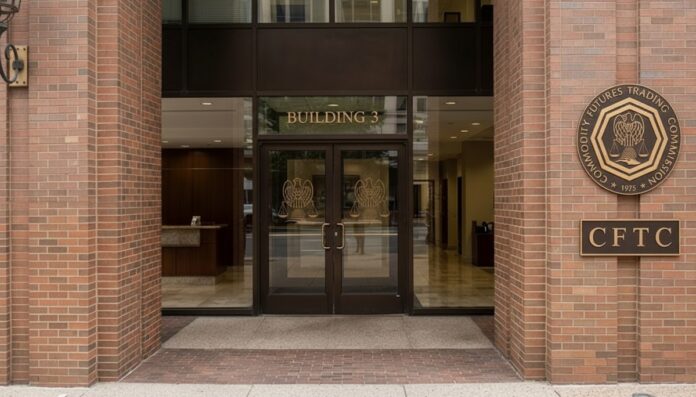
Michael Selig, the 16th chairman of the CFTC, stated that the agency can lead crypto regulation to make the U.S. the world capital of digital assets, leaving behind application-based regulation.
In recent statements, disseminated through his official account on X, the chairman of the Commodity Futures Trading Commission (CFTC) emphasized that The agency is technically and operationally prepared to lead market oversight this year.
Selig emphasized that traditional financial infrastructure has fallen behind the needs of the modern economy, while Blockchain technology emerges as the ideal tool to modernize the system and bring it into the 21st centuryUnder this premise, the CFTC aims to revitalize innovation and pave the way for a new stage of technological and financial development in the country.
Furthermore, the CFTC chairman emphasized that his goal is to position the United States as a global leader in crypto regulation, preventing the country from losing ground to other technological powers. In his view, prediction markets, artificial intelligence, and cryptocurrencies represent key sectors that must be strengthened within U.S. borders. He warned that if the country fails to lead in these areas, it risks relinquishing its role as a global innovation hub.
With this vision, the current CFTC administration seeks to consolidate a solid and balanced regulatory framework that fosters technological development without compromising legal certainty.
Visit Bit2Me and buy crypto todaySelig promotes clarity and cooperation in the crypto sector
One of the most disruptive aspects of Selig's tenure at the CFTC is the decision to end the so-called “regulation by application”The official confirmed The era in which sanctions dictated the course of supervision is over. Now, the regulator seeks to establish a more clear regulatory environment, where rules are defined before conflicts arise.
According to Selig, this change responds to the need to offer new technologies such as prediction markets and blockchain-based projects a fertile ground to develop within the United States, without fear of investigations or unexpected legal action from Washington.
In this context, the CFTC is working in coordination with the Securities and Exchange Commission (SEC) to unify criteria and overcome the regulatory fragmentation that has generated uncertainty in the sector for years. Through these actions, the agency seeks to build a framework that provides security for both companies and developers, thereby promoting a more orderly and competitive ecosystem.
This collaborative approach between entities marks a significant development in US regulatory policy. By understanding the technical essence of blockchain protocols and balancing innovation with user protection, the CFTC and the SEC are aiming for a more user-friendly, modern, and functional regulatory model, where innovation is no longer seen as a risk but rather as an engine of digital growth.
Securely manage your crypto assets hereThe United States strengthens its framework for digital assets with a more active CFTC
Just over three months after assuming the role of chairman of the Commodity Futures Trading Commission (CFTC), Selig presented an optimistic assessment of the evolution of the digital asset market in the United States. During a recent appearance, Selig emphasized that the institution “is prepared to fully assume regulatory responsibility” of the sector, consolidating its role as a key player in the supervision of the trading of tokens and digital derivatives.
Although Congress has not yet defined a roadmap for passing a comprehensive law on market structure, the debate is progressing. The Senate continues to review the CLARITY ActA proposal aimed at establishing uniform rules for digital assets is still under discussion within the Banking Committee. Negotiations are focused on defining the operational framework for stablecoins, the performance of these assets, the DeFi sector, and tokenization.
Meanwhile, the CFTC and the SEC continue to strengthen their cooperation, for example, with a memorandum of understanding signed in March that lays the groundwork for smoother coordination in the oversight of digital asset platforms and issuers. According to this document, the SEC will retain jurisdiction over tokens classified as securities, while the CFTC will assume a predominant role over those considered commodities.
Likewise, one of the pillars of the Selig administration has been to promote American leadership in the digital financial ecosystem. In that context, the adoption of a new token taxonomy This represents a substantial change: for the first time, major high-cap digital assets such as Bitcoin, Ethereum, and XRP have been officially recognized as commodities. This decision provides a clearer legal framework and increases transparency in the sector's operations.
The new regulatory framework is being met with optimism by companies, institutional investors, and technology developers, who see it as an opportunity to consolidate projects and foster innovation within a more predictable and organized environment. With these advancements, the CFTC reaffirms its commitment to guiding the growth of an industry that is now an integral part of the global financial system.
Trade cryptocurrencies on Bit2Me today