
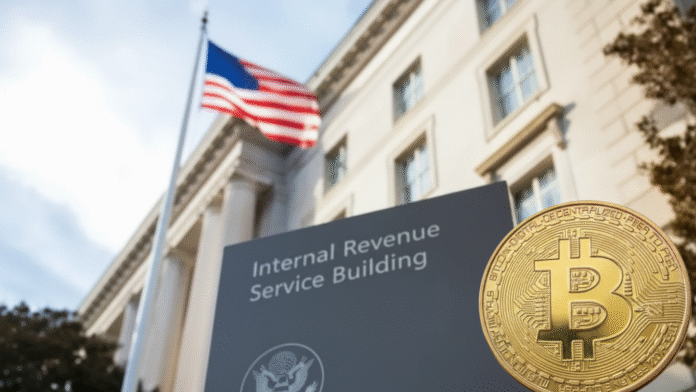
The IRS is moving towards tax regulation of cryptocurrencies with new reporting rules and safe havens, impacting investors, startups, and institutional adoption.
The taxation of cryptocurrencies has become a crucial issue for governments and taxpayers. In the United States, the Internal Revenue Service (IRS) has taken a significant step by introducing new rules aimed at regulating the growing digital market.
With the implementation of Form 1099-DA And with the opening of a “safe haven” for trusts and institutions, the tax authority is raising a scenario that could redefine the relationship between technological innovation and tax compliance.
Trade Bitcoin easily at Bit2MeNew tax rules for cryptocurrencies in the United States: what changes in 2025 and 2026
2025 has marked a significant change for centralized cryptocurrency exchange platforms in the United States. From now on, they will be required to issue the Form 1099-DAwhich will report gross revenues derived from the sale of digital assets. This measure, according to the agency and experts, seeks to increase clarity in cryptocurrency transactions and facilitate the accurate calculation of capital gains or losses that users must declare. In 2026, the base cost reportThis will allow taxpayers to file their taxes more accurately and avoid potential discrepancies with the IRS.
Meanwhile, the Internal Revenue Service continues to consider cryptocurrencies as your propertySimilar to stocks or real estate, this means that gains earned in less than a year are subject to higher tax rates, while those held long-term receive more favorable tax treatment. Furthermore, investors can offset losses by deducting up to $3.000 annually from their ordinary income and carrying any excess forward to future years.
For experts in the field, these measures represent progress in regulating the crypto market, which has grown rapidly without strict oversight until now. However, they also increase the responsibility of investors and companies, who will have to keep detailed records of every transaction, from transfers between wallets to staking rewards. All of this demands more rigorous organization to comply with new tax obligations and avoid problems with the authorities.
Buy Bitcoin with confidence at Bit2MeA project to pay taxes in Bitcoin and strengthen the strategic reserve
In addition to the new tax rules, a legislative project has also been introduced in the United States that seeks to enable the payment of federal taxes directly in Bitcoin, with a particularity that makes it a regulatory milestone: transactions carried out for this purpose would not generate tax obligations for capital gains.
In other words, this means that taxpayers could use their BTC to comply with tax regulations without having to declare the difference between the purchase value and the payment value, an aspect that has so far been one of the main obstacles to the everyday use of cryptocurrencies in official transactions.
Additionally, the project design stipulates that funds raised in Bitcoin will not be immediately converted to dollars, but rather are to be used to form a strategic reserve of digital assets under the custody of the federal government. As this publication has reported, this measure seeks to provide the country with an alternative financial buffer, capable of diversifying traditional reserves and offering support in an increasingly digitalized global market.
The initiative, which is still under discussion, opens a debate about the role of cryptocurrencies in US fiscal and monetary policy, which could incentivize the adoption of Bitcoin as a legitimate and institutionally recognized means of payment. If this bill passes, it would set an international precedent by making Bitcoin an official revenue-generating tool and a strategic component of US economic policy.
 Certificate
Course on Taxation of Bitcoin and other Cryptocurrencies in Spain (only in Spanish)
Medium levelLearn from experts in the Tax area all the details about the taxation of cryptocurrencies in Spain.