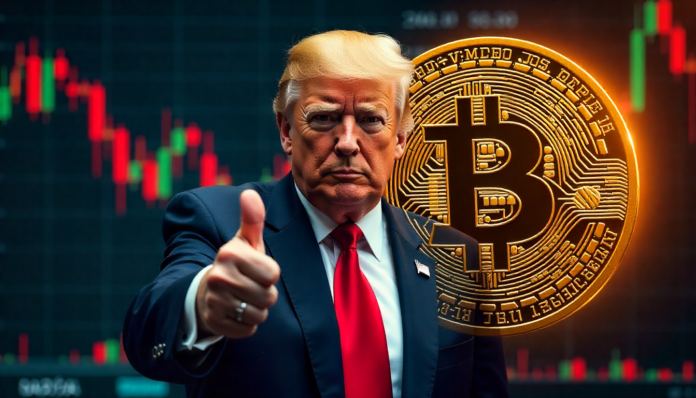
Donald Trump is poised to sign an executive order that will penalize banks that decide to close customer accounts based on ideology or crypto activity, promoting equality and access in the digital industry.
The Donald Trump administration is finalizing an executive order seeking to sanction banks that close customer accounts for ideological, religious, or crypto-related reasons. This practice, known as "debanking”, has been denounced by multiple actors in the financial and technological ecosystem as a form of economic censorship.
Therefore, the new executive order, which could be signed this week, will instruct regulators to investigate potential violations of laws such as the Equal Credit Opportunity Act, antitrust statutes, and consumer protection regulations. The central objective is ensure equitable access to banking services, especially for companies in the fintech and crypto industries, which have faced systematic obstacles to operating within the traditional financial system.
According to sources, the executive order also includes economic sanctions, legal action, and intervention by the Department of Justice in serious cases of debanking.
ENTER CRYPTO SECURELY HEREThe details of Donald Trump's new executive order
According to the draft revised by the Wall Street JournalThe executive order will direct agencies such as the Federal Deposit Insurance Corporation (FDIC), the Office of the Comptroller of the Currency (OCC), and the Federal Reserve (Fed) to review their internal policies that have facilitated debanking. Additionally, the Small Business Administration (SBA) will be directed to evaluate whether banks that provide federal loans have engaged in discriminatory practices.
The order is also part of a broader offensive against what has been called “Operation Chokepoint 2.0”, a purported regulatory strategy promoted by the Biden administration that would have pressured banks to cut ties with companies deemed politically unfavorable, including crypto platforms, religious organizations, and conservative media outlets.
In parallel, the White House has pushed other pro-crypto initiatives, such as the creation of a Bitcoin Strategic Reserve and a ban on issuing central bank digital currencies (CBDCs), consolidating a regulatory stance favorable to the sector.
A measure that could open the doors of the banking system
According to sources, this new executive order could mark a turning point for crypto and fintech companies, which have reported persistent difficulties accessing banking services in the country. Since the collapse of FTX in 2022, banks such as JPMorgan Chase and Bank of America have tightened their risk policies, limiting crypto companies' access to accounts, loans, and payment processing.
In addition to arbitrary closures, many firms have reported excessive fees for basic services, which has been interpreted as an indirect form of financial exclusion. Andreessen Horowitz, for example, has reported that banks charge high fees for data access, affecting various platforms operating in the digital industry.
Therefore, the order seeks to reverse this trend by promoting a competitive and transparent environment where digital companies can operate without discrimination. It is also expected to boost innovation and economic growth by facilitating access to critical financial infrastructure.
BUY AND MANAGE BITCOIN ON BIT2METhe emblematic cases that motivated the new executive order
One of the cases cited in the draft executive order involves Bank of America, which closed accounts belonging to a Christian nonprofit organization in Uganda. The bank claimed it does not offer services to small international businesses, but the case has been interpreted as an example of ideological discrimination.
Another relevant case is the testimony of Coinbase's chief legal officer, Paul Grewal, who accused the FDIC of systematically pressuring banks to abandon relationships with crypto companies. Documents obtained through freedom of information requests support these accusations, revealing coordinated efforts to limit banking access to the sector.
Even Donald Trump himself has publicly denounced being rejected by JPMorgan Chase and Bank of America, despite having hundreds of millions of dollars in his accounts. According to the current US president, these decisions were motivated by regulatory pressure during the Biden administration.
Towards the democratization of banking services in the digital age
On the other hand, in Congress, Republican lawmakers have supported the measure, while some Democrats have expressed concern about the legal scope of the order. Despite the challenges, Trump's proposed executive order represents a bold attempt to reform banking access in the United States, especially for sectors marginalized by recent regulatory policies. If implemented, it could redefine the relationship between banks, customers and regulators, establishing a more equitable framework for the crypto and fintech industry.
Although it is still unclear when the order will be signed or how the sanctions will be applied, the debate has already reshaped the political and financial landscape. In a context of increasing digitalization, ensuring fair access to banking services has become a matter of fundamental economic rights.
The crypto industry, for its part, is watching closely. Beyond politics, what's at stake is the possibility of operating without financial censorship in an environment where innovation isn't penalized by ideology.
TRADE WITH CONFIDENCE IN BIT2ME LIFE