
The integration between traditional financial markets and the crypto ecosystem takes another step forward. A well-known global exchange platform is offering access to the initial public offering (IPO) of the Jersey Mike's restaurant chain through tokenized shares, allowing users from over 110 countries to participate in this event.
Jersey Mike's leap into blockchain and tokenization
According to recent industry reportsEligible customers in over 110 countries can apply for access to JMKEx, a tokenized version of the shares of the popular US sandwich chain. This digital asset is backed 1:1 by the underlying shares, which are held in regulated custody to ensure parity and transparency in trading.
Jersey Mike's, a well-established franchise with over 3.300 operating locations, expects its initial public offering (IPO) price to be between €20 and €23 per share. While traditional shares will trade on the New York Stock Exchange (NYSE) under the symbol JMKE and will be subject to standard US market hours, the JMKEx token will introduce a key advantage of the crypto ecosystem: it will allow trading 24 hours a day, five days a week.
This temporal flexibility is one of the great attractions of tokenization, as it breaks down the geographical barriers and time zones that traditionally limit classic stock markets. Furthermore, JMKEx tokens can be transferred between compatible platforms and integrated with decentralized finance (DeFi) applications, expanding use cases beyond simply holding them in a traditional brokerage account.
How do tokenized shares and RWAs work?
Real-world asset tokenization (RWA) is a technological process that involves issuing a digital representation of a physical or financial asset on a blockchain network. In the case of stocks, this mechanism allows a token to act as a "mirror" of the real stock's value, facilitating its exchange in the digital environment.
For this system to be viable and reliable, it is essential to have regulated custodian entities that acquire and store the physical shares equivalent to the issued tokens. This ensures that each token in circulation has real and auditable backing. If you want to learn more about how this technology is transforming traditional finance and creating new liquidity bridges, you can explore the detailed educational resources available at [link to resources]. Bit2Me Academy.
The impact of RWAs extends far beyond corporate stocks. The crypto ecosystem is currently witnessing the tokenization of treasury bonds, real estate, artwork, and commodities. This diversification allows users to build their portfolios with exposure to markets that previously required high levels of capital or faced complex bureaucratic hurdles.
The SpaceX precedent: lessons on demand and liquidity
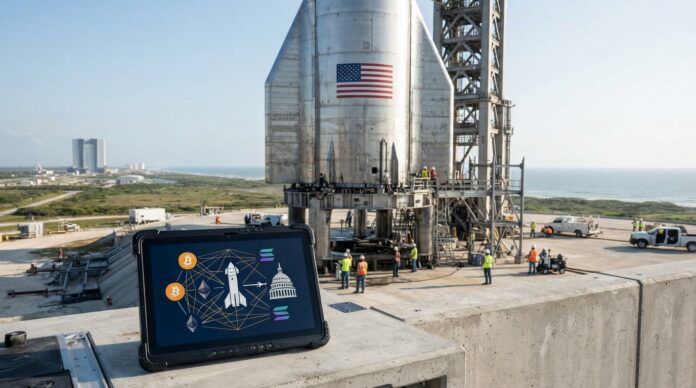
Jersey Mike's tokenized stock offering follows in the footsteps of other recent public debuts in the crypto sector, with SpaceX's being one of the most notable. However, that event served as a case study on the logistical and liquidity challenges facing this emerging model.
During SpaceX's tokenized IPO, market demand exceeded the available supply of underlying shares by more than four times. This imbalance forced several global exchanges to cancel their allocation campaigns and process massive refunds to users, as they were unable to secure enough real shares to back the requested tokens.
Furthermore, the post-launch volatility also yielded important lessons. The aerospace company's traditional shares experienced significant fluctuations, underscoring the importance of trading with known and managed risk, and reminding us that tokenization facilitates access but does not alter the volatile nature of equity markets.
Sustained growth of the RWA market and the regulatory framework
Despite the logistical challenges observed in highly anticipated launches, the global market for tokenized shares and RWAs maintains a robust growth trajectory. The value distributed in this specific sector has experienced sustained increases in recent months.
This exponential growth is attracting the attention of regulators globally. In the European Union, the MiCA Regulation has established a pioneering standard for the supervision of crypto assets, requiring high levels of transparency, auditing, and user protection. To stay up to date with the latest developments and metrics in the sector, we recommend consulting [link to relevant section]. news.bit2me.com.
The arrival of global brands to the tokenization ecosystem demonstrates the growing interest in connecting traditional finance with blockchain infrastructure. As liquidity and regulations solidify, real-world assets will continue to gain traction as a fundamental pillar of the crypto market.
Investing in cryptoassets is not fully regulated, may not be suitable for retail investors due to high volatility and there is a risk of losing all invested amounts.