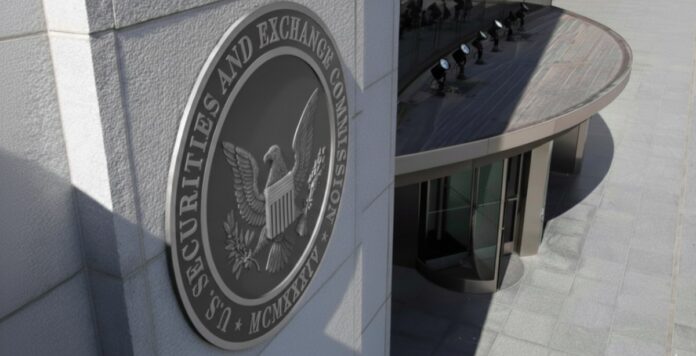
The SEC has given the green light to DTCC to explore asset tokenization, in a move that further boosts blockchain integration on Wall Street.
The Depository Trust & Clearing Corporation recently announced that it has received a non-action letter from the U.S. Securities and Exchange Commission's Division of Commerce and Markets. This administrative document effectively grants the clearinghouse authorization, allowing it to proceed with its plans to tokenize real-world assets within a regulated framework.
With this announcement, the DTCC confirms its ability to issue distributed ledger-based representations of highly liquid financial instruments, further modernizing Wall Street's infrastructure.
But beyond this technical advancement, the regulatory decision aligns perfectly with the pro-crypto policy of the federal government led by Donald Trump. The goal is to integrate emerging financial technology into traditional markets in an orderly manner.
In this context, the SEC administration, under Paul Atkins' leadership, is dismantling the barriers that previously limited institutional adoption of crypto technology. The non-action letter in question acts as a key legal safeguard, giving the DTCC the confidence to operate blockchain-based clearing and settlement systems. It does so without fear of enforcement action from the regulator, provided that strict transparency and risk management conditions are met.
Access crypto assets from Bit2MeMoving towards the transformation of financial settlement with blockchain
The core of this authorization lies in the types of assets that can now have an official digital representation. According to the Valid identity document According to the regulatory agency, the DTCC has the green light to implement this technology in Russell 1000 index stocksThis index serves as an essential benchmark for institutional investors and comprises the 1,000 largest publicly traded companies in the United States. The standard also covers sovereign debt instruments, such as Treasury bonds and notes, along with exchange-traded funds (ETFs).
In short, the approval in question marks a practical change in market operations, by prioritizing the efficiency brought by institutional blockchain technology.
Traditional settlement processes involve multiple layers of verification and reconciliation, resulting in delays of several days. Now, with the representation and transfer of these values on a permissioned blockchain controlled by the DTCC, real-time settlements are possible. This minimizes counterparty risk and frees up capital that was previously tied up in transaction waiting times.
As a result, market players will be able to move guarantees and collateral at unprecedented speeds, streamlining treasury management in large banks and investment funds.
Trade cryptocurrencies now on Bit2MeUnder Paul Atkins' vision, the SEC is building a renewed regulatory environment.
This technological advancement is possible thanks to a significant shift in the Securities and Exchange Commission's stance. Under Paul Atkins' leadership, the agency has moved from imposing sanctions to prioritizing dialogue and fostering innovation with players in the crypto industry. Atkins has made this clear in numerous statements: the United States must lead the global financial landscape by embracing new technologies, rather than allowing them to develop in other countries.
In this context, the SEC has promoted various initiatives aimed at improving U.S. leadership in this area, such as roundtables through its working group on crypto assetsThese spaces bring together regulators and business leaders from the crypto sector to analyze technical and legal barriers that hinder market growth.
At the same time, initiatives such as "Project Crypto" They reveal the agency's commitment to creating a controlled environment for experimentation. This will allow institutions to test distributed ledger technology under the watchful eye of federal authorities, balancing investor protection with the inevitable advancement of modern finance.
Enter now and trade cryptocurrenciesThe DTCC activates the blockchain era in traditional finance
The DTCC's authorization to operate with assets tokenized It suggests an imminent convergence between decentralized finance and traditional banking.
Until now, tokenization had remained largely confined to isolated pilot projects or unregulated platforms, which lacked the necessary liquidity to attract large capital. However, the entry of the DTCC completely changes this reality, providing the infrastructure upon which trillions of dollars in daily transactions rely.
For experts, this move opens the door to practical transformations in the day-to-day operations of the markets. Industry analysts observe that the digitization of bonds and stocks will facilitate the creation of new financial products and improve market accessibility. Furthermore, tokenization's ability to fractionalize assets and program their functions through smart contracts on a blockchain could automate complex corporate processes such as dividend payments or the management of voting rights at shareholder meetings.
In this context, blockchain technology ceases to be a futuristic promise, becoming the operational rail on which the safest and most demanded values of the American economic system travel.
 Certificate
Blockchain Course
Basic levelTake this course where we explain blockchain in a clear, simple and concise way so that you have a very clear idea of what this new technology consists of.