

In a note published by Franklin Templeton for its investors, the firm delved into the value dynamics in the blockchain ecosystem, highlighting how emerging Web3 technology, Layer 1 platforms and decentralized applications are redefining value accumulation in the financial sector.
The value dynamics of blockchain is a topic of growing relevance in the cryptocurrency and financial technology sector, so investment management firm Franklin Templeton, known for its innovative approach to the cryptocurrency market, has explored how these new technologies and innovations have been redefining the accumulation of value.
Franklin Templeton, founded in New York more than 70 years ago, has become a key player in the cryptocurrency ecosystem, launching two spot exchange-traded funds or ETFs for Bitcoin and Ethereum in the US market. This move not only underlines the firm’s commitment to the innovation of cryptocurrencies as investment assets, but also reflects its growing interest in understanding how digital economies are developing.
Periodically, Franklin Templeton publishes notes dedicated to its investors, in which it explores different topics related to cryptocurrencies and blockchain technology, from the impact of updates like Nakamoto's Stacks, to the transformation driven by decentralized physical infrastructure networks, known as DePINs, in the real world.
In its latest note, Franklin Templeton examines how Web3 technology represents a significant shift from the historical value accumulation mechanisms that characterized Web2. With this analysis, the firm seeks to provide a clearer view of current and future trends in the cryptocurrency space.
The impact of dApps on value capture
In its analysis, Franklin Templeton highlighted the critical role that Layer 1 networks play in the new digital economy.
Unlike Web2, where applications dominated value capture through data monetization, Web3 enables foundation protocols to generate revenue directlyThis translates into a dynamic in which blockchain platforms can monetize transactions by charging fees, representing a radical change in the way value is perceived in the digital ecosystem.
Decentralized applications (DApps) also play a key role in this new paradigm, the firm said. As users interact with these applications, they not only contribute to the broader ecosystem but also generate significant revenue for the underlying protocols. This interaction creates a revenue stream that benefits both DApp developers and Layer 1 owners. In this context, Franklin Templeton's note highlights the importance of understanding how these dynamics are shaping the future of cryptocurrency investment.
Layer 1 Networks: The New Backbone of the Digital Economy
Layer 1 networks have become the backbone of the new digital economy. Protocols like Ethereum and Solana not only facilitate transactions, but also enable the creation of decentralized applications or DApps that offer innovative services in areas like decentralized finance (DeFi).
In this regard, Franklin Templeton stressed that Layer 1s not only generate revenue through transaction fees, but are also at the heart of an expanding ecosystem that seeks to democratize access to financial services.
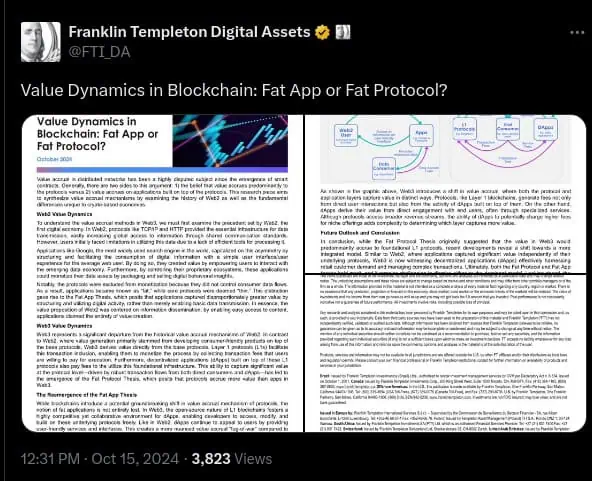
Decentralized applications have transformed the way users interact with financesUnlike traditional applications that rely on intermediaries, DApps allow users to manage their assets more directly and efficiently. For example, DeFi platforms have proven to be able to offer financial services in a more accessible way, which has attracted a broader user base. According to the firm, this phenomenon has led to a significant increase in DApp activity, which in turn generates a positive impact on Layer 1s.
Financial innovation in the era of Web3
The note published by Franklin Templeton, which provides an overview of the value dynamics in blockchain, highlights the growth of DApps and the increase in activity on Layer 1s, an aspect that investors should consider in order to evaluate how these trends will affect their investment strategies. As protocols become more relevant in the accumulation of value, selecting investments in this space requires a deeper analysis of the underlying technologies and their growth potential.
Furthermore, the investment firm highlighted that the success of DApps in capturing value can influence the way future technologies and applications are developed in the blockchain ecosystem. With competition on the rise, applications that can offer unique and high-quality services have the potential to stand out, which could further change the value dynamics in the cryptocurrency space.
The transformative potential of DeFi
In the published analysis, Franklin Templeton also highlighted the transformative potential of decentralized finance in securities lending markets, suggesting that DeFi technologies could expand the current institutionally dominated market and transform it into a more inclusive and accessible asset lending ecosystem.
Overall, Franklin Templeton's analysis of value dynamics in blockchain offers valuable insight into how Web3 is redefining value accumulation. This macro analysis of the blockchain ecosystem revealed that Public blockchains are critical to enabling Web3 and decentralized finance, offering significant advantages over private blockchains, which tend to replicate problems existing in the current Web2 model.
Main image from Pixabay