

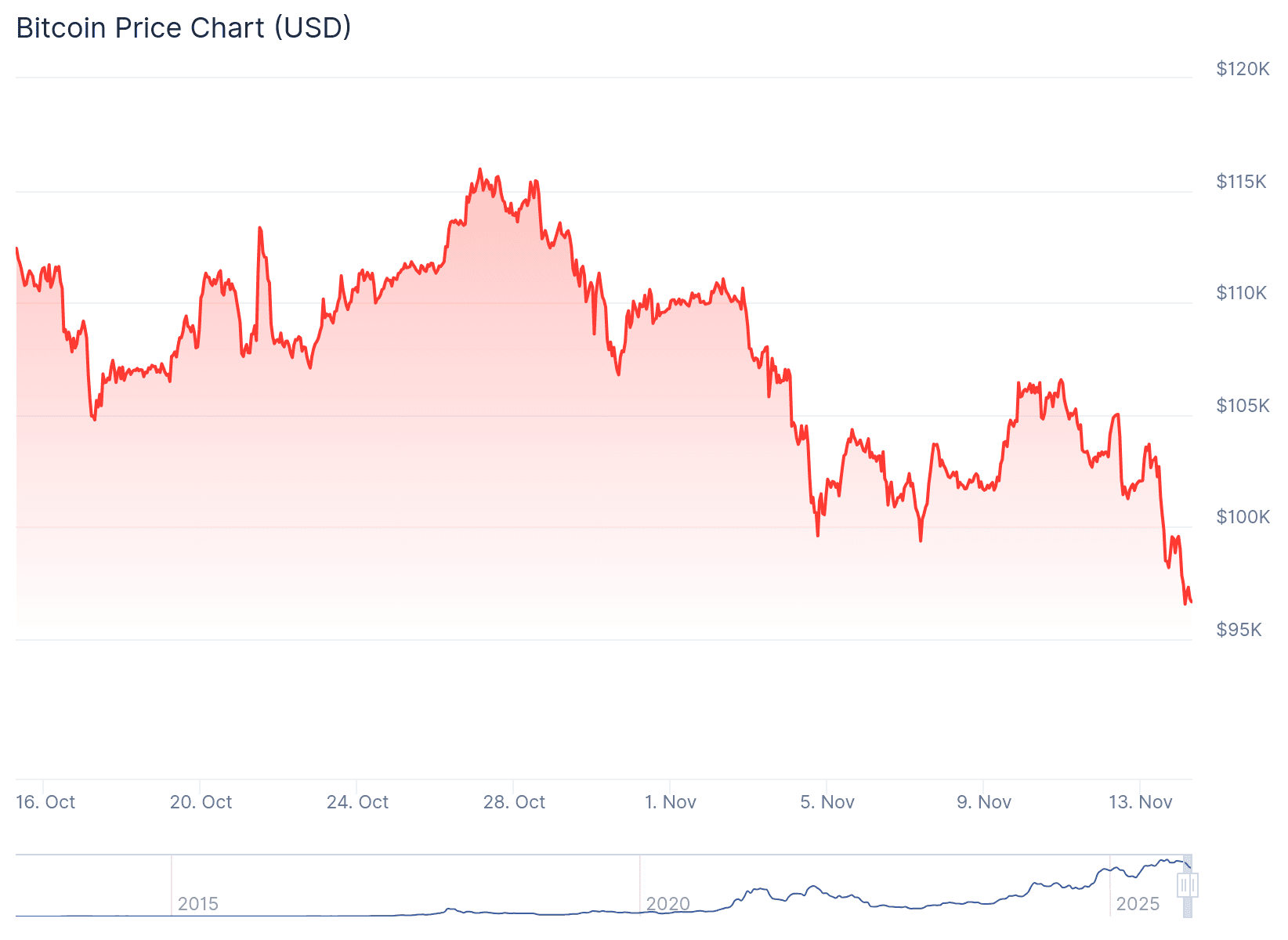
Bitcoin is trading around $82.000, accumulating a drop of nearly 30% from its all-time high in October, which has triggered a structural crisis in crypto corporate treasuries.
This week, Bitcoin is holding around $82.022This reflects a significant 36% drop from its all-time high in October, when it surpassed $126.000. Far from being a simple technical adjustment, this decline has generated a domino effect that directly impacts companies managing digital asset (DAT) treasuries, as well as institutional funds and the overall sentiment of the crypto market.
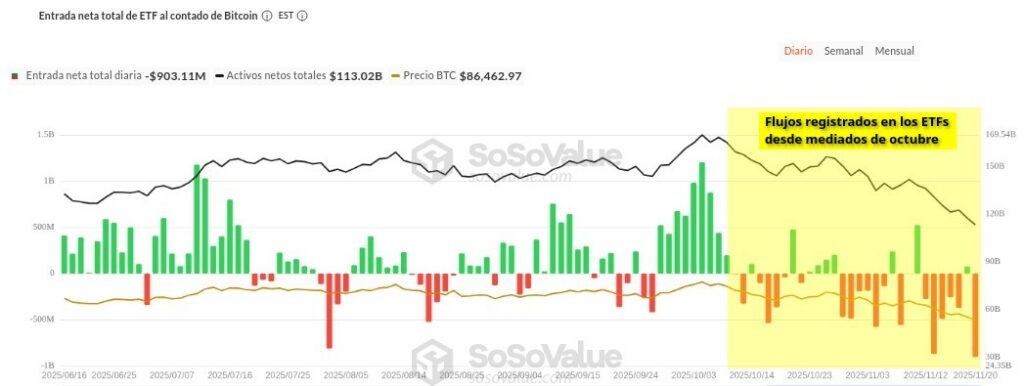
Bitcoin's pullback coincides with a Intense wave of withdrawals in spot ETFs Cryptocurrency ETFs in the United States are experiencing a surge in activity after a brief respite, with losses reaching up to $1.000 billion in a single day. The iShares Bitcoin Trust (IBIT), managed by BlackRock and considered the leading ETF in the crypto market, is among the hardest hit.
Trade BTC while ETFs adjust positionsData from the Soso Value platform indicates that the 12 spot Bitcoin ETFs listed in the US lost over $3.000 billion in November alone. This data reflects a palpable loss of confidence in the asset's liquidity and a growing fear of risk among institutional investors, who appear to be pulling back in the face of market volatility and uncertainty.
Source: Soso Value
Crypto companies in check: major treasuries face the 2025 storm
So far this year, a large number of public companies have begun to adopt cryptocurrencies as strategic assets, following the models established by Strategy and BitMine, which lead the sector, with the largest Bitcoin and Ethereum treasuries, respectively.
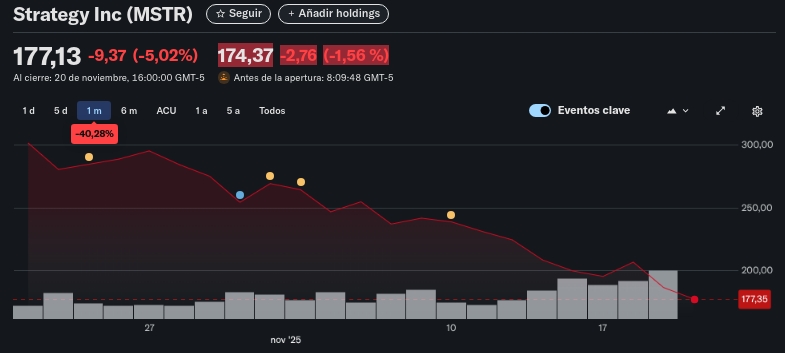
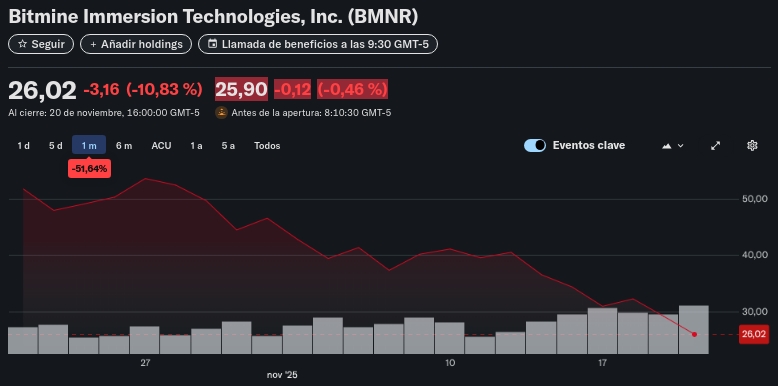
However, many of these companies with oversized reserves in major cryptocurrencies have seen their business model falter. Strategy and BitMine have suffered stock market losses of between 40% and 51% in the last 30 days, while other companies with crypto in their reserves, such as Metaplanet and SharpLink Gaming, have seen stock market losses of up to 38%.
Source: Yahoo Finance
Market data also shows that many of these companies are trading below the market value of their underlying cryptocurrencies (mNAV < 1), a situation that has forced several of them to make forced asset sales to cover debt or finance share buybacks.
A clear example of this situation is given Sequans, that He sold nearly 30% of his Bitcoin reserves at the beginning of the month to reduce leverage, while ETHZilla liquidated 10% of its Ethereum reserves with similar objectives. These sales, although strategic in the short term, could generate a negative domino effect by further pushing down cryptocurrency prices, again impacting the net inventory value of these companies and their financial capacity.
Breed Capital, a venture capital fund, published a report in June warning of the risk of collapse for most Bitcoin treasuries. According to this reportthe high concentration in crypto assets and the dependence on constant revaluation These factors have left these companies vulnerable to abrupt downturns, turning what was an accumulation strategy into a liquidity trap due to overleverage.
Why is the price of Bitcoin falling?
Bitcoin, after shining brightly for much of the year, is now facing a significant drop, falling 10,5% in the last 24 hours and leaving it near $82.000. This decline not only affects Bitcoin but extends to the entire digital asset market, which has fallen almost 10% in the same period.
Source: CoinGecko
One of the factors contributing to this weakness is the massive outflow of institutional capital from Bitcoin exchange-traded funds (ETFs) in the United States. This phenomenon was evident on Friday, November 21, when net outflows of nearly $903 million were recorded, with products such as BlackRock's IBIT and Grayscale's GBTC leading the trend.
Activate your wallet and trade BTC on key platformsThis situation was compounded by a chain reaction in the futures market, with many leveraged positions being liquidated after the break of a key technical support level at $85.000. The BTC drop triggered automatic selling exceeding $2.200 billion daily in both long and short positions, intensifying downward pressure and reducing speculative interest in futures by approximately 6,5%.
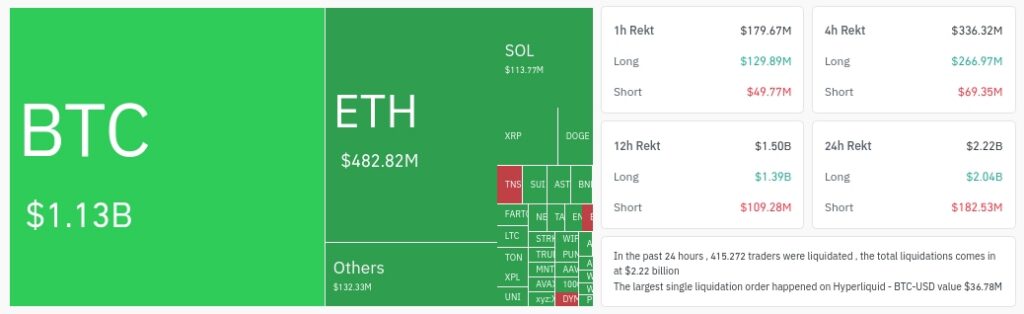
Source: Coinglass
From a technical perspective, Bitcoin also showed worrying signs, falling below its 200-day exponential moving average and reaching a relative strength index (RSI) of just 24.7, indicating a deep oversold zone. The level to watch for support is between $73.000 and $80.000, a range that is crucial for the stability of companies like Strategy and large institutional buyers.
Additionally, the macroeconomic context has added fuel to the fire. Rising US Treasury yields and reduced expectations of interest rate cuts by the Federal Reserve have dampened the appetite for risk assets like Bitcoin. Although the correlation with the S&P 500 has decreased, the overall liquidity environment remains unfavorable.
In summary, according to experts, Bitcoin's recent drop reflects a combination of profit-taking by institutional investors, rapid deleveraging, and the breaking of key support levels, all within a context of global economic uncertainty.
Now, the $80.000 to $85.000 range will be crucial in determining whether the market stabilizes or if BTC's correction deepens. The coming weeks, especially with the release of macroeconomic indicators like the Fed's PCE report, will be key to anticipating the next direction of the leading cryptocurrency.
Access BTC with a long-term vision