New York Attorney General Letitia James has expressed her deep concern to the U.S. Senate regarding the impact of the proposed CLARITY Act. She believes this federal legislation could severely limit states' ability to oversee the cryptocurrency market and protect users from potential vulnerabilities.
The impact of the CLARITY Act on state oversight
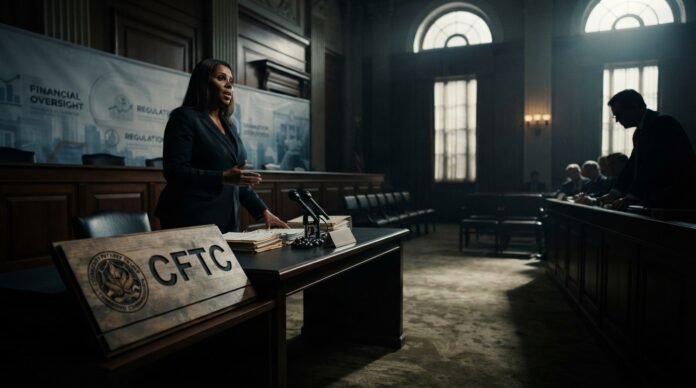
The debate over how to structure the oversight of digital assets in the United States has reached a new point of contention. written testimony submitted to the Senate Permanent Subcommittee on InvestigationsAttorney General Letitia James argued that the Digital Asset Market Clarity Act (known as the CLARITY Act) could override state regulation of digital asset markets. This legislation proposes transferring much of the oversight to the Commodity Futures Trading Commission (CFTC), a move that, according to James, would undermine enforcement efforts at the state and local levels.
In the United States, the duality between federal and state laws has always been complex. New York, in particular, has historically maintained a very strict and proactive stance on financial regulation. The potential centralization of regulatory power in a federal agency like the CFTC is causing concern among state attorneys general, who fear losing the legal tools necessary to intervene quickly when irregularities are detected in their jurisdiction. For users seeking to build their portfolios in an informed way, understanding these regulatory developments is crucial, as they define the level of protection and transparency within the ecosystem.
Increased incidents and the urgent need for greater protection
One of the central arguments presented by the New York Attorney General's office is based on data collected over the past few years. According to the report, complaints related to cryptocurrency scams received by their office have tripled in the last three years. Furthermore, reported losses by consumers amount to approximately €460 million over a five-year period.
These figures underscore the need to establish regulatory frameworks that not only foster technological innovation but also prioritize user safety. The proliferation of unaudited platforms and a lack of financial literacy have been key factors in the increase of these incidents. Therefore, it is vital to always trade through your secure and regulated exchange and stay up-to-date with the latest industry developments through specialized portals such as [insert portal name here]. Bit2Me News, where the impact of these policies on the day-to-day life of the ecosystem is analyzed.
Regulatory requirements: KYC, AML and cybersecurity
To mitigate the risks associated with the mass adoption of digital assets, Letitia James has urged Congress to impose much stricter requirements on platforms operating in the country. Among the key requirements is rigorous compliance with anti-money laundering (AML) regulations and Know Your Customer (KYC) protocols. These measures are the industry standard for ensuring that funds come from legitimate sources and for identifying malicious actors before they can operate.
Furthermore, the prosecutor emphasized the need to implement mandatory cybersecurity audits and continuous monitoring systems to detect suspicious activity and market manipulation. It is interesting to contrast this situation with the European landscape, where the MiCA Regulation already establishes a harmonized framework requiring cryptocurrency service providers to comply with strict standards of transparency, governance, and asset protection, demonstrating that comprehensive regulation is possible without leaving local consumers unprotected.
Financial responsibility and the problem of mixers
Another critical point in James' testimony is the proposal to hold platforms and intermediaries financially responsible when they fail to protect their customers from fraud. This measure aims to incentivize companies to proactively invest in robust security infrastructure, assuming a known and managed risk instead of passing the consequences of security breaches on to end users.
Along the same lines, the prosecutor urged Congress to prohibit the conversion to US dollars of cryptocurrency originating from mixers or untraceable sources. Mixers are tools designed to obscure transaction histories on the blockchain, making it extremely difficult to trace illicit funds. If you'd like to learn more about how blockchain traceability works and why regulators pay so much attention to these tools, you can explore the educational resources available at [link to resources]. Bit2Me Academy.
Ethics and conflicts of interest in regulation
Finally, the testimony addressed a matter of government ethics. James proposed prohibiting elected officials and recent former government officials from participating in the regulation of the crypto sector if they hold direct financial interests in the industry. This measure aims to ensure that public policies are designed objectively, prioritizing the general welfare and market stability over private gains.
Transparency in lawmaking is just as important as transparency within the financial platforms themselves. Avoiding conflicts of interest is an essential step in building a regulatory framework that inspires confidence in both institutional investors and retail users participating in the digital economy.
FAQ
What exactly does the CLARITY Act propose?
It is a proposed federal law in the United States that seeks to restructure the oversight of the digital asset market. Its main objective is to grant greater regulatory authority to the Commodity Futures Trading Commission (CFTC), standardizing regulations nationwide but limiting the scope of state regulators.
Why is New York opposing this federal law?
Attorney General Letitia James argues that centralizing regulation at the federal level would weaken states' ability to investigate local fraud, protect consumers quickly, and enforce their own historical regulations on money transmission and financial protection.
What security measures does New York require of the platforms?
Strict implementation of KYC and AML protocols, mandatory cybersecurity audits, monitoring against market manipulation, and a ban on trading assets from mixers that conceal the origin of funds are requested, thus ensuring a more transparent environment.
The debate surrounding the CLARITY Act underscores the ongoing tension between creating a unified federal framework and preserving state authority in the United States. As the digital asset ecosystem matures, the need for clear rules that protect users without stifling technological development becomes increasingly urgent.
While Europe is moving forward with defined and structured regulations such as the MiCA Regulation, the US market continues to seek institutional equilibrium. The resolution of this conflict will define not only the future of supervision in North America, but also the global standard for compliance and safety in the industry.
Investing in cryptoassets is not fully regulated, may not be suitable for retail investors due to high volatility and there is a risk of losing all invested amounts.