
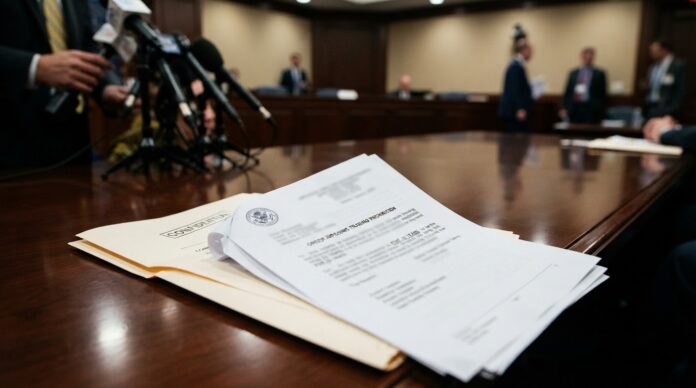
The U.S. Commodity Futures Trading Commission (CFTC) has imposed a five-year trading ban on Caroline Ellison and Gary Wang, former executives of Alameda Research and FTX. This measure settles pending civil cases following the exchange's collapse and underscores the regulatory consequences of mismanagement of funds.
The agreement with the CFTC and the sanctions imposed
After several years of litigation and complex legal proceedings, the U.S. Commodity Futures Trading Commission has issued consent orders that Caroline Ellison and Gary Wang are banned from trading in the markets for five years.This resolution ends the civil lawsuits originally filed in December 2022.
In addition to the trading restriction, Ellison faces a 10-year registration ban, while Wang's ban is set at eight years. These measures mean that neither can participate in markets regulated by the CFTC or register as operating entities under its jurisdiction during the stipulated periods. David Miller, the agency's chief enforcement officer, noted that the sanctions reflect both the seriousness of the fraud committed at Alameda and FTX and the material assistance both men provided during the investigations.
The economic impact: $12.700 billion
These individual sanctions against the former executives come shortly after a massive financial resolution affecting the corporate entities involved. In August 2024, a court ruled that FTX and Alameda must make restitution payments totaling $12.700 billion (approximately €11.600 billion) to compensate affected users.
This monumental sum aims to repay creditors following the platform's collapse. Managing and distributing this capital is a complex process that underscores the importance of using platforms with known and managed risk. To build your cryptocurrency portfolio responsibly, it's crucial to choose environments that comply with strict regulations. You can learn more about digital asset custody and security at [link to relevant website/website]. Academy.
The collapse of FTX and the role of Alameda Research
To understand the magnitude of these sanctions, it is vital to remember the relationship between FTX and Alameda Research. Alameda operated as the primary trading firm linked to the exchange, using FTX client funds to conduct high-risk trades without the users' knowledge or consent.
This lack of segregation of funds was the catalyst for the collapse in November 2022, when a liquidity crisis exposed a multi-billion dollar financial hole. The opacity with which Ellison and Wang operated under the leadership of Sam Bankman-Fried is precisely what the new global regulations seek to eradicate, requiring regular audits and clear proof of reserves.
Prior criminal consequences and cooperation
The CFTC's civil actions complement the criminal sentences already handed down by the U.S. justice system. Caroline Ellison, former CEO of Alameda Research, testified decisively against the founder of FTX. For her cooperation, she initially received a two-year prison sentence, but was granted early release in January of this year.
Gary Wang, co-founder of FTX, and Nishad Singh, former director of engineering, served their pretrial detention without additional extended sentences, thanks to their early cooperation with authorities. In contrast, Bankman-Fried was found guilty on multiple counts of fraud and sentenced to 25 years in prison, marking one of the biggest financial scandals of the decade.
The regulatory contrast: United States versus Europe
The outcome of the FTX case underscores the urgent need for robust and unified regulatory frameworks. While the United States continues to operate under a fragmented oversight system involving different agencies, the European Union has taken the lead with the MiCA Regulation.
The MiCA regulation requires crypto-asset service providers to keep client funds completely separate from corporate funds. Had this framework been in place and applied to FTX, the diversion of capital to Alameda Research would have been immediately detected by auditors. Furthermore, MiCA imposes strict corporate governance requirements, ensuring that directors are qualified to manage financial platforms. Operating in an audited and transparent environment is essential for market confidence. Stay informed about the latest regulatory changes and how they affect the ecosystem at [link to relevant website/website/etc.]. news.bit2me.com.
FAQ
What sanctions has the CFTC imposed on the former FTX executives?
The CFTC has banned Caroline Ellison and Gary Wang from trading in commodity markets for five years. In addition, Ellison has a 10-year registration ban and Wang an eight-year ban, preventing them from participating in entities regulated by the agency.
How much is the financial restitution in the FTX case?
In August 2024, FTX and Alameda were ordered to pay $12.700 billion in restitution. This amount is intended to compensate users and creditors affected by the collapse and mismanagement of funds on the platform.
Why haven't the CFTC's sanctions been more severe?
According to the commission itself, although both former executives were responsible for fraud, the sanctions reflect their substantial cooperation. Their material assistance during the investigations against Sam Bankman-Fried was key to unraveling the complex web of financial irregularities.
The CFTC's dismissal of the civil cases marks one of the final legal chapters stemming from the FTX collapse. As the crypto industry matures, clear regulations and accountability for market participants are becoming increasingly fundamental.
The evolution towards a more transparent and regulated ecosystem, driven by regulations such as MiCA in Europe, is the way forward to consolidate trust globally and ensure that users operate in protected and audited environments.
Investing in cryptoassets is not fully regulated, may not be suitable for retail investors due to high volatility and there is a risk of losing all invested amounts.
Generative artificial intelligence tools were used to create this article.