
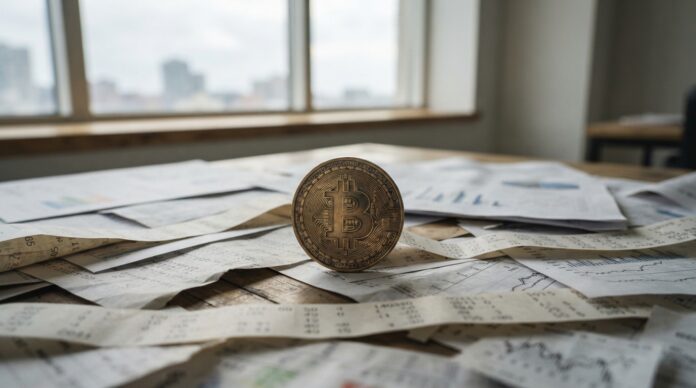
The recent surge in core inflation in the United States has created a complex macroeconomic scenario for Bitcoin. While tighter monetary policies could exert pressure in the short term, US debt dynamics present a different and potentially favorable outlook for digital assets in the long run.
The impact of inflation data on the crypto market
The current macroeconomic landscape presents a dual challenge for global financial markets. According to a recent analysis on the impact of underlying inflation in the United StatesDespite a 0,3% increase in August, the crypto ecosystem faces a contrasting scenario. This rebound, exceeding market expectations when excluding volatile items like food and energy, suggests that inflationary pressures remain latent in the US economy.
For Bitcoin (BTC), this macroeconomic data translates into a potential limitation of its short-term upward movement. Persistent inflation typically forces central banks to maintain restrictive monetary policies, reducing the liquidity available in risk markets. When the cost of living rises steadily, traditional financial institutions adjust their risk models, often resulting in less capital allocation to digital assets in the short term.
Understanding core inflation is vital because it is the preferred indicator for policymakers to measure the true trend in prices. By removing the noise from the energy and food sectors, which can fluctuate wildly due to geopolitical or climatic factors, the monthly figure of 0,3% indicates that structural inflation has not yet been fully brought under control, making imminent monetary easing less likely.
The Federal Reserve's policy and its effect on Bitcoin
The Federal Reserve's (Fed) decisions play a crucial role in the valuation of digital assets. With recent data available, financial forecasting tools, such as CME's FedWatch, indicate an 85% probability that interest rates will remain elevated or even rise after the Fed's upcoming meetings. This expectation of prolonged high rates is redefining the strategies of market participants.
Historically, Bitcoin has performed better in low-interest-rate environments, where the opportunity cost of holding assets that don't generate traditional dividends is lower and liquidity is plentiful. In the current context, analysts suggest that this tighter monetary policy could act as a temporary ceiling for BTC's price, keeping it below the $80.000 mark in the short term. If you are evaluating buy Bitcoin To build your portfolio, it is essential to understand how these macroeconomic variables influence market cycles.
High interest rates make credit more expensive, which slows economic growth and temporarily strengthens the US dollar. A strong dollar typically exerts inverse pressure on assets priced in this currency, including Bitcoin. However, this is only one side of the current macroeconomic coin.
The Treasury bond buyback program
Beyond immediate inflation, the market is paying close attention to the maneuvers of the U.S. Treasury Department. A significant expansion of the long-term bond repurchase program was recently announced, a measure championed by figures such as Treasury Secretary Scott Bessent, designed to inject liquidity and stabilize the government debt market.
However, the data suggest that this program is not achieving its primary objective of reducing long-term bond yields. In the fixed-income market, bond prices and yields move inversely. When government debt yields remain stubbornly high despite buybacks, the cost of borrowing for the government increases dramatically, creating unsustainable pressure on public finances in the long run.
This apparent ineffectiveness of the current program could force authorities to implement much more aggressive interventions in the future, what in financial jargon is known as "bazooka-style" measures. An intervention of this magnitude would involve a massive injection of liquidity into the system, significantly altering the monetary landscape and weakening the strength of the dollar.
The narrative of devaluation (Debasement Trade)
It is precisely at this point that the long-term outlook for Bitcoin becomes more complex and potentially bullish. If the US Treasury is forced to launch a massive asset purchase program to control borrowing costs, the narrative of currency devaluation, known in financial markets as the "debasement trade," would be strongly revived.
This dynamic occurs when market participants seek refuge in alternative assets due to the loss of purchasing power of traditional fiat currencies. In this scenario, both gold and Bitcoin tend to benefit from the structural weakness of the dollar. Bitcoin's programmed scarcity, with its immutable maximum supply of 21 million coins and its predictable issuance policy, positions it as an asset of great interest to those seeking to protect their value against the uncontrolled expansion of the money supply.
Unlike fiat currency, whose supply can be altered by central bank policy decisions, the Bitcoin protocol guarantees an inelastic supply. To delve deeper into these economic concepts and better understand how market cycles work, you can explore the free educational resources available at [website address]. Bit2Me Academy.
Medium-term outlook and the European regulatory framework
The combination of resilient short-term inflation and the possibility of massive intervention in the long-term bond market creates an unusual mix for Bitcoin. While immediate monetary tightening acts as a temporary brake, the potential future expansion of liquidity acts as a powerful catalyst in the medium and long term.
It is important to note that while the United States navigates these turbulent macroeconomic waters and defines its fiscal policies, in Europe the crypto ecosystem is progressing toward greater institutional maturity thanks to the implementation of the MiCA Regulation. This regulatory framework provides unprecedented clarity and legal certainty, allowing users to operate on audited, transparent platforms that comply with EU regulations.
Regulatory consolidation in the European Union contrasts with global monetary uncertainty, offering a more predictable environment for the development of the digital economy. This legal certainty is fundamental for both retail users and institutions to participate in the crypto market with known and managed risk, moving away from purely speculative volatility.
FAQ
How does inflation affect the price of Bitcoin?
In the short term, high inflation typically leads central banks to raise interest rates, reducing liquidity in the markets and potentially putting downward pressure on the price of assets like Bitcoin. However, in the long term, persistent inflation can strengthen Bitcoin's narrative as a store of value against the declining purchasing power of traditional currencies.
What is a "debasement trade"?
It's a financial strategy in which alternative assets, such as gold or Bitcoin, are acquired to protect against the depreciation of a fiat currency. This situation typically arises when governments significantly increase the money supply or public debt, which weakens the value of the local currency over time.
Why are the Federal Reserve's decisions important for the crypto market?
The US Federal Reserve determines the global cost of money through its interest rates. Low interest rates encourage investors to seek alternatives in higher-risk, higher-potential assets, benefiting the crypto market. Conversely, high interest rates make credit more expensive and strengthen the dollar, which often temporarily reduces the appeal of digital assets.
The interplay between central bank policies, inflation data, and public debt management will continue to drive global financial markets. For Bitcoin, this dual scenario underscores its unique nature as an asset that responds to both short-term liquidity conditions and long-term structural concerns about the traditional monetary system.
Understanding these macroeconomic dynamics is essential for assessing the role of crypto assets in the current economic landscape. As traditional financial institutions and regulators adapt their strategies, Bitcoin's performance will continue to be a key indicator of confidence in conventional monetary policies.
Investing in cryptoassets is not fully regulated, may not be suitable for retail investors due to high volatility and there is a risk of losing all invested amounts.
Generative artificial intelligence tools were used to create this article.