
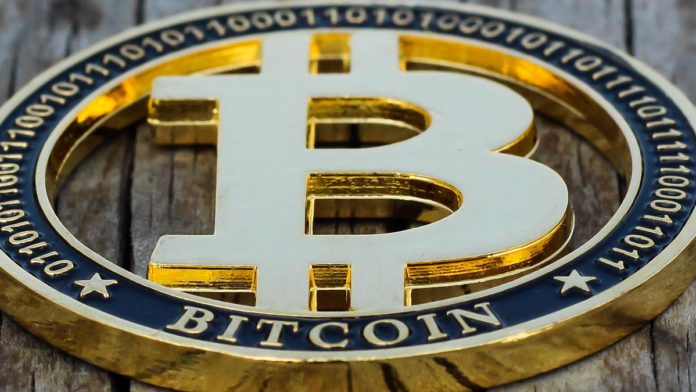
Bitcoin, the cryptocurrency that revolutionized digital finance, is designed with an internal clock that marks its destiny: a hard cap of 21 million coins. As we move into 2025, more than 90% of all bitcoins have already been mined, with the remaining supply slowly being depleted. This unique design, masterminded by its mysterious creator, Satoshi Nakamoto, is starting to spark speculation about how the end of issuance could transform the cryptocurrency market and its long-term value. What does this limit mean, and what can we expect when the clock hits zero?
The Bitcoin Limit: A Deliberate Design
When Satoshi Nakamoto launched Bitcoin in 2009, he included a fundamental rule in its code: only 21 million bitcoins will ever exist. This limit is achieved through the process of “mining,” where network participants solve mathematical problems to validate transactions and receive bitcoins as a reward. However, every four years or so, an event known as the “halving” occurs, which cuts the reward for each block mined in half. last halving took place in April 2024, leaving the reward at just 3.125 bitcoins per block, and the next one, scheduled for 2028, will reduce it even further.
This mechanism ensures that the issuance of new bitcoins becomes increasingly slower, with the last bitcoin estimated to be mined around the year 2140. However, long before then, the impact of the limit is already being felt, as the pace of creation slows and the market begins to adjust to an increasingly scarce supply.
Digital scarcity: a boost for value?
The 21 million cap makes Bitcoin a deflationary asset by design, in contrast to fiat currencies like the dollar or euro, which central banks can issue indefinitely. For many Bitcoin proponents, this scarcity is its greatest strength. As the supply of new bitcoins decreases, theory suggests that if demand remains or grows, the price should rise. This has led some to compare it to “digital gold,” a store of value in times of economic uncertainty.
Historically, halvings have coincided with significant increases in the price of Bitcoin. For example, following the 2020 halving, the value of Bitcoin skyrocketed from around $10,000 to over $60,000 in less than a year. In 2025, with over 19.6 million bitcoins already in circulation, the market is watching closely to see how the progressive reduction in supply could amplify this effect. However, not everyone is convinced that the impact will be immediate or predictable.
BUY BITCOINchallenges on the horizon
While scarcity sounds promising, the approach to the limit raises critical questions. One of the main ones is the future of miners, who underpin the security of the Bitcoin network. Currently, block rewards are their main incentive, but when these disappear (or are reduced to negligible levels), miners will rely exclusively on the transaction fees that users pay to process their transactions. If the fees are not high enough, some miners might leave the network, which could affect its security and decentralization.
Another factor is speculation. As supply contracts, investors might accumulate bitcoins, expecting a surge in value, which could lead to extreme volatility. On the other hand, if Bitcoin adoption does not grow at the same rate as its scarcity, the market could stagnate, defying the expectations of optimists.
A market in transformation
Bitcoin’s cap could also change the dynamic between the cryptocurrency and its competitors. While Ethereum and other altcoins don’t have a fixed supply, Bitcoin could establish itself as the digital asset of choice for those seeking long-term stability. However, this will depend on how its practical utility evolves. If transaction fees skyrocket, using Bitcoin for everyday payments could become unviable, relegating it to a store of value role rather than an active currency.
Moreover, the impact will not be limited to investors. Governments and regulators, who already view Bitcoin with caution, could react to a rise in its value or influence by implementing measures that affect its adoption or trading.
The clock keeps ticking
As Bitcoin’s supply nears its ceiling, the crypto market is on a countdown that no one can ignore. Although the last bitcoin will not be mined in our generation, the effects of its scarcity are already shaping the present. For some, this limit is the key to a future where Bitcoin dominates as a global asset; for others, it is a test of fire that could expose its limitations.
In 2025, with the clock ticking inexorably, one thing is certain: the Bitcoin cap is not just a technical detail, but a catalyst that could redefine the cryptocurrency market. Meanwhile, investors, miners and enthusiasts are watching closely, wondering whether the end of issuance will be the beginning of a new era or the tipping point of a bold experiment.