
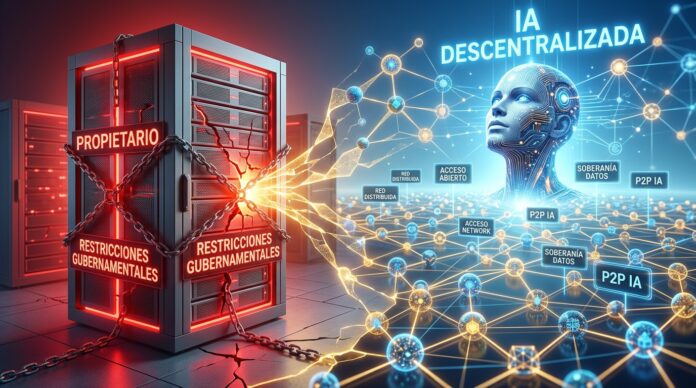
Imagine that the artificial intelligence tool you use daily is suddenly shut down by a government order. This scenario, which seems straight out of a science fiction novel, has just become a reality for users of some of the most advanced models on the market. In response, the crypto ecosystem has reacted strongly, demonstrating that decentralization is more than a philosophy: it's a necessity to ensure technological sovereignty.
Recent regulatory measures and debates surrounding Anthropic and its Claude models have raised alarm bells in the global tech community. Users and developers who relied on these centralized APIs have realized how vulnerable they are to unilateral decisions by governments and corporations. This vulnerability has led to a massive migration of attention and capital toward censorship-free alternatives.
Blockchain-based artificial intelligence projects, such as Bittensor (TAO), Fetch.ai (FET), and SingularityNET, have experienced a significant surge. These protocols offer an infrastructure where model training and computing power are distributed globally across thousands of independent nodes, making centralized censorship virtually impossible to implement.
This phenomenon demonstrates that the future of artificial intelligence may not belong to a handful of Silicon Valley tech giants, but to open and collaborative networks that guarantee democratic access to the most advanced technology of our era.
Investing in cryptoassets is not fully regulated, may not be suitable for retail investors due to high volatility and there is a risk of losing all invested amounts.
Source: The block