
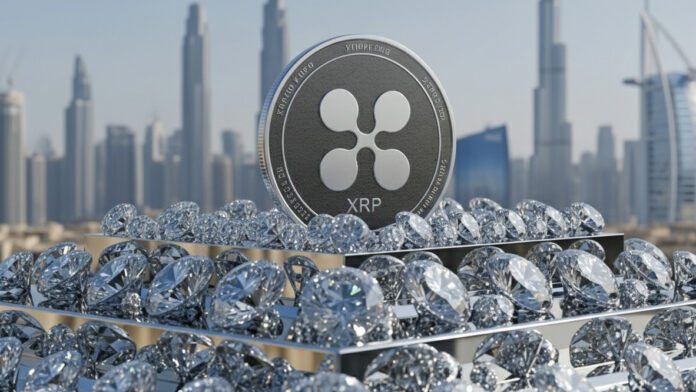
Dubai revolutionizes the luxury market by transferring $280 million worth of certified diamonds to the XRP Ledger, consolidating the tokenization of real assets (RWA) on this network.
The auction house Billiton Diamond and the technology firm Ctrl Alt have announced a historic alliance that will transfer more than $280 million worth of polished diamonds to the infrastructure of the XRP Ledger (XRPL).
The project, based in the United Arab Emirates, not only digitizes the ownership of these precious stones, but also uses Ripple's custody technology to ensure that each carat has an exact and secure reflection on the blockchain.
With over 1.000 billion dirhams already tokenized in inventoryThe initiative seeks to transform a traditionally opaque market into a flow of institutional-quality assets, allowing for verification of provenance and settlement of transactions with a speed previously unknown in the luxury commodity trade.
Ripple's infrastructure serving the luxury market
The use of the XRPL network in the tokenization of diamonds It is redefining how inventories are managed in the gem industry. The new alliance combines Billiton Diamond's trading expertise with Ripple's technological infrastructure, enabling the issuance and transfer of digital assets backed by real gemstones.
From an operational perspective, Ctrl Alt has developed a system that takes the entire process to the blockchain, integrating the Certification, traceability, and grading data for each diamond directly in XRPLWith this decentralized structure, buyers, distributors, and financial institutions can verify the history and authenticity of assets without relying on physical documentation or additional intermediaries.
According to Reece Merrick, Ripple's managing director for the Middle East and Africa, behind this technological integration there is a clear objective: to open access to a historically closed and opaque market.
The digitization of diamonds aims to transform them into liquid and verifiable instruments within a broader financial environment. However, the full expansion of this initiative still awaits final approval from the Virtual Asset Regulatory Authority of Dubai (VARA), responsible for overseeing the issuance and trading of these new tokenized assets.
Robert Farquhar, CEO of Ctrl Alt in the Middle East, explained that this development stems from the strategic agreement reached with Ripple in July 2025, which laid the foundation for an ecosystem aligned with international regulatory standards. statementsIntegrating XRPL's infrastructure into a market like diamonds has a greater purpose: to transform a traditionally inaccessible commodity into a financial asset transparent, traceable, and compatible with global compliance frameworks.

The unstoppable rise of real-world assets (RWA)
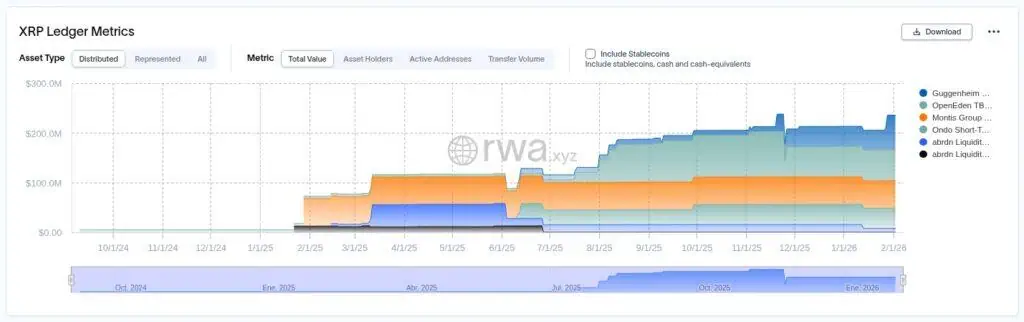
The XRP Ledger has become one of the strongest pillars in the real-world asset market. In just a couple of years, the tokenization of physical goods has gone from a laboratory experiment to one of the most profitable aspects of the blockchain ecosystemAccording to records from specialized platforms such as RWAxyz, the volume of tokenized assets operating on the Ripple network has grown significantly thanks to its operational efficiency and a clearer regulatory environment that has favored institutional adoption.
Source: RWAxyz
During 2025, the trading of digitized commodities saw a significant surge. Gold maintained its position as the base asset, but other real-world assets also began to gain prominence, driving the sector's market capitalization to growth exceeding 160%. Financial firms and companies in the real economy found in blockchain a more secure way to store and transfer value, avoiding the high costs and slowness of traditional mechanisms.
The tokenization of diamonds on the XRPL represents an evolution in how capital is mobilized. Manufacturers can now operate with greater liquidity, and investors gain access to instruments backed by tangible assets without relying on physical custody infrastructure. This model is strengthening the XRP Ledger's position as a reliable alternative in the market, supported by over a decade of uninterrupted technical performance and an architecture that facilitates token issuance and management on a global scale.
XRPL sets a new standard for commodity trading
The alliance between Billiton and Ripple sets a precedent for the future of global trade. By integrating real-time inventory tracking with tamper-proof blockchain entries, Dubai's diamond industry is positioning itself at the forefront of the digital economy.
As Merrick has highlighted, this initiative demonstrates the strength of XRPL in managing high-value physical assets across the supply chain, combining technological precision with the security required by the luxury market. By transferring immutable and verifiable data to the distributed ledger, Ripple offers an infrastructure that can transform how goods are traded and held globally.