
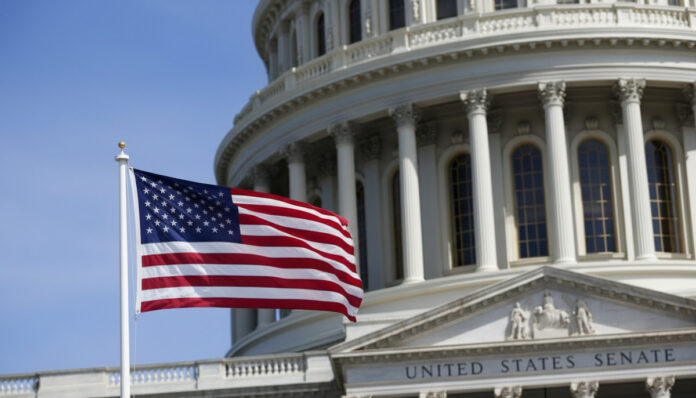
The United States Senate continues its search for consensus to unblock the Clarity Act after months of negotiation between the banking and cryptocurrency industries.
Senator Angela Alsobrooks presented a pragmatic stance this week to the American Bankers Association in Washington, DC, noting that resolving the conflict over the regulation of cryptocurrencies and stablecoins will require concessions from all sectors involved.
The core of the dispute, as this media outlet has reported, centers on the ability of stablecoin issuers to offer rewards and returns to their users, a practice that traditional banks perceive as a direct threat to their deposit base.
According to the legislator, the current objective is to establish safeguards that allow for the growth of technological innovation without incentivizing a massive shift of capital from community banking to digital assets. This mediation process, which includes the participation of the White House and legislators such as Thom Tillis, seeks to strengthen the current framework of the GENIUS Act with clearer and more comprehensive regulations that balance digital market competition with the financial stability of the traditional system.
Trade stablecoins on Bti2MeThe conflict over the performance of digital assets remains unresolved.
The biggest sticking point in the Clarity Act's architecture is the possibility of crypto companies offering financial incentives for holding stablecoins. According to reports from the American Bankers Association (ABA), local financial institutions are expressing persistent concern about the potential "deposit flight" this could trigger. In other words, bankers fear the movement of funds from bank savings accounts to digital wallets that offer more competitive returns.
Naomi Camper, policy director at the ABA, emphasized that community banks are especially vulnerable to this liquidity migration. Alsobrooks, for his part, suggested that the draft legislation includes a technical distinction: allowing rewards based on specific activities but restricting interest payments on idle balances. This differentiation aims to mitigate the risk of stablecoins becoming direct competitors or substitutes for traditional, supervised bank deposits.
But from the tech sector, the perception remains different. Patrick Witt, executive director of the White House Crypto Council, questioned the urgency of these concerns. According to Witt's observations this month, the crypto industry has offered these kinds of incentives for years without a liquidity crisis in commercial banking. For proponents of the digital ecosystem, the deposit flight argument stems more from a fear of new competition than from a proven systemic risk.
Access regulated stablecoins hereWashington accelerates debate on the legal framework for digital assets
After nine months of talks mediated by the Executive branch, the responsibility for finalizing the bill in question has returned to the legislative chambers. Journalist Eleanor Terrett, host of Crypto in America, underlines Senators Alsobrooks and Tillis have begun to intensify their meetings with stakeholders from both the banking and crypto sectors to refine the technical drafts of the law.
According to Terrett, Tillis's press representative confirmed that dialogue with stakeholders continues in order to reach a compromise that is acceptable to the Senate Banking Committee.
The urgency to pass the Clarity Act stems from the legal vacuum that, according to legislators, exists in current regulations. However, the new bill aims to introduce a market structure that clearly defines which entities can issue digital assets and under what reserve requirements. The central idea of this regulatory text is to build a transparent framework that provides legal certainty to both traditional institutions and protocols and projects that operate with blockchain technology.
Trade cryptocurrencies on Bit2MeThe Clarity Act faces its decisive moment in Congress
The timeline for the Clarity Act vote remains uncertain, although the pressure to establish a regulatory framework before the end of the legislative session is evident. Industry analysts point out that any prolonged delay could perpetuate the legal uncertainty affecting both investors and traditional financial institutions.
One of the points that generates the most consensus is the need for regulations that provide certainty about the nature of stablecoins. While the banking sector demands that they be treated under standards similar to deposit products, the crypto industry advocates for rules that recognize the technological particularities of the blockchain. Alsobrooks has reiterated that "perfection should not be the enemy of good," suggesting that The final text will probably not fully satisfy either side.but it will provide the necessary order for the industry.
How this clash of positions is resolved will shape the legal framework for digital assets in the country for years to come. If the Banking Committee reaches a consensus on the key provisions, the Clarity Act could move forward to a vote and pave the way for a future where traditional finance and digital technology begin to coexist more harmoniously.
But for now, the debate continues to focus on the technical aspects of stablecoins and how to guarantee the liquidity of the financial system without hindering innovation.
Create your account and enter the crypto market