
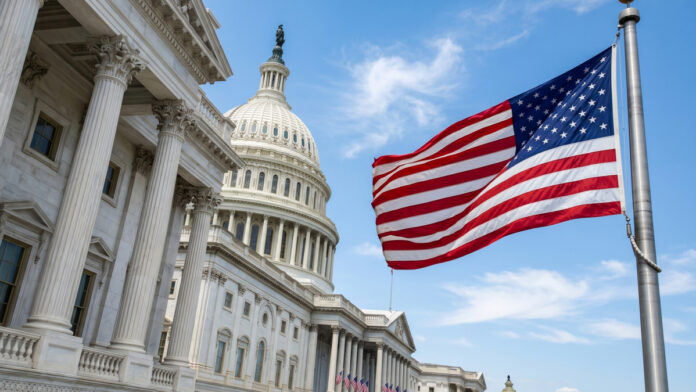
The CLARITY Act faces a new hurdle in the Senate following Senator Thom Tillis's request for a delay. We analyze how banking pressure and internal divisions could push the vote back to the end of the second quarter of 2026.
The progress of the Digital Asset Clarity Act —known as CLARITY Act o Clarity Act— in the United States Senate, a new sticking point has emerged that threatens to delay the legislative calendar scheduled for this quarter. The senator Thom Tillis has requested the leadership of the Banking Committee to postpone the amendment session for the regulatory project until next may.
Tillis's request comes at a time of high tension, where the expectations of the crypto industry clash head-on with the interests of the traditional banking sector, especially regarding the treatment of returns derived from stablecoins.
Tillis, one of the key negotiators in the stablecoin performance compromise, is yielding to an intensified pressure campaign by lobbying groups such as the North Carolina Bankers AssociationThese stakeholders have expressed their concern regarding the details of a preliminary agreement reached in early April between companies in the crypto ecosystem and financial institutions.
Although the new draft of the bill has not been made public, the banking sector fears that the proposed structure will encourage a flight of deposits to more competitive digital instruments, leading Tillis to argue that it is necessary to "give a rational basis" to the decisions that will be made before proceeding with the vote.
Trade cryptocurrencies on Bit2MeThe conflict over stablecoin yields continues
Although White House crypto asset advisor Patrick Witt had reported days ago that an agreement between the banking and crypto industry was practically finalized, and that legislation was progressing well, it seems that the situation has taken a different turn.
The discussion has once again focused on the performance of stablecoins, a specific point that has kept the bill's progress on hold for the past few months; in addition, recent events such as the exploit to the KelpDAO protocolThey have added uncertainty and concerns about morality and ethics in the market, issues that are also addressed by the regulation in question.
From the White House, the Council of Economic Advisers recently released a report suggesting that banning stablecoin lending would have a minimal impact on the banking system. The estimate barely touches a fraction of total lending, indicating that the effect would be virtually imperceptible. Even so, financial institutions remain cautious, driven by concerns about losing ground to more agile and efficient digital alternatives.
Likewise, current reports, Like the ones of Crypto in America And its host, Eleanor Terrett, indicate that the tension is also visible within the political sphere itself. In the Banking Committee, Republican figures are displaying divergent positions. Senator Cynthia lummis She has been one of the strongest voices in demanding progress on the CLARITY Act, considering that prolonging the debate weakens the United States' position against other jurisdictions that have already defined clear rules for this growing industry.
Senator Lummis warned that seeking a "perfect bill" It is a futile strategy that only succeeds in closing the legislative window of opportunity before the midterm election cycle consumes the congressional agenda.
Thus, as the legislative calendar progresses, pressure grows to finalize decisions that will define the future of the digital financial ecosystem in the country.
New signals from the Fed reshape the debate on digital payments
While the debate on the CLARITY Act continues in the Senate, the confirmation hearing of Kevin Warsh As the incoming Federal Reserve chairman, Warsh is adding unexpected twists to the regulatory landscape. Warsh, who previously championed the need for a wholesale CBDC, now states clearly that he will not push for the development of a digital dollar, arguing that this could be a bad policy move and that it is not the agency's role to do so. Meanwhile, he said he is evaluating fintech companies' access to the Fed's payment systems, such as fednow y FedACH.
Right now, the House of Representatives is also pushing the Access to Payments and Consumer Efficiency Act, known as PACE ActA bipartisan project that seeks to allow digital payment providers, such as technology and cryptocurrency companies, to join the Fed's infrastructure. All of this reveals that Congress is not only evaluating stablecoins as a means of payment, but also wants to redefine the foundation of the United States' financial system.
Even so, the delay weighs heavily on the crypto industry. The Senate Committee, led by Tim Scott South Carolina has not set a date to review the CLARITY Act, so industry organizations are denouncing this delay, noting that more than 270 days have passed since its approval in the lower house, and that all of this is hindering the progress of innovation in digital payments and finance.
Enter the crypto market: create your accountWhat to expect from the May legislative window?
If the Banking Committee follows Tillis's recommendation, the earliest date to resume debate on the CLARITY Act would be week of May 11Once the Senate recess ends. However, for the crypto industry, every day that passes without progress makes it more difficult for the bill to reach the president's signature before the end of 2026.
Investors and analysts are now wondering if another round of consultations with the banks is really necessary to resolve technical issues that have already been analyzed in recent months.
Based on this, the regulatory landscape for the coming month is shaping up to be a new battleground between the urgency of Web3 proponents and the caution of a banking sector seeking to protect its dominance over retail deposits. Meanwhile, market participants are watching with skepticism as legislation that enjoyed broad bipartisan support in the House stalls in the Senate, leaving open the question of whether the United States will be able to establish clear rules of engagement before capital seeks refuge in markets with greater legal clarity.
 Certificate
Main Cryptocurrencies Course
Basic levelBit2Me Academy brings you a new course in which you will learn everything you need about the most important cryptocurrencies that exist today.