

The drop in Bitcoin's hash rate has taken with it the price of the cryptocurrency, which fell to $53.300 on Wednesday, while commission fees for transactions on the network rose to more than $58 on average.
El hash rate of the network Bitcoin (BTC) continues to be affected by power outages in China, which are forcing large mining pools to disconnect some of their equipment, which in turn is causing network congestion at a time of high demand, and driving up average transaction fees, which rose to a new high on Wednesday.
As various industry data providers show, Bitcoin (BTC) transaction fees reached an average of $59,8 on Wednesday. This figure marks a new record for fees within this blockchain, whose highest peak was previously seen in December 2017, when the cryptocurrency boom pushed fees up to an average of $49.
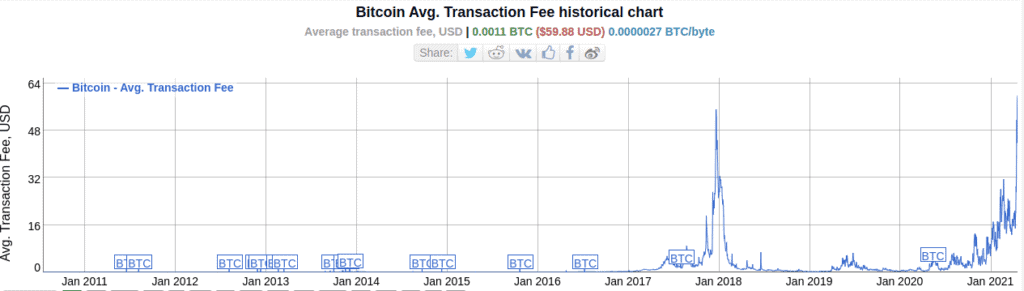
Source: BitInfoCharts
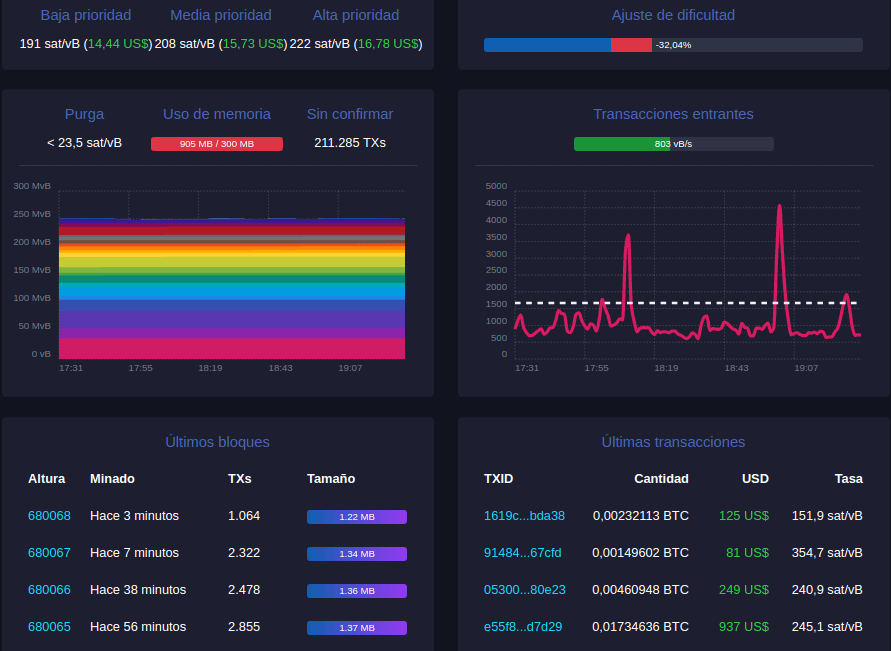
The current high demand for Bitcoin, and the slowdown in the mining and block generation process on the network, is causing congestion, and causing users to pay higher fees to see their transactions confirmed as quickly as possible within the blockchain.
En Mempool Space It can be seen that blocks are taking up to 30 minutes to be confirmed. Even a user on Twitter He showed that some blocks have taken up to 1 hour on the network. Each Bitcoin block is processing between 1.300 and 2.500 transactions, depending on its size in MB, while more than 212.000 transactions are waiting unconfirmed on the network.
It may interest you: Bitcoin Hash Rate Hits New High, Miners Earn Over $58 Million a Day
Hash rate drops to 140 EH/s
After celebrating a record high in its hash rate, above 200 EH/s a few days ago, the Bitcoin network saw its computing power fall to 143 EH/s, according to data shown by Blockchain.com.
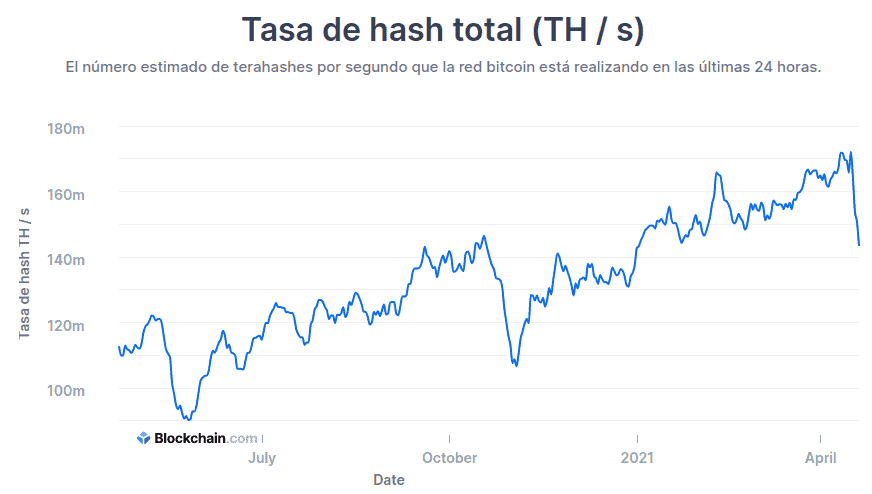
Source: Blockchain.com
Just like reported According to Bit2Me News, BTC mining or computing power grew to 200 EH/s last weekend. Some providers even showed BTC computing power above 210 EH/s. However, power outages in the Xinjiang region of China, due to safety inspections at coal mines after a series of accidents, have affected the mining operations of some of the largest mining pools on the network, such as Poolin, AntPool, Binance Pool, F2Pool and 1THash, which saw reductions in their mining power between 20% and 69%.
This has caused the network hash rate to drop by 28,5% to 143 EH/s at the time of writing.
Affected miners are expected to be able to reconnect to the network next week, although some, such as F2Pool, have declared not knowing when their teams will be operational in Bitcoin again.
BTC price also falls
Although the drop in Bitcoin's price was not caused solely by the drop in its hash rate, it did have a direct effect on the price of BTC, which is currently in a bearish short-term trend. This effect was previously seen in November 2017, when a drop in the network's hash rate brought the price of BTC below $6.000 at the time.
Bitcoin miners' profits are increasing raising with the new commission rates, and it seems that they are going to exceed 60 million dollars in daily earnings, including block rewards. Despite the increase, the income from commission fees does not exceed 12% of the total earnings of miners on this network, contrary to what happens in Ethereum, where earnings from commission fees represent more than XNUMX% of the total earnings of miners on this network. 46 % of the miners' monthly income.
At press time, BTC is trading at $54.050, and its market cap has remained above $1 trillion for more than 30 consecutive days.
Continue reading: Bitcoin an important tool for alternative investment, says China's PboC