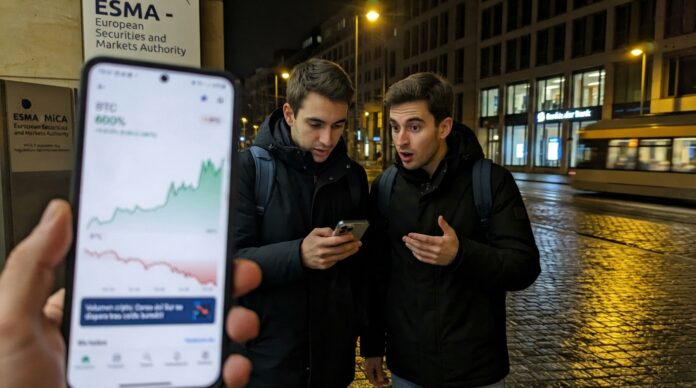
Cryptocurrency trading volume in South Korea has surged in recent days. This spike coincides with a sharp decline in the country's stock market, prompting many users to seek alternatives and new opportunities within the crypto ecosystem in the face of traditional financial volatility.
The impact of the KOSPI drop on the crypto market
During the last week of July, the South Korean financial market faced a highly volatile scenario. The KOSPI stock index registered significant declines, losing almost 18% of its value in a short period. Amid this downturn, driven primarily by a massive sell-off of semiconductor and technology stocks, the Asian country's exchanges reported a 600% increase in crypto trading volume.
This dramatic capital movement suggests that market participants sought refuge or attempted to capitalize on the decline in traditional stocks. According to the data analyzed, much of this capital flow went toward crypto assets, demonstrating once again the interconnectedness between traditional finance and the digital ecosystem. The agility to transfer value has been crucial for those looking to build their portfolios in times of uncertainty.
The cooling of the artificial intelligence and semiconductor sector
To understand the magnitude of this shift toward the crypto ecosystem, it's essential to analyze what triggered the KOSPI's decline. For much of the year, stocks related to artificial intelligence (AI) and semiconductor manufacturing experienced a remarkable boom. However, as growth expectations adjusted to economic reality, the traditional market suffered a severe correction.
This cooling in the traditional technology sector caused capital to rotate rapidly. Market participants, who had previously invested heavily in AI, began liquidating their positions. It is at this turning point that cryptocurrencies demonstrated their usefulness as an alternative way to store value and seek new opportunities, moving away from overexposure to a single industry sector.
The role of liquidity and stablecoin pairs
One of the clearest indicators of this trend reversal was observed in trading pairs involving the local currency, the South Korean won (KRW), and Tether (USDT). Records show that trading volume jumped from a mere 20 million USDT on July 25 to nearly 140 million USDT by July 29. This exponential surge reflects the need for immediate liquidity among Asian users.
It's important to highlight the regulatory contrast when analyzing this global news. While in South Korea trading volume flows freely across USDT pairs, in Europe the ecosystem is progressing toward institutional maturity thanks to the MiCA Regulation. This regulation requires asset-backed tokens to meet high standards of transparency. For you, as a user in Europe, this means operating in an environment with clear rules, where technological innovation is balanced with consumer protection on your secure exchange.
Bitcoin demonstrates resilience in the face of macroeconomic uncertainty
While the South Korean stock market and global technology stocks suffered setbacks, Bitcoin It showed remarkable resilience. Recent analyses highlight that the price of BTC has remained virtually unchanged since semiconductor stocks peaked in late June. This lack of contagion has surprised many traditional analysts.
Reports from digital asset managers highlight Bitcoin's superior performance compared to large-cap US stocks, known as the "Magnificent Seven." This resilience is especially relevant given the tightening of financial conditions globally. In this context, Bitcoin acts as a macroeconomic barometer, suggesting that the crypto market has its own dynamics that don't always mirror the declines on Wall Street or the KOSPI.
What does this tell us about the future of monetary policies?
The behavior of cryptocurrencies during this stock market downturn could be anticipating future moves by central banks. Despite the rise in inflation in certain regions and the short-term possibility of interest rate hikes, Bitcoin's resilience suggests that the market may be pricing in an eventual easing of monetary policy. Users who decide to add digital assets to their portfolios often do so by evaluating these long-term scenarios.
Understanding these economic cycles is vital for anyone interested in the ecosystem. Through educational resources such as Bit2Me AcademyYou can delve deeper into how central bank decisions impact both fiat money and the adoption of blockchain technology globally.
FAQ
Why did crypto trading volume increase in South Korea?
Crypto trading volume surged 600% in direct response to a nearly 18% drop in the KOSPI stock index. Users shifted their capital from traditional stocks, particularly in the technology sector, into cryptocurrencies in search of new opportunities and liquidity.
What is the relationship between the stock market and crypto assets?
Although they often operate independently, during periods of high macroeconomic volatility, capital flows can shift from one market to another. In this case, the stock market decline boosted crypto activity, demonstrating that digital assets are seen as a viable alternative by many market participants.
How does the MiCA Regulation affect stablecoins in Europe?
The MiCA Regulation establishes a strict regulatory framework for the issuance and trading of stablecoins in the European Union. Unlike Asian markets where assets such as USDT circulate without these restrictions, in Europe, asset-backed tokens are required to meet high standards of transparency and auditing to protect users.
Why is it said that Bitcoin showed resilience?
Despite the sharp declines in the semiconductor and technology sectors globally since the end of June, Bitcoin's price has remained stable. This ability to avoid being swept away by traditional stock market panics highlights its maturity and its uncorrelated behavior in certain macroeconomic scenarios.
Recent market activity in South Korea underscores how cryptocurrencies continue to solidify their position as a robust alternative to the volatility of traditional finance. The rapid movement of capital from equities into the digital ecosystem reflects a growing maturity in how users manage their exposure to global markets with known and managed risk.
As the macroeconomic landscape evolves, with potential changes in monetary policy and clearer regulations like MiCA in Europe, the crypto sector's ability to adapt will be crucial. Observing these international flows allows us to better understand the trends that will define the future of financial value and technology.
Investing in cryptoassets is not fully regulated, may not be suitable for retail investors due to high volatility and there is a risk of losing all invested amounts.