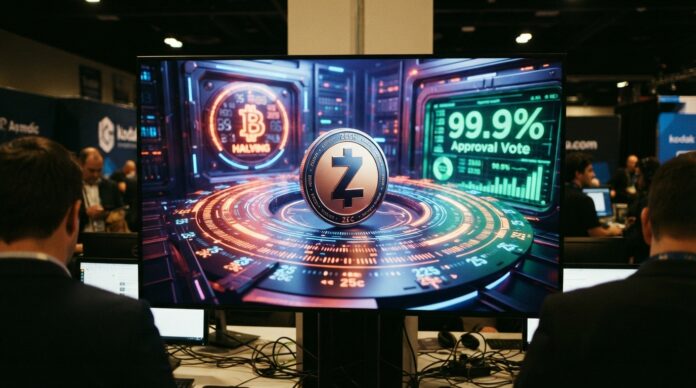
The Zcash (ZEC) community has overwhelmingly supported the next major upgrade to its network, known as NU7. With record-breaking participation, users have voted to accelerate block times and maintain the reward reduction schedule, marking a milestone in the project's decentralized governance.
A massive endorsement of the NU7 update
In a recent governance vote, Nearly 2,4 million ZECs participated in defining the future of the networkThis figure represents approximately two-thirds of the 3,6 million eligible tokens at the time of data capture. The level of consensus has been remarkable, far exceeding the minimum of 1 million ZEC required by the organizers to validate the representative process.
Faster transactions: 25-second blocks
One of the most notable changes from this consultation is the reduction in block time. An overwhelming 99,9% of participating tokens voted in favor of reducing the block time from the current 75 seconds to just 25 seconds. In the crypto ecosystem, a shorter time between blocks translates to faster payment confirmations for users, improving network efficiency. If you want to fully understand how block validation works, you can explore the free resources at [website/platform name]. Bit2Me Academy.
Zcash's halving remains unchanged
Besides speed, monetary policy was a central issue in the vote. 98,9% of the votes supported keeping the current halving system, which is very similar to Bitcoin's. This means that the reward in new ZEC that miners receive for securing the network will continue to be halved at fixed intervals, rather than gradually decreasing. This mechanism is crucial for controlling the asset's issuance and inflation in the long term.
Private voting via Ironwood
The system used for this survey is notable for its focus on privacy. Only ZEC stored in Ironwood, Zcash's newest private transaction pool, could be used to cast votes. Votes were encrypted and divided into 16 fragments before being tallied. This allowed participants to use their actual economic power without publicly revealing their balance or identity—a significant improvement over previous surveys that barely reached 7,25% participation.
The crypto ecosystem and the MiCA Regulation
It's important to understand that Zcash is a privacy-focused cryptocurrency. Under the European Union's MiCA regulations, assets that obscure transaction histories face strict regulatory scrutiny, limiting their availability on regulated platforms. Staying informed about these regulations is essential when building your portfolio on your secure exchange. For the latest industry and regulatory developments, you can continue reading at [link to relevant information]. Bit2Me News.
FAQ
What is the Zcash NU7 update?
The NU7 upgrade is the next major technical improvement to the Zcash network. Its main objective is to optimize protocol performance, reducing block confirmation time to 25 seconds and adjusting key governance and long-term sustainability parameters.
How does the halving work in Zcash?
Similar to Bitcoin, the Zcash halving is a scheduled event that halves the amount of new ZEC tokens miners receive as a reward for validating blocks. This occurs at fixed intervals to limit the total supply of the cryptocurrency.
Why was the Zcash vote private?
The voting process utilized the private Ironwood pool to ensure users could participate with their actual voting power without publicly exposing their balances or identities. Votes were encrypted and fragmented, demonstrating the network's technological capabilities in terms of privacy.
The Zcash community's resounding decision reflects a clear consensus on the project's technical and economic direction. By prioritizing transaction speed and maintaining a predictable issuance model, the network seeks to solidify its value proposition in the technology sector.
As the blockchain ecosystem evolves, the ability to coordinate complex updates through decentralized and private governance sets an interesting precedent. The successful implementation of NU7 will be the next major challenge for developers and users of this network.
Investing in cryptoassets is not fully regulated, may not be suitable for retail investors due to high volatility and there is a risk of losing all invested amounts.
Generative artificial intelligence tools were used to create this article.