
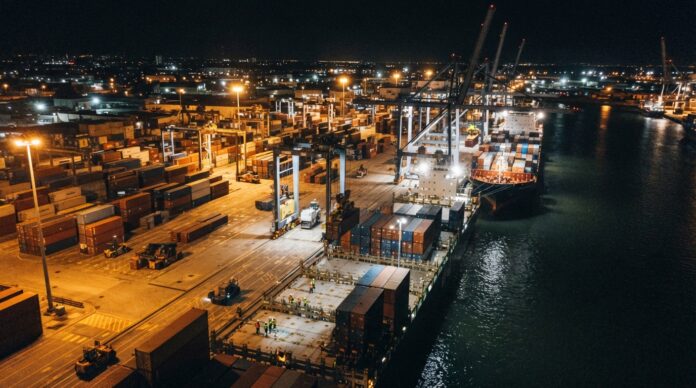
Real-world asset tokenization (RWA) continues its expansion into new sectors. The Shipfinex and ADI Chain platforms have agreed to prepare the infrastructure to tokenize a fleet of 35 commercial vessels, valued at approximately €455 million, opening new avenues for financing in the maritime industry.
The agreement to digitize the maritime fleet
The blockchain ecosystem is taking a new step in integrating the traditional economy. According to project details, Shipfinex and ADI Chain are preparing to tokenize 35 vessels through the creation of special purpose vehicles (SPVs). This structure will allow the issued tokens to represent economic rights, such as freight-linked revenues or loans backed by the ships themselves.
Infrastructure and chain settlement
To carry out this operation, Abu Dhabi-based ADI Chain will provide the settlement and distribution network. Primary allocations will be made using stablecoins linked to fiat currencies such as the UAE dirham or the US dollar. It is important to remember that, under the MiCA Regulation In Europe, the use and trading of certain stablecoins is subject to strict regulations to protect users and ensure market transparency.
The potential of the shipping sector
Although the figure of €455 million is significant, it represents a tiny fraction of the global shipping market. At the beginning of 2026, the global fleet and its order book were valued at an estimated €1,9 trillion. The Shipfinex initiative is currently in the pilot phase, finalizing regulatory details before any public offering of these maritime assets.
The unstoppable growth of RWAs
The digitization of physical assets is one of the strongest narratives in today's crypto ecosystem. Recent data places the value of tokenized real-world assets (RWAs) at over €34.600 billion, primarily driven by US Treasury debt and commodities. Financial institutions project that this market could reach €3,6 trillion by the end of 2028. If you want to explore more about this ecosystem, you can access Bit2Me Academy to understand how blockchain technology is transforming traditional finance.
FAQ
¿Qué es la tokenización de activos del mundo real (RWA)?
RWA tokenization involves digitally representing a traditional physical or financial asset on a blockchain network. This allows for the fragmentation of ownership, facilitates transfer, and increases liquidity in markets that have historically been difficult to access.
What role does ADI Chain play in this project?
ADI Chain acts as the technology infrastructure provider. Its blockchain network manages the distribution and settlement of tokens representing the economic rights of the vessels, using stablecoins for transactions.
Are these maritime tokens already available?
No, the project between Shipfinex and ADI Chain is in the pilot and operational readiness phase. They are currently defining the regulated issuance path, so no public offering of these tokens has yet taken place.
The convergence between the maritime industry and blockchain technology demonstrates how crypto assets can bring efficiency to traditional sectors. As tokenization matures and adapts to clear regulatory frameworks, we are likely to see more industries exploring the digitization of their physical assets.
The development of solid and transparent infrastructure will be key to consolidating institutional trust in these new financing models, marking a turning point in the management of the global supply chain.
Investing in cryptoassets is not fully regulated, may not be suitable for retail investors due to high volatility and there is a risk of losing all invested amounts.
Generative artificial intelligence tools were used to create this article.