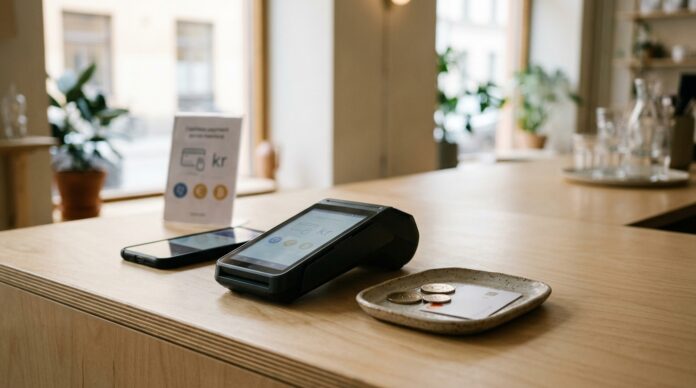
Sweden's Riksbank has asked the national parliament to immediately begin legislative work on a potential digital krona. The bank warns that the technical and regulatory implementation will require at least five years, in a context marked by the acceleration of the digital euro in Europe and the expansion of stablecoins pegged to foreign currencies.
This step represents a strategic shift after years of thoughtful analysis, motivated by the need to preserve monetary sovereignty and the competitiveness of national payment systems in the face of global financial transformation.
The Riksbank and the regulatory urgency of a CBDC
The central bank of Sweden, through a formal communication sent to the Parliament's Finance Committee, has requested Prepare legislation for a possible digital crownThis initiative comes three years after a government commission concluded there was no urgent need to launch a central bank digital currency (CBDC). However, the Scandinavian regulator believes the international monetary environment has changed substantially and requires immediate legal anticipation.
The monetary authority emphasizes that the technical implementation of a CBDC would take a minimum of five years, a calculation that excludes the time needed to debate and approve the necessary legal reforms. Therefore, the central bank argues that the regulatory foundations must be laid now, regardless of whether the government ultimately decides to proceed with the issuance or reject it. Sweden thus positions itself among the most proactive European economies in structuring next-generation payment frameworks, coordinating its steps with the standards being developed at the EU level.
The competitive pressure of the digital euro
One of the key catalysts for reviving the digital krona project is the progress of the European Central Bank (ECB). The eurozone authority plans to implement its digital euro pilot phase by 2027, with an official public launch anticipated in 2029. For Sweden, which is part of the European Union but maintains its own sovereign fiat currency, this timeline presents a challenge in terms of integration and technological balance.
The Riksbank warns that Sweden's payments infrastructure could experience a relative loss of competitiveness if businesses and consumers do not have access to a digital public asset similar to those circulating in euro area countries. Given the rapid digitization of cross-border trade within the single market, the lack of a native digital version of the Swedish krona could incentivize the use of foreign infrastructures for everyday transactions. Those wishing to delve deeper into the technical underpinnings of these architectures can find more information at [link to relevant website/website]. Bit2Me Academy, where the operational differences between bank money, programmable assets and wholesale settlement systems are detailed.
The influence of foreign stablecoins and MiCA
Beyond institutional CBDCs, the Swedish central bank has expressed its attention to the proliferation of stablecoins pegged to foreign currencies, particularly the US dollar. While the bank believes the short-term risk to the domestic economy remains limited, it warns of long-term structural implications if these private assets gain widespread adoption as a regular means of payment within Sweden.
In its analysis, the regulator warns that a continued preference for foreign stablecoins could erode domestic demand for the Swedish krona, weakening the effectiveness of national monetary policy. At the EU level, the MiCA Regulation defines strict parameters for transparency, reserve backing, and issuance under electronic money institution (EMI) licenses to safeguard payment stability. Currently, users looking to build their portfolios with established digital assets such as Bitcoin Tokenized currencies rely on platforms that operate under MiCA compliance to mitigate unregulated counterparty risks.
Payment infrastructures and monetary sovereignty
Sweden is one of the most cashless societies in the world. Less than 10% of retail transactions in the country are now carried out with physical banknotes or coins, having ceded almost exclusive prominence to bank cards and private instant payment platforms. This near-total transition to digital has generated a debate about operational resilience and dependence on private retail networks.
The implementation of a digital crown would allow the central bank to maintain an anchor of public money accessible to all citizens, guaranteeing the continuity of transactions in the face of potential technical or geopolitical contingencies. The initiative seeks to ensure that money issued directly by the state remains accessible to the general public in the digital age, preventing the ecosystem from depending exclusively on commercial banking processors. Several analyses published in news.bit2me.com They agree that the sovereignty of central banks will depend on their agility in coexisting with decentralized financial models and new tokenized standards.
FAQ
Why is Sweden resuming the digital crown project?
The Riksbank has revived the initiative due to the progress of the digital euro project promoted by the ECB and the sustained increase in the global use of foreign stablecoins, factors that could affect the competitiveness and sovereignty of the Swedish payments system.
When will the Swedish digital krona enter circulation?
The central bank estimates that technological development and integration will take at least five years once the legal framework is established. Therefore, any potential issuance would not materialize before the 2030s, and would always be subject to final parliamentary approval.
What differentiates the digital crown from a stablecoin?
The digital crown would be direct public money issued and legally backed by the national central bank, with no credit risk. Stablecoins are assets issued by private entities that replicate the value of a fiat currency through reserves under the MiCA regulatory framework.
The Riksbank's initiative confirms that the race for institutional monetary digitization in Europe is accelerating. Central banks are adapting their roadmaps to respond in a coordinated manner to the emergence of new settlement alternatives, establishing technical and regulatory frameworks designed to coexist with financial innovation.
Investing in cryptoassets is not fully regulated, may not be suitable for retail investors due to high volatility and there is a risk of losing all invested amounts.
Generative artificial intelligence tools were used to create this article.