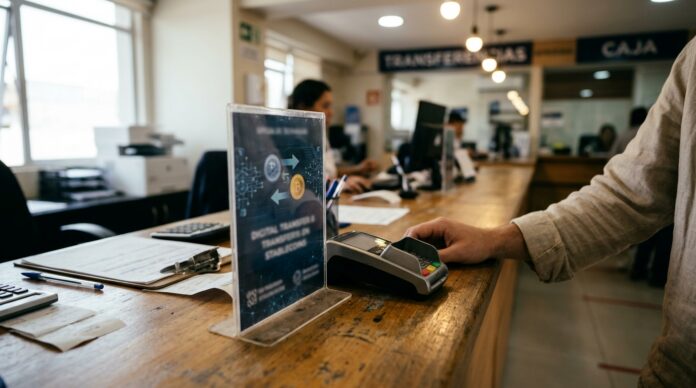
Stablecurrency-adjusted transfers reached $891.000 billion during the third quarter of 2026, quadrupling the activity recorded at the beginning of 2023. This acceleration in transactional use coexists with a market capitalization that remains stable at around $301.420 billion.
The surge in stablecoin transactions reflects a structural shift in international and corporate payments, driven primarily by financial institutions and corporate initiatives seeking instant settlements outside of traditional channels.
Uninterrupted settlements and cross-border payments
The rate at which these digital assets circulate marks a significant operational shift for the connected economy. According to a study by The Block Research, Stablecoins moved more than $400 million per hour in adjusted transfer volume during the third quarter of 2026. This continuous flow highlights the need for settlement tools available 24 hours a day.
One of the report's most striking findings reveals that 73% of the volume examined was processed entirely outside of regular US banking hours, encompassing nights, weekends, and holidays. In a globalized financial system where supply chains operate continuously, relying on rigid clearing windows creates liquidity frictions that blockchain networks help mitigate.
The analysis highlights that business-to-business (B2B) payments infrastructure has been one of the most active drivers of this growth, registering a 36% year-over-year increase in its processed volume. You can explore more about how these decentralized infrastructures work at Bit2Me Academy, where the technical architecture of digital monetary networks is analyzed.
Traditional banks are accelerating their trials with programmable money.
The institutional adoption of this technology is no longer limited to theoretical phases. According to the report, seven of the ten largest commercial banks in the United States have conducted trials with stablecoins or tokenized deposits to optimize their internal settlement processes. These institutions seek to reduce the costs associated with interbank routing and shorten fund confirmation times.
In the mid-sized corporate segment, interest shows a similar upward trend. Thirty percent of medium-sized companies with cross-border activity use or are running pilot projects with stablecoins, compared to a modest 10% in 2024. For international treasuries, the ability to transfer value without relying on multiple correspondent banks represents a significant improvement in working capital management.
The number of holders also indicates an expanding base. The research identified 293 million addresses on public networks holding stablecoins, a figure that exceeds the cumulative number of cards issued by traditional carriers like American Express and Discover combined. However, analysts point out that a network address does not strictly equate to a single, individual user, due to multi-signature management and intermediary wallets.
Macroeconomic impact and liquidity challenges
The progressive integration of tokenized fiat assets presents transformative scenarios for international trade. The report projects that migrating 80% of international transactions to stablecoin networks could contribute up to $155.000 billion annually to global GDP. Furthermore, this shift would release approximately $3 trillion in buffer liquidity currently held by banks in correspondent accounts.
However, these quantitative models rely on hypothetical efficiency projections. The report warns that widespread, unsupervised adoption could erode banks' conventional deposit base, potentially reducing their capacity to grant commercial loans and offsetting some of the benefits derived from lower fees and faster payments.
In this respect, the convergence between traditional finance and distributed ledgers requires clear and reliable frameworks. In the European market, the MiCA Regulation provides a harmonized environment for service providers operating with electronic money tokens (EMTs) and asset-linked tokens (ARTs), guaranteeing strict reserve standards and direct protection for depositors.
Citizen demand for banking integration
Alongside the transactional data, a survey conducted by the National Cryptocurrency Association shows that 42% of adults in the United States —approximately 112 million people— would be more willing to open an account with an entity that offers integrated crypto services, or to concentrate a larger portion of their usual asset management operations in it.
Within this surveyed group, 18% explicitly expressed a desire to acquire or use stablecoins through their primary bank. However, a significant information gap exists: 64% of participants indicated that their financial manager or advisor has never addressed the topic of cryptocurrencies, while 43% are completely unaware of whether their bank offers technical capabilities or services related to this sector.
The combination of users' appetite for more agile solutions and the need for rigorous oversight underscores the importance of transparent environments. Users seeking to optimize their operations can learn more about tools such as our analytics portal to follow the regulatory evolution and innovations of digital money.
Disparity between operating volume and market capitalization
Despite record-breaking usage and volume metrics, the aggregate market capitalization of the stablecoin sector has remained relatively flat. According to DefiLlama's figures, the sector's total valuation stood at $301.420 billion, reflecting a slight decrease of 0,6% compared to the $303.140 billion recorded twelve months prior. This indicates that existing capital is rotating much faster rather than accumulating statically.
This divergence between transaction speed and monetary mass issued has led several analysis firms to recalibrate their long-term projection models. Recently, analysts at Standard Chartered postponed their forecast for this market to reach a capitalization of $2 trillion from 2028 to 2030, citing a slower pace of new supply creation but with more efficient use.
For their part, institutions like Citi maintain a central forecast of $1,9 trillion for 2030, with favorable scenarios that contemplate reaching $4 trillion if the corporate and interbank liquidation finishes consolidating its transition on blockchain rails.
FAQ
Why are stablecoin transfers increasing if the market capitalization isn't growing?
The increase in volume is due to a faster velocity of money. Companies and banks are repeatedly using existing assets for continuous cross-border settlements instead of holding funds tied up, which increases the amount processed without necessarily requiring a greater net issuance of tokens.
What advantages do stablecoins offer to banks and companies compared to traditional systems?
They allow for the immediate settlement of transactions 24 hours a day, including weekends and holidays. This reduces bank intermediation costs, avoids international time zone differences, and reduces the capital tied up to support payments abroad.
How does the MiCA regulation influence the use of stablecoins in the European Union?
MiCA establishes strict requirements for liquid reserves, independent audits, and operational transparency for issuers of electronic money tokens. This provides legal certainty for institutions and users, ensuring that transactional tools operate within a rigorous framework of control and financial protection.
The surge in tight transfers confirms that stablecoins have solidified their role as an indispensable operational infrastructure for modern corporate payments. The ability to transfer capital without time constraints is redefining the treasury of international companies and putting pressure on banks to modernize their payment systems.
As regulation progresses in strategic regions such as Europe and major institutions complete their testing phases, transactional speed will continue to dictate the pace of adoption versus simply passively accumulating reserves.
Investing in cryptoassets is not fully regulated, may not be suitable for retail investors due to high volatility and there is a risk of losing all invested amounts.
Generative artificial intelligence tools were used to create this article.