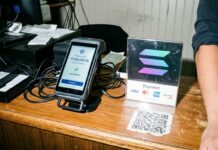
International investment manager Schroders, which manages approximately $1,1 trillion in assets globally, has taken the step of bringing its active debt strategy to the Layer 1 network through a tokenization process. The firm is deploying its sovereign and corporate debt-focused vehicle on the public blockchain using the technical infrastructure developed by the specialized platform Centrifuge.
This move represents a significant integration between traditional institutional finance and the decentralized finance ecosystem. By migrating a collective investment vehicle to a distributed ledger-based infrastructure, the asset manager aims to streamline issuance, clearing, and settlement processes, paving the way for corporate adoption of real-world assets (RWAs).
Institutional tokenization comes to the Solana network
The announcement confirms that the international asset manager Schroders has decided Bring your emerging markets bond fund to the Solana blockchain through the specialized Centrifuge protocol. The initiative represents a milestone in the maturation of tokenized institutional instruments, allowing an actively managed vehicle to operate within a decentralized environment with instant settlement.
Schroders oversees a capital base exceeding $1,1 trillion across various asset classes and geographies. The selection of this fixed-income product for digitization on the Solana network responds to the growing corporate demand for agile infrastructures that reduce intermediation costs. Thanks to the technical architecture employed, qualified and institutional investors can access holdings represented by cryptographic tokens with full traceability of their transactions.
Centrifuge's technical role in real asset integration
To implement this strategy on the blockchain, Schroders has turned to Centrifuge technology, a pioneering platform connecting traditional credit with blockchain technology. Centrifuge provides the necessary legal, technical, and operational framework to transform debt portfolios into tokenized shares compliant with regulated capital markets standards.
Real-world asset tokenization (RWA) requires structures that guarantee risk segregation, legal ownership validation, and strict regulatory compliance. The deployed infrastructure allows fund units to be issued under smart contracts that automate capital flows, periodic distributions, and net asset value calculation without relying on manual off-chain processes. Those wishing to learn more about how these instruments interact can find more information at [link to relevant documentation]. Bit2Me Academy, where the foundations of programmable contracts applied to the real economy are detailed.
Why Schroders has chosen the Solana infrastructure
The choice of the Solana network to deploy this emerging markets debt fund is no coincidence. Its high-performance architecture, characterized by high transaction throughput per second and significantly low fees, is attractive for financial vehicles that require frequent adjustments and continuous operation. On platforms where gas costs are unpredictable, the systematic settlement of fixed-income instruments can become inefficient.
In recent quarters, the ecosystem of Solana It has seen an increase in the attraction of institutional initiatives exploring tokenized assets, cross-border payments, and regulated stablecoins. The combination of speed and stable costs allows global asset managers with diversified portfolios to process subscriptions and redemptions with minimal operational friction, reducing the traditional settlement cycle from the T+2 or T+1 standard to near-instantaneous block confirmation.
Emerging markets and debt: the context of the tokenized vehicle
The fund selected by Schroders for this deployment focuses on debt securities issued by governments and corporations based in emerging economies. These types of instruments offer different risk profiles and interest rates compared to sovereign bonds from developed economies, reflecting their own macroeconomic cycles and global diversification requirements.
Maintaining an on-chain portfolio of this type improves transparency in the underlying asset composition and provides greater secondary liquidity to assets that have historically faced access barriers. Institutional investors thus gain a transparent tool where ownership of the security is recorded in a verifiable cryptographic address, enabling continuous audits and eliminating the opacity inherent in closed custodian registries. Furthermore, constant monitoring of adoption news on platforms such as Bit2Me News It allows us to understand the evolution of these strategic alliances.
Regulatory framework and institutional convergence under MiCA
The tokenization of traditional funds does not occur in a regulatory vacuum. Within the European framework, the consolidation of the MiCA (Markets in Crypto-Assets) Regulation and the European Union's pilot program for market infrastructures based on distributed ledgers set the standard for how these instruments should operate. Although MiCA is primarily aimed at crypto-assets not covered by previous regulations (such as issuers of asset-linked tokens and service providers), asset managers distributing tokenized financial vehicles must align their structure with directives such as MiFID II.
Issuers and authorized intermediaries operate under rigorous requirements for Know Your Customer (KYC), Anti-Money Laundering (AML), and qualified custody. Schroders and its technical partners structure these issuances by restricting access to only those counterparties verified through whitelists in smart contracts. This hybrid approach ensures that technological innovation does not compromise the legal compliance required by global financial regulators.
FAQ
What does it mean for Schroders to tokenize a bond fund in Solana?
This means that the asset manager issues digital shares of its emerging market debt portfolio using the Solana blockchain, allowing ownership, transfer and settlement of the asset to be recorded directly on a public distributed network with technical support from Centrifuge.
Can any user acquire shares in this fund through the chain?
No. As it is an institutional financial vehicle, access to token subscription is reserved for qualified investors who comply with the regulatory procedures for identity verification, financial adequacy and prevention of money laundering established by current legal frameworks.
What advantages does the Solana network offer to traditional fixed income funds?
The network offers high confirmation speeds and extremely low transaction costs. These technical qualities enable near-instant settlements, optimized capital flow allocation, and greater efficiency in operational processes compared to traditional financial systems.
The addition of a major asset manager like Schroders to the Solana ecosystem via Centrifuge's infrastructure reaffirms that the tokenization of real-world assets is progressing toward practical implementation. By integrating actively managed debt vehicles with distributed ledger technology, the institutional sector is demonstrating that blockchain is a suitable tool for modernizing the operations of international capital markets.
As regulatory clarity takes hold both in the European Union and internationally, the convergence between traditional finance and public networks continues to lay the foundations for a more transparent, efficient, and interconnected financial infrastructure.
Investing in cryptoassets is not fully regulated, may not be suitable for retail investors due to high volatility and there is a risk of losing all invested amounts.
Generative artificial intelligence tools were used to create this article.