
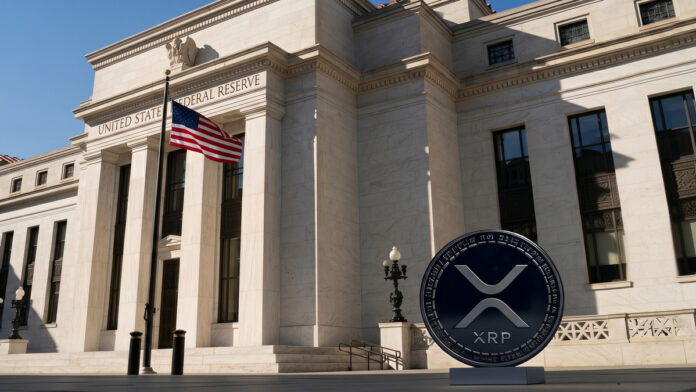
FedNow's expansion through intermediaries positions Ripple as a strategic player for liquidity and cross-border transfers in 2026.
The Federal Reserve has put forward a technical proposal to expand FedNow's capabilities, allowing banks and credit unions to use intermediaries to process fund transfers. This regulatory change removes the restriction on direct transactions exclusively between domestic entities, opening the door to players capable of handling the complexities of international payments.
In this stage, Ripple It emerges as a natural fit due to its settlement infrastructure and current regulatory position. The analyst XFinanceBull underlines The company has already received conditional approval from the Office of the Comptroller of the Currency (OCC) for its domestic banking division. This status grants Ripple the legal capacity to hold digital assets and, most importantly, to request direct access to the Federal Reserve's payment systems, which could give XRP a technical advantage over traditional correspondent banking.
Ripple and XRP: instant liquidity in the financial system
The focus of this potential integration lies in the Federal Reserve Master AccountThis access is the definitive link that allows a financial institution to settle transactions directly on the central bank's books. Ripple is currently awaiting final approval for this connection, a step that would transform its network from an external solution into an integrated component of the U.S. financial system.
The Fed's proposal to include intermediaries suggests that the regulator recognizes the need for more efficient liquidity bridges to connect the domestic ecosystem with the outside world.
The research published by the Financial Planning Association details how XRP is designed to function as a bridge asset in cross-border transactions. By integrating as an intermediary in FedNow, the network could offer immediate liquidity support, reducing wait times and the costs associated with currency conversion.
Although the regulator expects public comments Regarding the proposal in question, the technical reports emphasize that the planned integration points include both access to FedNow and participation in liquidity windows for financial support. This structure would allow the traditional system to adopt the efficiency of a blockchain like Ripple's without abandoning its security and compliance protocols.

XRPL as an institutional settlement layer
While the regulatory architecture adapts, Ripple has strengthened the utility of its Ledger (XRPL) through the creation of a unified settlement layer for stablecoins. The logic behind this move is operational efficiency: stablecoins reach their maximum value when they flow through networks that guarantee continuous settlement and real transfer demand. The growth of RLUSDThe network's native stablecoin reflects this trend with an increase in 13 % in its market capitalization so far this year. Currently, this asset represents the 24 % of the market share within XRPL, consolidating an internal liquidity environment necessary to support high-volume trading.
The company's strategy has shifted towards corporate treasury management, an area where controlling payment flows is critical. Integrating management systems that combine traditional protocols like SWIFT with the speed of XRP allows companies to choose their settlement method based on cost and urgency.
DeFiLlama's data indicates that this convergence between traditional finance (TradFi) and decentralized finance (DeFi) is maturing, positioning the network as a financial services infrastructure rather than just a payment alternative.
The advance of XRP in the financial system
In the financial markets, XRP has shown remarkable resilience in the face of these announcements, trading around $1,38Despite regulatory optimism, the cryptocurrency's price faces technical barriers defined by a consolidation pattern that has persisted since February. The 70-period moving average acts as immediate resistance, sitting above recent candlesticks, while the RSI remains in a neutral zone at 52 points. For the asset to confirm a solid trend reversal, it would need to decisively break above the [unclear] mark. $1,43 in the daily chart.
According to analysts, the main support is located at the $1,29A drop below this level would invalidate short-term bullish expectations and increase selling pressure. On the other hand, they point out that actual adoption resulting from a potential integration with FedNow and other platforms will be the determining factor in breaking through the resistance at $1,67 in the medium term.
In the current context of 2026, Ripple's infrastructure does not seek to replace the financial system, but rather to act as the connective tissue that allows digital money to move with the same freedom as information.