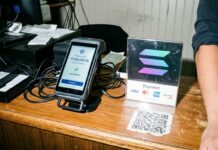
El Salvador commemorated three years since the implementation of the Bitcoin Law, the first legislation in the world that recognizes the market-leading cryptocurrency as legal tender.
Since its approval on June 8, 2021, and its entry into force on September 7 of that same year, the Bitcoin Law has been the subject of intense debate. While some consider this regulation a bold and historic step that marks the path towards economic modernization and financial inclusion, others have criticized it for the possible risks that cryptocurrency poses for the Salvadoran economy.
Thus, despite having accumulated 5.866,7 BTC to dateEl Salvador faces a complex economic and social landscape in which Bitcoin's volatility and lack of widespread adoption still weigh in the balance.
President Nayib Bukele, who has made himself known as a fervent advocate of Bitcoin, has been pushing the adoption of Bitcoin as a long-term strategy for transform the country's economy, especially for those who lack access to traditional financial services. However, recently recognized that, despite efforts, acceptance of Bitcoin has been limited.
The advantages and challenges of Bitcoin as a national reserve currency
The idea of using Bitcoin as a national reserve has gained traction in Latin America and other parts of the world. El Salvador, as a pioneer in recognizing cryptocurrency as legal tender, has inspired other nations to explore the potential of this digital asset. Salvadoran President Nayib Bukele has argued that Bitcoin can offer significant advantages for the nation and its citizens, such as Financial inclusion and cost reduction in remittance sending, a critical aspect for the country's economy, which receives billions of dollars in transactions from abroad.
However, criticism of the Bitcoin Law has also been strong. Several economists and opposition political figures have pointed out that Bitcoin's volatility could threaten El Salvador's financial stability. The nation has even had to deal with concerns expressed by the International Monetary Fund (IMF) about its ability to manage the risks associated with this cryptocurrency.
Still, while some have called the Bitcoin Law a potential failure, the truth is that El Salvador has made significant economic and social progress since implementing the leading cryptocurrency as legal tender. Recently, the IMF spoke of a possible agreement with the nation Central America, pointing out that the risks associated with Bitcoin adoption have not materialized and are no longer as relevant. Even the Financial Action Task Force (FATF) said recently in an extensive report that cryptocurrency has not posed any risk to this national economy.
El Salvador's bet on Bitcoin
Since the implementation of the Bitcoin Law, the Salvadoran government has made significant investments in the purchase of Bitcoin. To date, the country has accumulated a total of 5.866,7 BTC, valued at almost $320 billion dollars.

Source: Mempool of Bitcoin Office
Despite the criticism received, Bukele has maintained his stance that these investments are part of a broader strategy to position El Salvador as a leader in cryptocurrency adoption and financial innovation. The creation of the National Bitcoin Office and Bitcoin Fund Management Agency (AAB), and the promotion of initiatives such as «My first Bitcoin» y “CUBE+”, among others, are examples of the government's efforts to promote education and the adoption of this cryptocurrency among the population.
During an interview with Time, Bukele said that his investment and growth strategy in Bitcoin has had a positive impact, even though the cryptocurrency has not had the adoption he expected.
“There are many Salvadorans who use it, almost all large businesses in the country have it. You can go to a McDonald's, you can go to a supermarket, you can pay with Bitcoin at a hotel. It doesn't have the adoption we expected, the good thing is that it is voluntary, that is, we never forced people to adopt it, we gave it as an option and those who wanted to use it used it and it was beneficial for them.”, Bukele said.
The growing recognition and acceptance of Bitcoin as an investment asset
Despite criticism over its volatility and market uncertainty, Bitcoin's recognition as a legitimate investment asset has been growing globally.
Cryptocurrency adoption by businesses and individuals has begun to take hold, albeit at a slower pace than expected. Companies such as MicroStrategy, Marathon Digital Holdings, Tether, Block, Semler Scientific, Metaplanet and others have been promoting the adoption of Bitcoin as a treasury asset, while initiatives such as accepting Bitcoin for local tax payments in the state of Colorado (United States) and in Lugano (Switzerland) and promoting it in local businesses in countries such as Colombia and El Salvador itself, have been part of the efforts that have encouraged its use and adoption worldwide.
On the other hand, interest in Bitcoin as an investment and economic growth tool has also transcended borders. In addition to Bukele, former US President Donald Trump has begun to consider the leading cryptocurrency as a possible solution to the nation's economic challenges, suggesting that, despite the potential risks, interest in Bitcoin as a viable economic alternative continues to grow.
“El Salvador invested $135 million, now we have $400 million in Bitcoin in the public wallet alone. We have done well as a government. Salvadorans who used it and saved with it have done super well, for obvious reasons, because of the price increase.”, Bukele commented.
In conclusion, three years after the implementation of the Bitcoin Law, El Salvador is in a key position to continue promoting the adoption of Bitcoin as a tool for economic transformation. Despite the current challenges, Bukele is confident that he can do much more as a government to improve understanding and education about the potential of this cryptocurrency and improve its levels of use and adoption in the country.
IMPORTANT: The content of this article is for informational purposes only and, in no case, what is written here should be taken as investment advice or recommendations. Bit2Me News reminds you that before making any investment you should educate yourself and know where you invest your money, as well as the pros and cons of the system. We separate ourselves from the actions and consequences that ignorance may entail. If you decide to invest in this or another asset class, you are solely responsible for the consequences that your decisions and actions may have.