
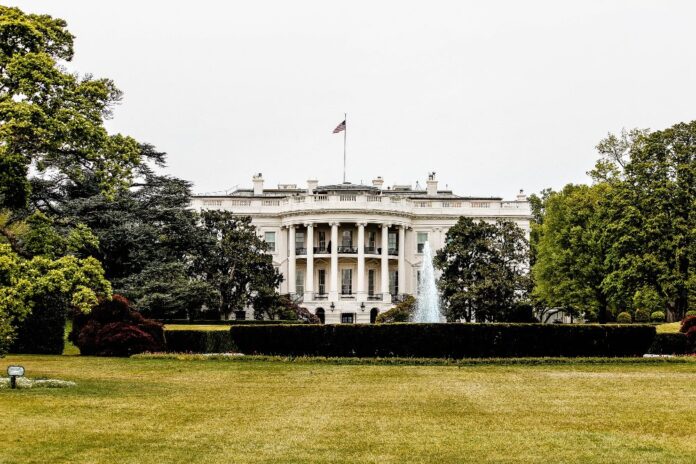
Joe Biden's White House has released guidelines on what crypto regulation should look like in the United States.
The Biden administration has just released its first regulatory framework on cryptography, which will provide guidance to regulators and legislators on What should the laws governing the sector be like?.
The regulatory framework published by the White House includes guidelines on how financial services industries should evolve to facilitate borderless transactions or how to take action against fraud in the digital asset space.
This regulatory framework provides regulators with guidelines that they can use to align themselves with major regulatory agencies such as the Securities and Exchange Commission or the Commodity Futures Trading Commission.
The publication of the regulatory framework follows the March Executive Order, in which President Biden requested federal agencies to examine the Risks and benefits of cryptocurrencies, issuing official reports on their findings.
From Joe Biden's executive order to the regulatory framework
Government agencies have been working for six months to develop a series of own frameworks and policy recommendations with which to address Half a dozen priorities listed in the executive order such as consumer and investor protection, promoting financial stability, combating fraud, seeking U.S. leadership in the global financial system, economic competitiveness, financial inclusion, and responsible innovation.
Together these recommendations make up the First “whole-of-government approach” to regulating the sectorWith these, the Biden administration aims to position the United States as a leader in the governance of the cryptocurrency ecosystem worldwide.
What are the key points of Biden's new crypto regulatory framework? Let's take a look:
fight against fraud
One of the sections of the Biden regulatory framework focuses on the Elimination of illegal activity in the sector.
To this end, amendments to the Bank Secrecy Act, anti-bribery statutes, and unlicensed money transmission laws are being considered to ensure that apply to cryptocurrency service providers, such as exchanges or NFT marketplaces.
Congress is also being evaluated Increase penalties for unlicensed money transfer, and federal statutes to allow the Department of Justice to pursue cryptocurrency-related crimes.
By the end of 2023, the Treasury will need to complete an illicit finance risk assessment for decentralized finance and another for non-fungible tokens.
A new digital dollar
The framework also points out the Benefits of a Central Bank Digital Currency (CBDC) for the United States.
In the US, commercial banks have a “kind of digital dollar.” These are the so-called “fractional reserves”, digital money backed in part by dollar reserves.
The creation of a Digital Dollar would serve to eliminate the use of these fractional reserves, as well as to Fighting the Proliferation of Stablecoins like USDT or USDC.
The Digital Dollar would be controlled by the United States Federal Reserve and would serve, as Jerome Powell already pointed out, to ensure that people would not have the need to use any type of cryptocurrency.
Biden's new framework notes that a US CBDC would allow for a more efficient payment system, while providing a basis for further technological innovation, facilitating faster cross-border transactions and being more environmentally sustainable.
Ensuring financial stability
Biden's regulatory framework points out specifically to stablecoins, since being backed by dollars they create channels that cause consequences in traditional financial markets.
The Biden administration wants to avoid a new debacle like the one caused by the collapse of the Terra ecosystem and its stablecoin UST. To this end, the n is raisedneed to create adequate regulation.
The Treasury and the administration will work with financial institutions to Strengthen the ability to identify and mitigate cyber vulnerabilities by sharing information and promoting a wide range of data sets and analytical tools, as well as cross-agency collaboration to identify, track and analyse emerging strategic risks that relate to digital asset markets.
[hubspot type=cta portal=20298209 id=38fb28e1-1dc1-40e3-9098-5704ca7fcb07]