
In an unexpected twist, the class-action lawsuit against Keith “Roaring Kitty” Gill, the trader who became the face of the GameStop phenomenon, has been dropped.
The class action lawsuit filed against famed GameStop trader Keith Patrick Gill, better known as “Roaring Kitty,” was voluntarily dismissed by the plaintiffs just days after it was filed. This news has resonated strongly with the investment community, especially among those who closely followed the “memecoin” phenomenon in 2021, where Gill played a leading role.
The rise, fall and resurgence? by Roaring Kitty
To understand the magnitude of this event, it is necessary to go back to 2021, when Keith Patrick Gill, a previously unknown financial analyst, rose to fame for his optimistic analyzes of GameStop, a struggling video game company. Through videos on YouTube under the pseudonym "Roaring Kitty" and posts on the Reddit forum, r / WallStreetBets, Gill passionately argued that GameStop stock was undervalued and that a massive short squeeze was imminent.
His analyses, loaded with simple and direct language, resonated with thousands of retail investors, who, armed with online trading platforms like Robinhood, joined Gill's crusade, buying GameStop shares en masse. The result was a meteoric rise in GameStop's share price, which went from trading at less than $4 USD in January 2021 to hitting an all-time high of nearly $81 USD in a matter of days.
This phenomenon, which would later spread to other companies such as AMC Entertainment and BlackBerry (in other subsequent movements unrelated to GME), shook the foundations of Wall Street, exposing the vulnerabilities of the large investment funds that had bet against GameStop and others. companies. The story of David versus Goliath, starring a reclusive analyst and thousands of small investors, made headlines around the world, turning Roaring Kitty into an idol for many.
However, the euphoria was short-lived. GameStop shares plummeted from those highs just as quickly as they had risen, leaving many investors with heavy losses. Regulatory authorities launched investigations into market volatility and the role of social media in price manipulation.
An attempt to silence the messenger
In this context, the class action lawsuit filed against Keith Patrick Gill at the end of June 2024, accusing him of manipulating the stock market for his own benefit, did not surprise many.. The lawsuit, Radev v. Gill, alleged that Gill, through his social media posts, had artificially boosted GameStop's stock price, violating federal securities laws and causing losses to investors who purchased at inflated prices.
However, the lawsuit was voluntarily withdrawn by the plaintiffs just one day after it was filed, just after the court issued a subpoena to Gill to respond to the lawsuit within 21 days.. The plaintiffs' decision to withdraw the lawsuit without prejudice means they could refile it in the future.
The rapid dismissal of the lawsuit has generated various interpretations. Some analysts suggest that the plaintiffs lacked solid evidence to support their accusations, while others speculate that media pressure and mass support for Roaring Kitty may have influenced their decision..
Tony Denaro echoed precisely this line of thought in his X account:
The impact on GameStop and the investment community
Regardless of the reasons behind the withdrawal of the lawsuit, the truth is that the news has had an immediate impact on the market. First, the price of the $GME token (launched on the Solana network), which had been trading lower in recent weeks, saw a significant increase following the announcement of the lawsuit (June 28). Now, after its collapse, the $GME token returns to its previous levels, keeping pace with the traditional GameStop action. This bullish movement reflects investors' renewed confidence in GameStop and, to a certain extent, in the figure of Roaring Kitty.
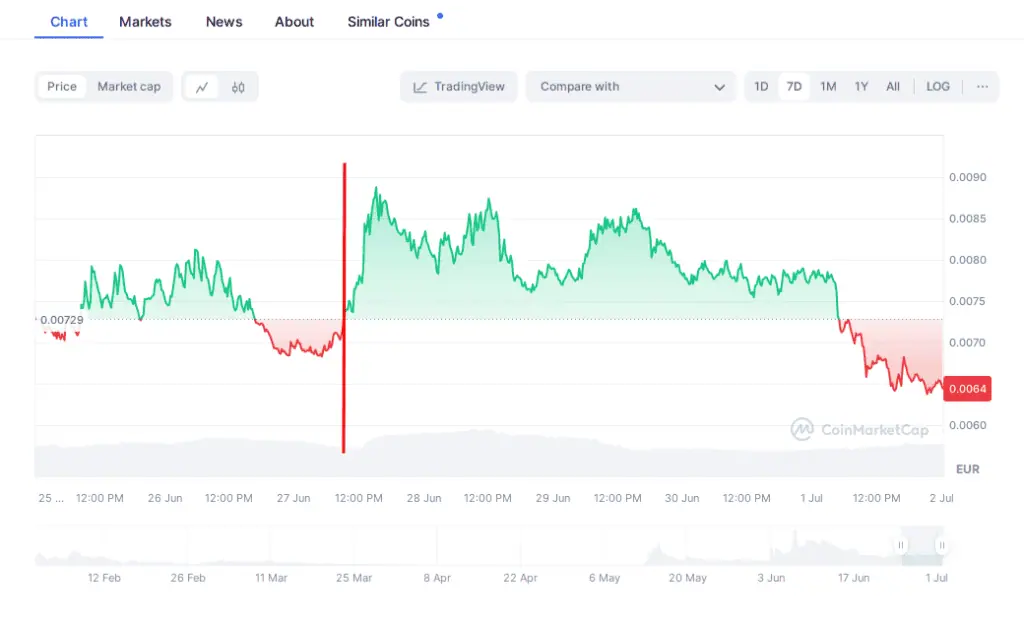
It is important to note that the investor community that has gathered around GameStop in recent years is not a homogeneous group. While some are experienced traders looking for short-term investment opportunities, many others are ordinary people who relate to the Roaring Kitty story and see GameStop as a symbol of resistance against what they perceive as an unfair financial system.
For these investors, the dismissal of the lawsuit against Roaring Kitty is a symbolic victory. It represents the possibility of challenging traditional financial institutions and for individual voices to be heard in the market.
The future of Roaring Kitty and “memecoins”
Despite the withdrawal of the lawsuit, the story of Roaring Kitty and “memecoins” is far from over. The volatility in the stock price of GameStop and other companies that came under the spotlight of retail investors in 2021 demonstrates that the market remains susceptible to the influence of social media and public sentiment.
Regulators are likely to continue examining the role of online platforms in price formation and investor protection. The SEC, for example, has expressed concerns about the gamification of investing and the spread of false information on social media.
In this context, it is essential that investors, especially those with less experience, act with caution and responsibility. While Roaring Kitty's story may be inspiring, it is important to remember that the stock market carries inherent risks and that investments should be based on sound analysis and proper risk management.
In short, the dismissal of the lawsuit against Roaring Kitty marks a new chapter in the “memecoin” saga. Although it is still early to determine the long-term implications of this event, the truth is that it has revived the debate about the role of social networks in the financial market and the need to protect investors in the digital age.