
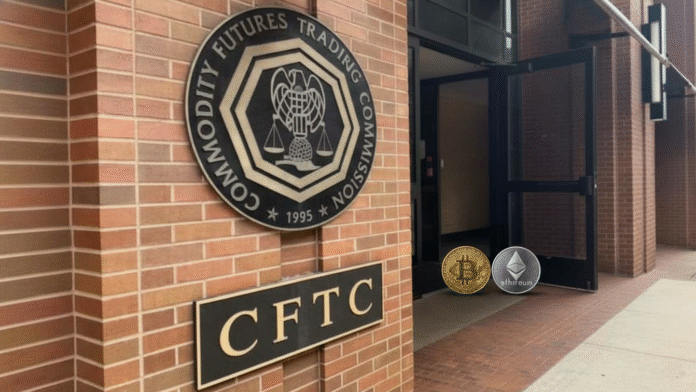
The CFTC has launched a pilot program to modernize finances under the GENIUS Act, which was passed mid-year.
After years of uncertainty and regulatory friction, the Commodity Futures Trading Commission (CFTC) has decided to tear down the wall that separated digital assets from traditional banking.
In a strategic move led by its interim president, Caroline PhamThe regulator has officially launched a pilot program that allows the use of Bitcoin (BTC), Ethereum (ETH) and stablecoins like USDC as a valid guarantee in the US derivatives market.
According to experts, this decision not only legitimizes these cryptocurrencies as institutional-grade assets, but also responds to a long-standing demand from the sector to compete on equal terms with global markets.
Create your account and trade crypto on Bit2MeFrom uncertainty to the GENIUS Act: a new operational framework for crypto
The new pilot program announced by the CFTC comes with immense symbolic and practical weight: official withdrawal of the "Staff Advisor 20-34"For years, this document acted as a brake, limiting the ability of financial intermediaries (FCMs) to accept virtual currencies from their clients. However, Caroline Pham has been adamant about this, stating that the notice has become obsolete in light of technological advances and, fundamentally, after the enactment of the GENIUS Law.
According to the acting president of the CFTC, this new legislation regulating stablecoins in the country has provided the necessary legal backing for the regulator to modernize its structures without fear of legal loopholes.
“Under my leadership this year, the CFTC has paved the way for a Golden Age of Innovation and Cryptocurrencies in the United States… Americans deserve secure markets on home soil as an alternative to offshore platforms, and that’s why last week I announced that spot crypto assets can now be traded on CFTC-registered exchanges.”, said Pham.
The pilot program in question begins with an initial three-month phase. During this period, the participating intermediaries They will be able to accept BTC, ETH, and USDC as collateral, under strict supervision that includes detailed weekly reports on the assets held in custody.
The regulatory agency's intention with this initiative is to demonstrate that blockchain technology can offer the same—or even superior—security to traditional systems, provided adequate rules and safeguards are in place. Furthermore, the CFTC has issued new guidelines for tokenized collateral, expanding the scope to include digitized real-world assets (RWAs), such as Treasury bonds.
Trade regulated cryptocurrencies hereThe United States redefines its role in the digital economy with an innovative approach
Beyond the legal technicalities, the CFTC's recent move has profound geopolitical and economic implications. The Pham administration seeks to curb the flight of capital to offshore platforms operating in gray areas or without regulation at all. By integrating these digital assets into the U.S. system, the CFTC aims to repatriate liquidity and offer investors a safe, transparent, and regulated environment.
Local industry leaders, such as Paul Grewal of Coinbase and Heath Tarbert of Circle, have welcomed the initiative, noting that the use of stablecoins and high-cap crypto assets will drastically reduce liquidation risks and allow for 24/7 trading, eliminating weekend and holiday bank waits.
Caroline Pham's vision is to position the United States at the forefront of what she calls the Golden Age of InnovationBy enabling dollars and digital assets to work more intelligently, the derivatives market gains in capital efficiency. In other words, it's no longer necessary to liquidate Bitcoin positions to cover dollar margins, because the asset itself now serves as collateral. This interoperability is seen by companies like Ripple as the ultimate catalyst for the mass institutional adoption of cryptocurrencies, transforming the rusty pipelines of traditional finance into high-speed digital highways.
Buy BTC, ETH and more with Bit2MeTowards greater integration between crypto and traditional finance
The pilot program that has just been launched represents only the beginning of a profound change in the country's crypto industry. With this project, the CFTC has created a controlled environment to observe in real time how crypto assets affect the financial health of traditional institutions, and this direct oversight will allow for adjustments to regulations and strategies based on concrete data and precise results.
Over the next few months, the success of this program could pave the way for the inclusion of a greater number of digital assets that meet the required standards. Furthermore, the adoption of tokenized collateral could become commonplace, facilitating institutional participation and increasing market liquidity.
Experts closely following this development interpret it as the crypto industry finally receiving the regulatory clarity it has demanded for years. It now remains for Wall Street to demonstrate whether the integration of digital assets with the traditional financial system can create a more robust and efficient ecosystem, capable of fostering a more trustworthy and stable market.
Access the frictionless crypto market today