
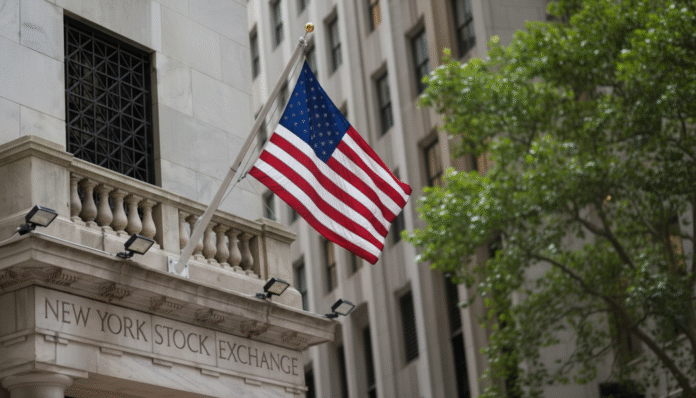
According to TD Securities experts, the NYSE's system for tokenized stocks signals a change in market structure.
The New York Stock Exchange (NYSE) unveiled its plans in January of this year to implement an alternative trading system (ATS) for tokenized shares, an initiative that has captured the attention of global financial analysts.
Reid NochThe vice president of e-commerce at TD Securities, has indicated that this move does not represent a simple addition of a minor financial product, but rather implies a profound transformation in the operational architecture of finance.
According to Noch's statements, the market is facing a transition towards a version "2.0"where technological infrastructure is redefining the execution of operations. He emphasized that this paradigm shift arises from the growing need to modernize settlement processes and extend operating hours in an interconnected global environment.
Access 24/7: Buy and manage crypto hereBlockchain is integrated with financial regulation
The New York Stock Exchange project aims to establish an environment where stock and exchange-traded funds (ETFs) can be traded 24 hours a day. According to TD Securities' analysis, the proposal differs from native cryptocurrency markets by fully integrating with the existing U.S. regulatory framework. This means that, while blockchain technology will be used to streamline processes, the system will continue to operate under the supervision of established entities.
Reid Noch explained that custody and settlement in this proposed structure will remain linked to the Deposit, Trust and Compensation Corporation (DTCC).
A critical point highlighted by the expert is compliance with National Best Bid-Bearer (NBBO) requirements. This regulation mandates that prices reflect the best available option across all U.S. markets, ensuring that liquidity is not fragmented and that investors receive fair prices, regardless of whether the asset is a traditional security or its tokenized version.
Access crypto whenever you want with Bit2Me“Currently, US exchanges are expected to transition to 23/5 trading (closing from 20:00 PM to 21:00 PM EST for corporate actions and system updates) by the end of 2026, though more realistically by 2027. Even current overnight ATSs remain closed on Friday and Saturday due to SIP reporting requirements the following day. The NYSE’s tokenized facility effectively circumvents these restrictions, creating an entirely new trading environment.”, said Night.
Tokenization: an innovation driving modern finance
In the financial world, tokenization is beginning to solidify as one of the most significant transformations in the capital markets. This process allows the ownership rights of a traditional asset, such as a stock or bond, to be converted into a digital representation within a blockchain network. But the key element is not just digitization, but the ability to program these assets to perform tasks autonomously, from dividend payments to regulatory compliance, without requiring manual intervention in each transaction.
For financial institutions, the main appeal of this technological innovation lies in the efficiencyThe report presented by Noch highlights that tokenization drastically shortens settlement times. In other words, what previously took one or two business days can now be resolved in a matter of seconds thanks to blockchain. This advancement strengthens collateral management and improves the use of available capital, key factors for institutions seeking to optimize liquidity in an increasingly competitive environment.
During 2025, the momentum of this model became evident. The issuance of US Treasury bonds and private credit products represented on blockchain marked a turning point in the adoption of the technology. Despite the volatility of cryptocurrency prices, institutional interest remained strong. Large firms continue to focus on blockchain infrastructure as the foundation for more secure, transparent, and faster settlement, prioritizing its technical value over short-term speculation.
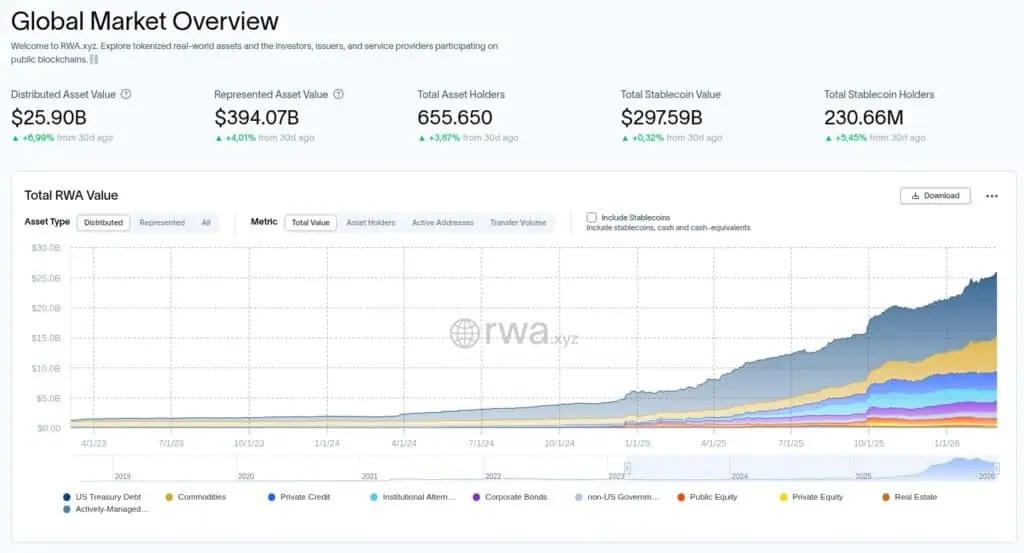
Source: RWAxyz
A new standard for institutional liquidity
While initial activity on the NYSE ATS is expected to be driven by the retail sector, experts agree that the real impact will affect large financial institutions.
The TD Securities report underscores that the ability to trade assets outside of traditional 9:30 a.m. to 16:00 p.m. trading hours can alter how banks and funds manage their global portfolios. The constant availability of liquidity and the transparency offered by blockchain are seen as tools for mitigating systemic risks.
Finally, the growth of real-world assets (RWAs) on digital networks has proven resilient. Now, with the NYSE's integration into this ecosystem, it is becoming increasingly clear that tokenization has moved beyond its experimental phase to become a core component of the financial infrastructure of the future. The goal for regulators and institutions is to strike a balance between technological innovation and investor protection, ensuring a stable and efficient transition to this new market model.
 Certificate

Blockchain Course
Basic levelTake this course where we explain blockchain in a clear, simple and concise way so that you have a very clear idea of what this new technology consists of.


