
A survey reveals that the majority of FTX creditors plan to reinvest their refunds into the crypto market, especially in SOL, the native cryptocurrency of the Solana network.
The FTX collapse in 2022 left thousands of investors and users in a state of uncertainty, but with the start of refunds on February 18, an unexpected trend has emerged.
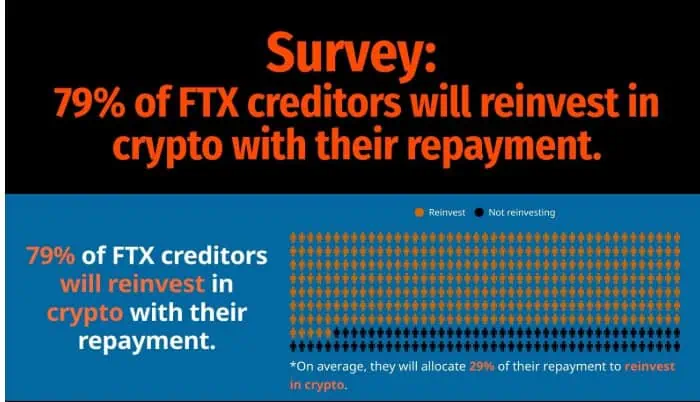
According to a survey conducted by NFTevening of more than 1.000 creditors, the 79% have plans to reinvest their recovered funds back into cryptocurrencies, a highly significant percentage that reflects a notable optimism in the market. Most of these investors have chosen Solana (SOL) as their main recipient, despite the recent drop that its price has faced in the market.
Although FTX’s repayment process has faced significant challenges, the relief of recovering some of their funds is reawakening the investment spirit of creditors, with most of them considering re-entering the crypto market according to the survey.
A vote of confidence in the crypto market
NFTevening’s survey, which was conducted in collaboration with Storible and Prolific, is shedding light on the intentions of FTX creditors after receiving their refunds.
According to the results, 79% of participants expressed interest in reinvesting in cryptocurrencies, suggesting that despite the uncertainty caused by the platform's collapse, confidence in the crypto market persists.
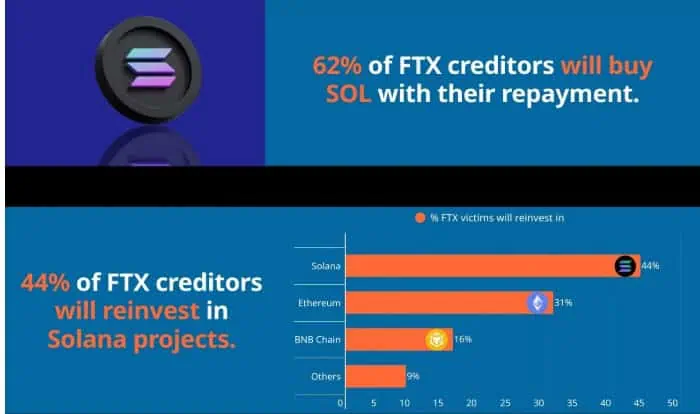
On the other hand, the results suggest that interest in Solana is particularly notable. 62% of respondents plan to acquire SOL, the native cryptocurrency of the network, while the 44% intend to invest in projects within this digital ecosystem. 31% are in favor of projects based on the Ethereum blockchain, while 16% are considering those based on the BNB Chain.
Source: NFTevening
For many, these results may come as a surprise, especially considering the recent problems the crypto ecosystem has faced, such as the fall of the LIBRA token and the Bybit hack.
INVITE AND WINThe challenges of FTX's refund process
While FTX’s repayments have begun successfully, the process has not been without complications. One of the most significant issues that has arisen in this process is the inability of creditors in certain countries to receive their payments.
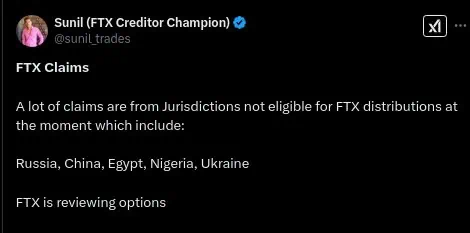
According to Sunil Kavuri, a creditor and activist who has been leading the negotiations, Residents of nations such as Russia, China, Egypt, Nigeria and Ukraine cannot access funds through current providers.
This restriction is due to regulatory and operational limitations of these providers, who are unable to process payments in certain jurisdictions. Although FTX has acknowledged the existence of creditors in these countries, it is working on finding alternatives to resolve the issue, Kavuri said. In the meantime, those affected must wait for the list of eligible jurisdictions to be expanded.
In addition to geographical hurdles, the platform's repayment process has also faced criticism for using digital asset prices as of November 2022, when Bitcoin was trading around $17.000. Some creditors have expressed dissatisfaction as this valuation method does not reflect current market fluctuations, despite annual interest being added to the payments.
SOLANA BUYSOn a more optimistic note, however, many analysts believe that the capital injection from FTX refunds could have a significant impact on the crypto market. These payments, which amount to billions of dollars, could drive a new bullish cycle in the short term, especially if they were to flow back into the market.
Investing in cryptoassets is not fully regulated, may not be suitable for retail investors due to high volatility and there is a risk of losing all invested amounts.