
Blockchain abstraction is a concept in the world of cryptocurrencies and Web3 that seeks to simplify user interaction with blockchain technology.
By hiding the complex technical aspects and providing a more user-friendly interface, blockchain abstraction is expected to enable more people to participate in the crypto ecosystem without needing to deeply understand the underlying technology.
This simplification could be key to mass adoption, as it removes barriers to entry and makes crypto transactions more intuitive.
Breaking the barriers to entry into the blockchain ecosystem
Illia Polosukhin, co-founder of Near Protocol, explained that chain abstraction is a concept that seeks simplify user interaction with blockchain technology, allowing users to enjoy the benefits of technology without the associated complexities.
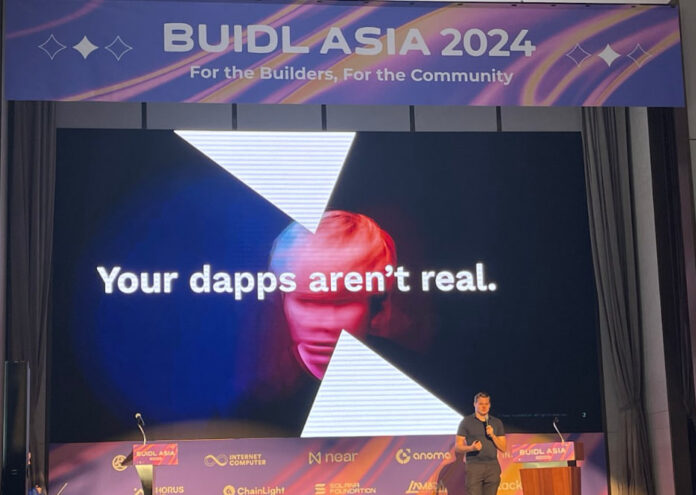
Speaking at BUIDL Asia 2024, Polosukhin highlighted Near as an example of how chain abstraction can facilitate account creation and recovery in a way that is more accessible to the average user, which could be a significant step towards a future where blockchain technology is an integral part of our everyday lives. He emphasized that chain abstraction is what Near is trying to achieve, in order to Making blockchain technology “invisible” like the Internet we know.
Desensitization as a security issue from the abstraction of the chain
However, despite the potential of blockchain abstraction to improve the on-chain user experience, Ethereum co-founder Vitalik Buterin has expressed concern about the “desensitization” to security issues that blockchain abstraction can lead to. According to Buterin, in an ecosystem of interconnected blockchains, security is key to the development, adoption, and expansion of this technology.
As blockchains become more complex and integrated, it is critical to maintain constant vigilance over security to protect both users and the underlying infrastructure.
Likewise, decentralization and security are key goals in moving the Web3 space forward, and while chain abstraction may present new challenges, it also offers opportunities to innovate in how risks are managed and mitigated, so it is important that developers and ecosystem participants work together to ensure that the evolution towards more decentralized systems does not compromise security, which is vital to maintaining the trust and stability of the Web3 space.
Chain Signatures, the new solution of the Near ecosystem
To further drive adoption and innovation in the cryptocurrency space, Near Foundation has launched a solution called Chain Signatures, which promises to simplify interaction with various blockchain networks.
Chain Signatures was presented by Polosukhin as a protocol that represents a significant step towards blockchain ecosystem interoperability, allowing users to manage transactions across multiple blockchains with a single account. This protocol provides a unified platform for decentralized token exchange, lending, and NFT management, while maintaining a vision focused on the transition to decentralized applications and the new era of accessibility and convenience of the cryptocurrency ecosystem.
In addition to discussing blockchain abstraction, Polosukhin also touched on AI during an interview with The Block during the Asia conference. In it, he argued that while the technology is innovative, it could also pose substantial risks due to the potential for malicious use.
In this context, Polosukhin noted that blockchain can represent a potential solution to mitigate the risks associated with the malicious use of AI, playing a crucial role in defending against cyberattacks, offering content verification methods and reputation systems, among other applications and solutions.
Continue reading: The Graph becomes Bitcoin-compatible as it expands to over 40 blockchains