The US Senate has delayed a key vote on the CLARITY Act, which seeks to establish a legal framework for the cryptocurrency market. Bipartisan disagreements postpone regulatory clarity until 2026.
Expectations of immediate regulatory clarity for the digital asset sector in the United States have suffered a significant setback following confirmation that no legislative progress is imminent in the Senate.
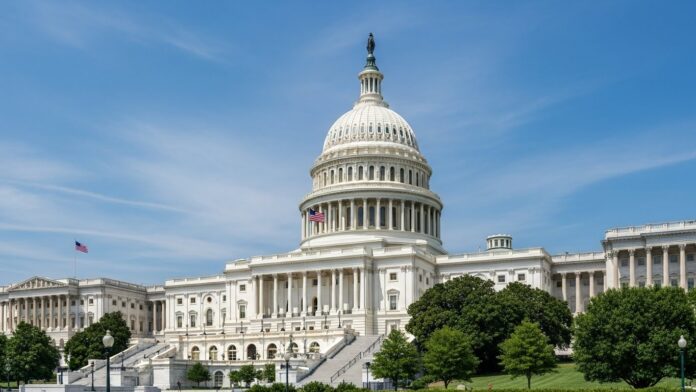
The senator Tim Scott, who chairs the Senate Banking Committee, has decided not to put the bill to a vote about the structure of the cryptocurrency market, known as CLARITY Act., during this week, in a move that effectively freezes the process until next year.
For the crypto community, this decision marks a notable contrast with the dynamism observed in July in the House of Representatives, —where the Digital Asset Market Clarity Act obtained resounding approval—, but leaves the Senate in a phase of stagnation that postpones the resolution until early 2026.
Create your account and trade crypto todayWashington puts the brakes on crypto dreams ahead of the holiday break
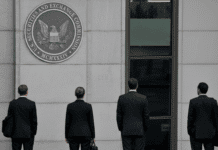
The proposed CLARITY Act seeks to create a clear framework that defines the roles of the Securities and Exchange Commission (SEC) and the Commodity Futures Trading Commission (CFTC) in the cryptocurrency market. Essentially, it positions the CFTC as the primary authority for the spot market of these assets, while clarifying the application of existing securities regulations.
Senator Tim Scott is promoting this initiative in order to transform the United States into the global epicenter of crypto, advocating for a bipartisan approach that unifies efforts.
Even so, the political dynamics in Washington have slowed its progress; discussions on this bill continue, but Congress is grappling with a packed agenda and the rapidly approaching end-of-year recess. Therefore, while markets are eager for regulatory certainty, they are cautiously watching how these obstacles are resolved in the coming weeks.
Points of friction in the bipartisan negotiations of the CLARITY Act
The stalemate in passing crypto market regulations in Congress stems from deep clashes between Republicans and Democrats over technical and ethical issues that are blocking any final agreement. The senator Mark Warner He made this clear by admitting that broad disagreements persist and that common language has not yet been drafted for several parts of the project. Democrats are pushing for strict rules to prevent public officials from profiting from crypto companies during their term, a measure that could directly clash with interests close to President Donald Trump, including his family's project. World Liberty Financial.
Adding to this complex scenario are financial concerns about stablecoins. The Democratic Task Force has expressed specific concerns about interest payments or returns on balances in these digital currencies, warning that they could trigger bank runs if simultaneous mass withdrawals occur or threaten overall financial stability if these assets lose their value.
For their part, Republicans have attempted to safeguard software developers and self-custody in their proposals, offering in return guarantees regarding sanctions compliance on decentralized finance platforms. According to journalist Eleanor Terrett, host of Crypto in America, the senator Cynthia lummis, one of the architects of the bill, described the work team as exhausted by the difficulty of aligning these divergent positions.
Bit2Me: Trade crypto with guaranteed securityThe SEC and CFTC are taking action while Congress is stalled
While the Senate grapples with these internal challenges, it's relevant to remember that the House of Representatives already achieved significant consensus months ago by passing its own version with 294 votes in favorThat initial support raised expectations that now clash with the complexities of the US bicameral process.
Jeff NaftA Republican spokesperson indicated that the panel continues negotiating with the hope of reaching an agreement early in the new year. Meanwhile, regulatory agencies such as the SEC and the CFTC have begun taking unilateral steps to facilitate market operations, regardless of the legislative impasse, by organizing roundtables and allowing certain transactions for licensed institutions.
The horizon for the long-awaited regulation of cryptocurrencies now lies in January 2026Although the committee chairman could technically force a partisan vote next week, such a move would lack the necessary support to survive on the Senate floor next year. The strategy appears to be to exhaust diplomatic avenues to secure a robust market structure bill with a realistic chance of becoming law.
The senator Bernie Moreno He described the recent talks as frustrating, reflecting the climate of a negotiation that, although necessary for the industry's maturity, will require more time than expected to come to fruition.
Create your wallet and get into crypto today!Crypto awaits the return of lawmakers
So, the crypto industry will have to wait for Congress to resume its activities after the Christmas recess to see if the current exhaustion turns into consensus.
The Senate Agriculture Committee, chaired by John BoozmanThe government has also indicated that it is likely to postpone its own legislative efforts until next year due to the complexity of the outstanding issues. This widespread delay suggests that, while the political will exists, the final architecture of the rules governing digital assets in the United States will be the result of a long and detailed legislative battle that may not emerge until the first quarter of 2026.
 Certificate
Main Cryptocurrencies Course
Basic levelBit2Me Academy brings you a new course in which you will learn everything you need about the most important cryptocurrencies that exist today.