
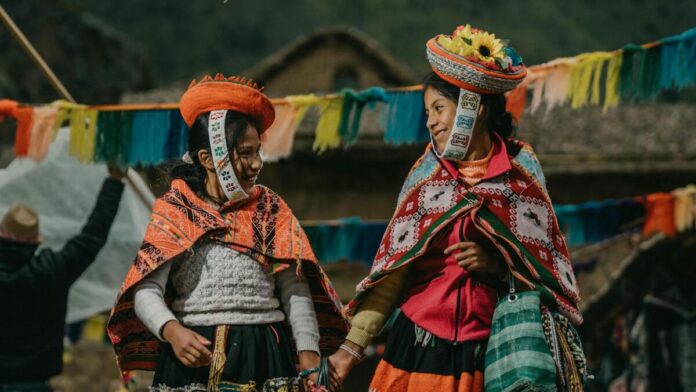
Bitcoin has become a logistical and humanitarian tool in Peru, boosting resilient local economies beyond financial speculation.
The global perception of Bitcoin is often tied to the volatility of its market value and its use as an investment asset. However, in various regions of the world, such as Peru, from the high Andes to the coastal areas, this technology is operating under a different logic: that of a direct and efficient payment system that functions as humanitarian infrastructure.
In environments where access to traditional banking is limited or non-existent, Bitcoin's decentralized nature allows for creation of circular economies that do not depend on intermediary institutions. According to reports by Bitcoin Magazine on communities in Peru that use Bitcoin, this phenomenon does not stem from speculative interests, but from the technical need to transfer value immediately to cover basic needs such as food, education, and footwear in vulnerable areas.
Buy and manage Bitcoin on Bit2MeBitcoin is gaining ground in Peru as a direct means of economic aid.
In various parts of Peru, Bitcoin has become a practical tool for solving challenges that traditional financial systems fail to address.
When banks suspend operations or international transfers become slow and expensive, this digital network offers a direct channel for moving value without intermediaries. According to the reportage According to a recent publication, during periods of greater economic hardship, a notable increase in the use of digital wallets was observed within local communities. Thanks to these wallets, donations and charitable payments reached those in need immediately, without relying on banks or incurring the fees of traditional money transfer services.
Unlike fiat money, whose transfer to remote areas depends on banking networks and bureaucratic processes, Bitcoin operates as a digital asset that is transferred without geographical barriersThis feature has allowed, for example, a small merchant in an Andean village to receive international payments in a matter of seconds, without the need for a bank account or additional procedures.
The network's continuous operation—without schedules or interruptions—provides users with uninterrupted availability, which is essential when emergencies don't adhere to a clock. Furthermore, simply owning a phone with internet access is enough to participate in the global financial system offered by Bitcoin, an alternative that expands income opportunities and provides independence from traditional banking requirements. In addition to this... the public nature of the networkwhich allows tracking of funds, a guarantee that the intended aid actually reaches those who need it.
 Certificate
Bitcoin 101 Course
Medium levelIn Bit101Me Academy's Bitcoin 2 Course you can continue your crypto education and learn what Bitcoin is, where it comes from and how to obtain it.
From Cusco to Lima, digital commerce marks a new financial era
Bitcoin's growth in Latin America has taken a new direction, and Peru appears to be at the heart of this transformation. According to Chainalysis data for 2025, the country ranks among the most active in the region in the everyday use of the cryptocurrency, with transactions totaling around $28.000 billion annually across Latin America.
In communities like Cusco and Lima, the adoption of this cryptocurrency is not limited to large financial transactions. Increasingly, local merchants, from shoemakers to farmers, are beginning to use it. Use digital wallets to circulate value within your own economic environmentAccording to the report, this change has allowed money generated in neighborhoods to remain within them, strengthening the local economic fabric and reducing dependence on traditional banking systems. At the same time, this practice has helped to mitigate the effects of inflation and the instability of national currencies.
For many users, Bitcoin represents access and financial autonomyThe ability to manage their resources without relying on banking intermediaries offers a sense of control rarely seen in traditional economic systems. This perception has driven increasing adoption among families previously excluded from the formal financial system, contributing to the development of a more connected and self-sustaining economic model.
Buy Bitcoin and manage it without complicationsBitcoin as a tool for inclusion
In several communities in Peru, Bitcoin has begun to take a leading role as economic inclusion toolAlthough previously viewed as a speculative asset, digital currency is now beginning to function as a practical alternative for exchanging value, especially in areas where access to traditional financial systems is limited. However, experts point out that for this progress to be sustainable in these regions, the technology needs to be accompanied by knowledge and training. Without digital literacy, even the best tool can become an obstacle.
According to sources consulted by Bitcoin Magazine, the most effective initiatives do not focus on complicated cryptographic theories, but on the everyday use of applications that facilitate fast and affordable paymentslike the Lightning Network. The instructors aim for participants to recognize Bitcoin as a useful software for sending and receiving money, and not as a means to get rich quick.
The results are beginning to reflect the impact of this training. More than 750 families already make weekly transactions with Bitcoin at fairs and small shops. The records show between 25.000 and 30.000 individual transactions in recent monthsprimarily in local markets. Merchants, who were initially wary of crypto, are now adopting it as their preferred method of paying suppliers.
Therefore, the transformation is not about Bitcoin's market price, but about its ability to address concrete needs. In these communities, the cryptocurrency is gaining traction not as a promise of wealth, but as a tool to connect local economies, facilitate exchanges of value, and restore financial autonomy to hundreds and thousands of families.
Access the digital economy with Bitcoin