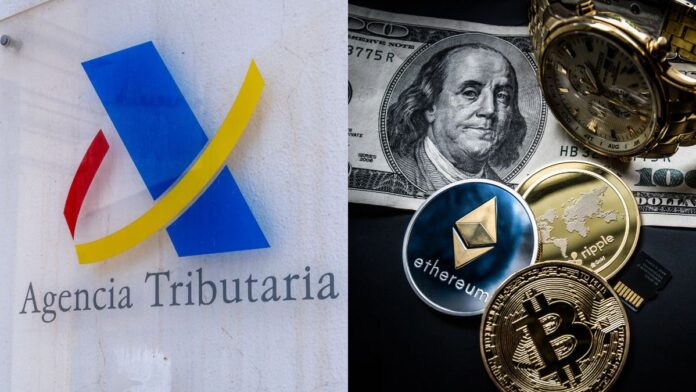
Cryptocurrencies are here to stay, and more and more people are joining this financial revolution every day. But beware: as the number of users increases, so does the scrutiny of the Treasury. Do you really know how to declare your cryptocurrencies without running into trouble in 2025?
Cryptocurrencies or cryptoassets: What does the Treasury think?
Until recently, cryptocurrencies were seen as an exotic, almost futuristic phenomenon. Now they are digital assets, officially denominated "cryptoassets" since January 2025, according to European Regulation 2023/1113. For the Treasury they are intangible assets: When you sell, exchange, or use them to buy something, you generate capital gains or losses that you must declare.
Think of cryptocurrency as virtual property that you must account for, just like a car or apartment when you sell or rent it. Simple, right?
Three clear cases in which you must declare
The Tax Agency leaves no doubt: there are three scenarios where your crypto activity becomes mandatory in your tax return:
- Purchases and sales and exchanges: Exchange Bitcoin for euros, Ethereum for another cryptocurrency or receive airdrops They are operations that generate capital gains or losses.
- Mining: Are you mining crypto? The Treasury considers you self-employed, so you'll have to declare your income as income from an economic activity.
- Passive income or payments received: If you earn cryptos by staking or lending, or you receive them as payment for work, you must also declare these earnings clearly.
By 2025, the Treasury will know exactly what's happening on Spanish exchanges, so failure to file returns is increasingly risky.
How to declare cryptocurrencies in Spain in 2025?
To comply with the Treasury you need to present the Form 100 (personal income tax) between April 3 and June 30 through RENTA WEB.
Taxes on ordinary income (staking, mining, payments received)
- Up to 12.450 € – you pay a 19 %
- 12.451€ to 20.200€ 24 %
- 20.201€ to 35.200€ 30 %
- 35.201€ to 60.000€ 37 %
- 60.001€ to 300.000€ 45 %
- More than 300.000 € 47 %
This income is added to what you earn from your day job. Can you imagine how easily the Treasury can detect any unusual activity?
Capital gains (sale or exchange)
- Up to 6.000 € – you pay a 19 %
- 6.001€ to 50.000€ 21 %
- 50.001€ to 200.000€ 23 %
- 200.001€ to 300.000€ 27 %
- More than 300.000 € 28 %
Here you only pay taxes on the difference between what you invested and what you received when you sold or exchanged.
Beware of the Wealth Tax
If your assets exceed €700.000 as of December 31, 2024, you must present the model 714. Cryptocurrencies, including NFTs, are included here, with taxes ranging from 0,2% to 4%, depending on your Autonomous Community.
Do you have cryptocurrencies abroad? Be careful with Form 721.
From 2024, any citizen with cryptocurrencies valued at more than €50.000 in foreign wallets or platforms must report through the model 721 before March 31th 2025Forgetting can cost you significant fines.
Miners, you need to register!
Mining is a economic activity for the Treasury. You do not pay VAT, but you must submit the model 130 quarterly and declare your income annually on your tax return. No more under-the-table filing!
Crypto inheritances and donations: unavoidable taxes
If you give away or receive cryptos by inheritance, you must pay the Inheritance tax and donations, which varies greatly depending on your region, between a 7% and 36,5% of the value received.
In which boxes should I declare my cryptocurrencies?
In 2025, crypto operations will be in the box. 1800 and 1814 from model 100:
- purchase value y sale value.
- Currency used in the transaction.
- Specific name of each cryptocurrency.
property losses are declared in the box 0305 and can offset future earnings, so don't forget to report them.
What if I decide not to declare?
Is it worth the risk? The Treasury can impose stiff fines:
- Failure to submit the model 721 involves fines of between 300 € and 20.000 €.
- Skip cryptos in IRPF may carry penalties from 50% to 150% of the tax due.
- Mining without registering as a self-employed person has penalties that reach up to €12.000 plus surcharges.
The Treasury will increase controls in 2025: what does this mean for you?
Spain adopts the directive DAC8, which requires cryptocurrency platforms to report all of their users' transactions. Furthermore, cryptocurrencies are now attachable for tax debts. The game has changed. Are you ready?
When do you NOT have to declare?
You do not declare if:
- You only buy and hold cryptos without exchanging or selling (HODL).
- You move cryptos between your own wallets.
Final recommendations to avoid problems with the Treasury
- Always carry a ordered record of your transactions.
- If in doubt, always consult a specialized tax advisor.
Declaring your cryptocurrency isn't just about complying with the law; it's about investing with peace of mind. Ready to get things right in 2025?
Do you want to get started without complications?
En Bit2Me You can easily manage your cryptocurrencies and stay informed about how to comply with the Treasury. Don't wait any longer, get informed and act now!