

Nigeria, one of the most dynamic and active crypto markets in the world, has a strong awareness of the disruptive potential of cryptocurrencies.
A study conducted by Consensys, in collaboration with Internet market research and data analytics firm YouGov, highlighted that Nigeria is the country leading the awareness of cryptocurrencies globally, having the highest percentage of population who has heard about these digital assets.
The study, titled “The State of Web3 perception around the world”, focused on understanding people’s perceptions of cryptocurrencies and Web3 in different parts of the world, as well as measuring the impact that the collapse of some crypto industry projects, such as FTX, had on the sector.
Cryptocurrencies in developing economies
ConsenSys results show that cryptocurrencies have spread globally, mainly in the developing economies.
The blockchain-based software company highlighted that Nigeria, South Africa and Brazil are the countries with the greatest knowledge about cryptocurrencies.
In Africa, Latin America, and Southeast Asia, cryptocurrencies and digital assets such as NFTs are perceived positively. In these regions of the world, people see cryptocurrencies as the evolution of money of the future and NFTs as an instrument that guarantees the digital property, ConsenSys noted.
The company also pointed out that in countries with unstable economies, such as Nigeria and Argentina, cryptocurrencies are also offering people a alternative to “access global capital and protect against inflation”.
In contrast, populations in European countries and developed nations such as Japan and South Korea perceive cryptocurrencies more negatively, associating digital assets with the possibility of money laundering and speculation.
Web3 awareness worldwide
Another concept ConsenSys explored was Web3. While the company noted that people remain disconnected from Web3 and its disruptive potential, this innovation is causing a paradigm shift in relation to data and identity.
Currently, only 8% of respondents globally consider themselves very familiar with the concept of Web3, IndianHowever, in the global population The desire for more data ownership and privacy prevails on the Internet.
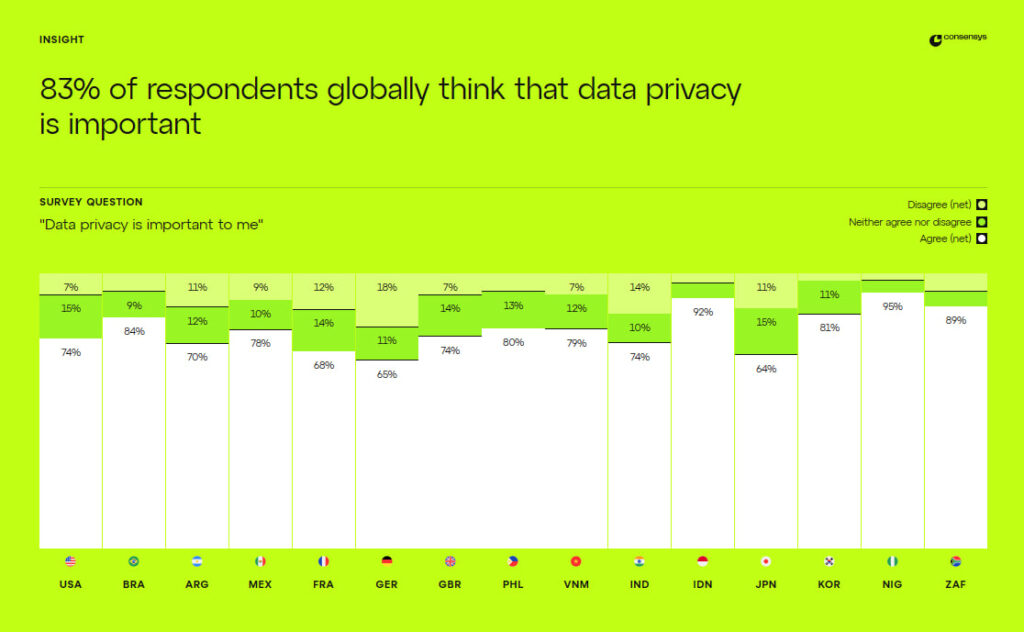
“83% of respondents worldwide think data privacy is important.”
According to ConsenSys, 67% of respondents said they should have ownership over the things they do online. 70% also said they should share in the profits companies make from their data, and 79% indicated a desire for more control over their online identities.
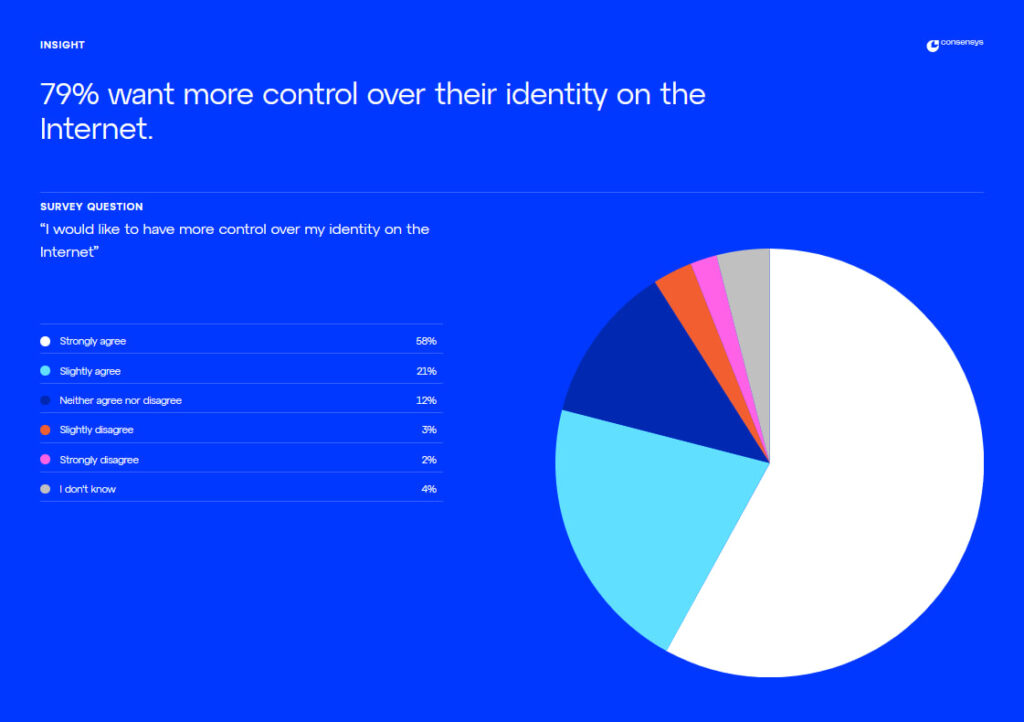
“79% want more control over their identity on the Internet.”
Based on these results, the blockchain company highlighted the need to help people understand how Web3 and the blockchain industry can solve all these needs and offer A comprehensive solution for privacy, ownership and digital identity.
Web3 can give people more control over data and information, so both users who build value online and creators can be compensated more fairly.
Familiarity with NFTs and the Metaverse is growing
While most people still don't understand the concept of Web3, countries such as the United States, India, South Africa and especially Nigeria are increasingly familiar with concepts related to this innovation, such as the Metaverse and NFTs, ConsenSys noted.
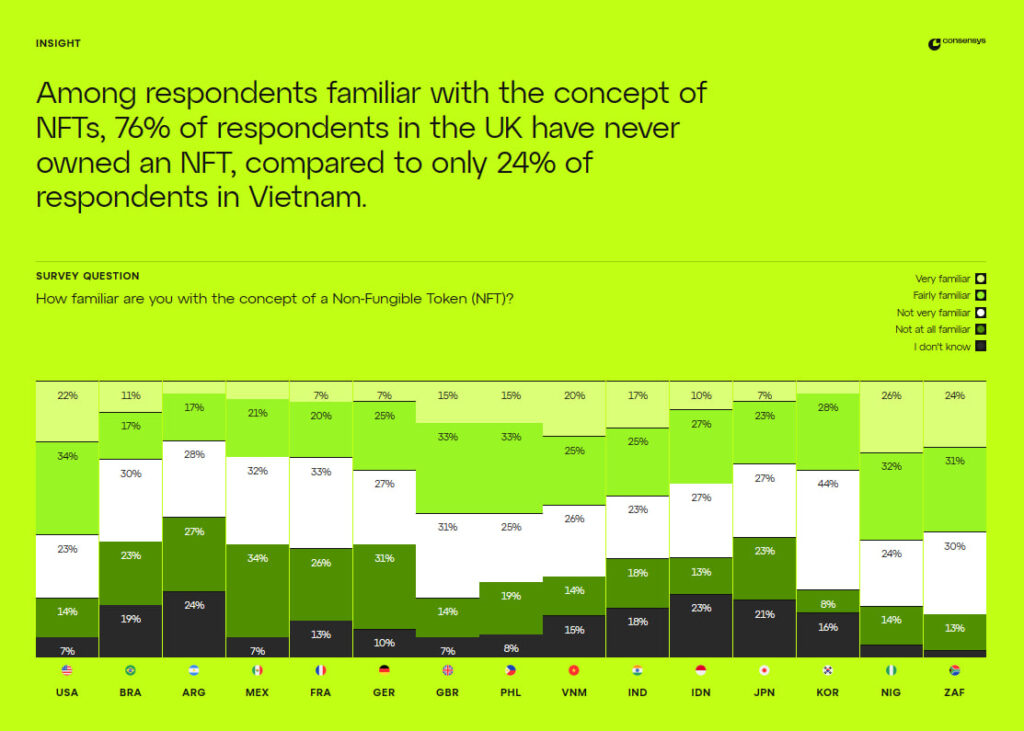
“Half of respondents in the United States, India and Nigeria are aware of the concept of Web3.”
Regarding the impact of the closures and bankruptcies of various companies and projects in the crypto industry in 2022, ConsenSys found that the greatest impact has been felt in South Korea and Nigeria, with 94% and 89%, respectively, while in countries such as Germany, Vietnam, India and South Africa, the majority of respondents said that these events had not had a significant impact on people's trust in cryptocurrencies and the blockchain/Web3 industry.
In her previous report On cryptocurrencies and Web3, ConsenSys had highlighted that currently, 92% of people worldwide have heard of cryptocurrencies.
Continue reading: Why do Latinos continue to invest in cryptocurrencies?
Main image from Pixabay