

DePIN networks are emerging as a key element in decentralizing physical infrastructures and real-world systems, according to MV Global.
In a recent report published by MV Global, the venture capital firm highlighted that decentralized physical infrastructure networks, known as DePIN Blockchain, or Blockchain Platform, is positioning itself as the “next big use case” for blockchain technology and the Web3 ecosystem.
According to the firm, these networks have the capacity to attract a significant number of new users, making them capable of transforming real-world infrastructure and offering innovative solutions to persistent problems.
In its recent report, MV Global noted that the DePIN landscape is evolving, with over 1.000 projects in development and an aggregate value exceeding $50.000 billion. The growth that this vertical of the blockchain industry has experienced in recent years not only reflects the potential of the technology, but is also indicative of its accelerated adoption in the real world, with hundreds of thousands of users interacting with multiple DePIN protocols.
What are DePIN networks?
DePIN networks are a set of blockchain protocols designed to decentralize physical infrastructure and real-world systems. This includes a wide range of applications, from communication networks to energy markets and data storage.
As reported by this media, this type of networks use physical and digital resources in a collective and decentralized manner, offering an innovative approach to building infrastructure that has traditionally been dominated by large corporations.
El report MV Global notes that DePIN networks address critical issues such as the “cold start problem” for resource-intensive networks. By using token-based incentives and a blockchain-based governance system, these networks manage to significantly reduce infrastructure costs, thus offering a more efficient and sustainable path for project development.
The growing expansion and adoption of DePIN
The rapid adoption of DePINs by the industry is evident in the growth of nodes within their networks. In 2023, more than 600.000 new nodes were reported in computing, wireless and sensor networks, and this growth is expected to continue throughout this year.
The combined market capitalization of DePIN protocols, according to CoinMarketCap data, is close to $20.000 billion, underscoring their attractiveness in the crypto ecosystem.
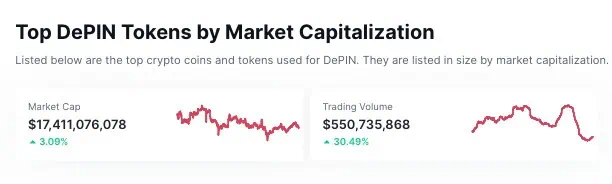
Source: CoinMarketCap
According to the firm, DePIN projects in the connectivity subsector are showing remarkable growth. Helium, for example, has achieved over 100.000 paying subscribers to its 5G connectivity service, proving that cryptocurrency-based consumer applications are gaining traction. According to MV Global, this type of adoption not only benefits current Web3 users, but also has the potential to attract Web2 converts who are looking for more efficient and cost-effective solutions.
The main use cases of DePIN networks
Many of the use cases for DePIN networks are applicable to technologies ranging from decentralized computing to energy and telecommunications. These networks leverage tokenization to incentivize participation in building open, distributed technology infrastructures, offering a secure and transparent alternative to centralized systems.
Among these use cases, some of special consideration can be highlighted:
Decentralized communication networks
One of the most prominent use cases of DePIN networks is the development of decentralized communication networks. Projects such as Helium are leading the way by enabling users to contribute to the creation of mobile networks through a crowd-funding model. This approach allows for reduced infrastructure costs, while democratising access to connectivity, allowing more people to benefit from quality communication services.
Sensors and data collection
Another area where DePIN networks are setting the standard is in the implementation of sensors for data collection in physical spaces. Projects such as DIMO e Hivemapper They are using connected devices to collect valuable information that can be used in a variety of applications, from logistics to environmental research, optimizing resource management and providing real-time data that can be crucial for decision-making.
Energy storage and trading
DePIN networks are also exploring innovative solutions for energy storage and trading. Projects such as Daylight Protocol y EC3 are developing platforms that allow users to store energy in a decentralized manner and trade it. By doing so, the projects are not only promoting a more efficient use of energy resources, but also contributing to sustainability by reducing dependence on centralized energy sources.
Decentralized data storage
Data storage is another sector where DePIN networks are gaining ground. With the growing demand for storage solutions that are secure and scalable, projects such as Filecoin y Arweave are leading the charge. The market for decentralized storage and computing protocols is expected to reach a value of $128.000 billion by 2028, driven by the growing need for artificial intelligence applications and other emerging technologies.
The impact of DePIN on the crypto industry
MV Global's report highlighted that the growth of connections, sensors and new applications such as energy networks demonstrate the tangible impact that DePIN networks can have on real infrastructure. It is estimated that the development, growth and adoption of this sector of blockchain technology will not only attract new users to the crypto ecosystem, but will also facilitate the integration of blockchain solutions into everyday life.
As more DePIN projects emerge and evolve, they are expected to become an integral part of the global infrastructure, offering solutions that are not only innovative but also effective in solving real-world problems. The firm believes that these networks are currently playing a pivotal role in the evolution of the crypto industry and that they offer a path to a more decentralized, efficient and accessible future for all.