
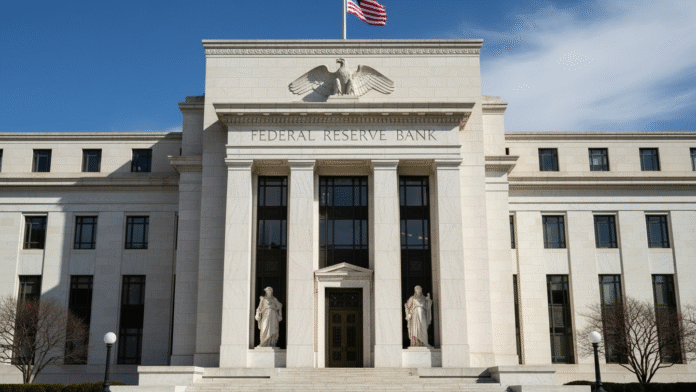
The US Federal Reserve has officially withdrawn the 2023 guidelines that blocked banks without federal insurance. We analyze how this historic turn of events marks the end of "Operation Choke Point 2.0."
In a decisive move that reshapes the financial landscape of the United States, the Federal Reserve (Fed) has formally withdrawn the restrictive guidelines issued in 2023. These rules, which for two years acted as a bulwark against innovation, effectively prevented banks not insured by the Federal Deposit Insurance Corporation (FDIC) from accessing Fed membership and its vital services.
The news, first reported by former FOX Business journalist and current Crypto in America host Eleanor Terrett, confirms what the market had been anticipating: the dismantling of Operation Choke Point 2.0. With this decision, the Fed ends a series of restrictions that severely limited cryptocurrency trading. Now, the Federal Reserve opens the door for banks specializing in digital assets to fully participate in the traditional financial system.
For the crypto industry, this change marks a profound shift in the agency's regulatory stance. Digital assets and crypto-focused banks can now be integrated as key components of the US economy, with the potential to connect directly to the Fed's payments network. The impact is being felt immediately in the sector, where companies like Custodia Bank are moving forward with their membership applications, strengthening interoperability between traditional finance and blockchain.
Buy Bitcoin and cryptocurrencies with Bit2MeThe end of institutional discrimination against crypto in the United States
To understand the magnitude of this shift, it’s crucial to look back. In January 2023, the Fed issued a policy statement equating the lack of traditional deposit insurance with an unacceptable risk. This measure disproportionately affected Special Purpose Depository Institutions (SPDIs), entities designed to operate with cryptocurrencies that, ironically, are often safer than traditional banks because they hold 100% of their reserves in cash, eliminating the need for bailout insurance.
Therefore, the withdrawal This guidance means that the Fed will no longer use the lack of FDIC insurance as an automatic excuse to deny applications for "Master Accounts"—the holy grail that allows a bank to trade directly with the central bank without intermediaries.
Under the new vision of the current administration and regulators, solvency and technological transparency take precedence over old inherited structures, allowing innovation to flourish under fair and non-obstructive supervision.
From rejection to openness: The Fed gives the green light to native crypto banks
The most emblematic case in this battle has been that of Custodia Bank, led by Caitlin Long. The institution was the primary target of the now-repealed guidelines, as the Fed explicitly used that 2023 guidance as the legal basis for rejecting its membership application, even though the bank proposed a full-reserve model that mitigated the contagion risks seen in other banking crises. Terrett covered the case in detail and highlighted how those rules stifled innovation without a basis in real risk.
Now, with these barriers removed, the narrative shifts dramatically. What was once considered a systemic risk is now recognized as an opportunity for modernization and innovation. Industry experts point out that integrating native crypto banks into the Federal Reserve system will improve payment speed, reduce costs for consumers, and, paradoxically, make the system more secure by bringing crypto activity into the regulated sphere, rather than pushing it into the offshore shadows.
 Certificate
Main Cryptocurrencies Course
Basic levelBit2Me Academy brings you a new course in which you will learn everything you need about the most important cryptocurrencies that exist today.
The US is accelerating in the race for digital assets
The Federal Reserve's decision to shelve its 2023 restrictions is more than a technical correction; it's a victory for economic freedom and technological innovation.
By allowing solvent, specialized banks to compete on a level playing field, the United States is regaining ground in the global race for digital asset leadership. Currently, banks like JPMorgan and other key players are already exploring cryptocurrency custody and related services, while smaller institutions see an opportunity to innovate in emerging markets such as stablecoins and the tokenization of real assets.
In summary, the Fed's recent decision, aside from reducing the regulatory gap that was hindering the growth of crypto, sends a clear message for 2026, indicating that the bridge between traditional finance and the future of blockchain is finally open.
Crypto and stablecoins in one place: join today