
Where is Bitcoin headed? We analyze how the change at the Fed and the full implementation of the MiCA law will dictate the price trend in this quarter of 2026.
During the third week of April, Bitcoin climbed sharply, reaching almost $78.000 per unit, marking a local high that injected optimism into the market, although the euphoria was brief. After reaching that peak on April 17, the cryptocurrency's price underwent a technical correction that stabilized its price around $75.000 currently, a move that analysts see as a necessary consolidation before facing a volatile macroeconomic calendar.
Despite this 1,6% decline Over the weekend, Bitcoin's market structure remained firm, supported by trading volume that suggests efficient absorption of sales by large institutional funds.
Beyond price action, the current stability that Bitcoin is showing in the area of $75.000 It is, in reality, the calm before a storm of institutional decisions.
Experts point out that, during April, the market has shifted from reacting solely to charts to closely monitoring developments in Washington and Brussels. The leading cryptocurrency finds itself caught between two opposing forces: the liquidity restrictions imposed by the Federal Reserve and the legal certainty promised by the MiCA regulations in Europe.
This combination of factors is creating a scenario where the price of BTC depends not only on supply and demand, but also on the ability of large funds to navigate the regulatory environment.
Buy Bitcoin on Bit2MeLiquidity, rates, and leadership at the Fed: The variables that will define Bitcoin's future
Crypto market analysts are keeping a close eye on the Federal Reserve meeting scheduled for the 28 y 29 de abril, which represents the first major liquidity filter for the ecosystem.
If the US federal agency decides to maintain a belligerent stance, the cost of money will remain high, which historically drains capital from riskier assets into Treasury bonds. However, the real turning point occurs in May 15thThe date on which the transition of the Fed chairmanship takes place. The successor nominated by the current administration is Kevin Warshwho will hold the position of Jerome Powell after the end of his term.
According to analysts, markets hate uncertainty, and a change in leadership at the world's most powerful monetary institution is usually accompanied by aggressive volatility as institutional portfolios readjust to new interest rate expectations.
Many consider this transition a "high-tension" event. It's not just about who takes the helm, but also the signal the FOMC sends in June. If the new Fed leadership signals easing, Bitcoin could absorb much of that new liquidity, fueled by its narrative of digital shortageConversely, any delay in rate cuts could force the cryptocurrency to test critical support levels below $73.000, invalidating the short-term upward trend we saw in the last week of April.
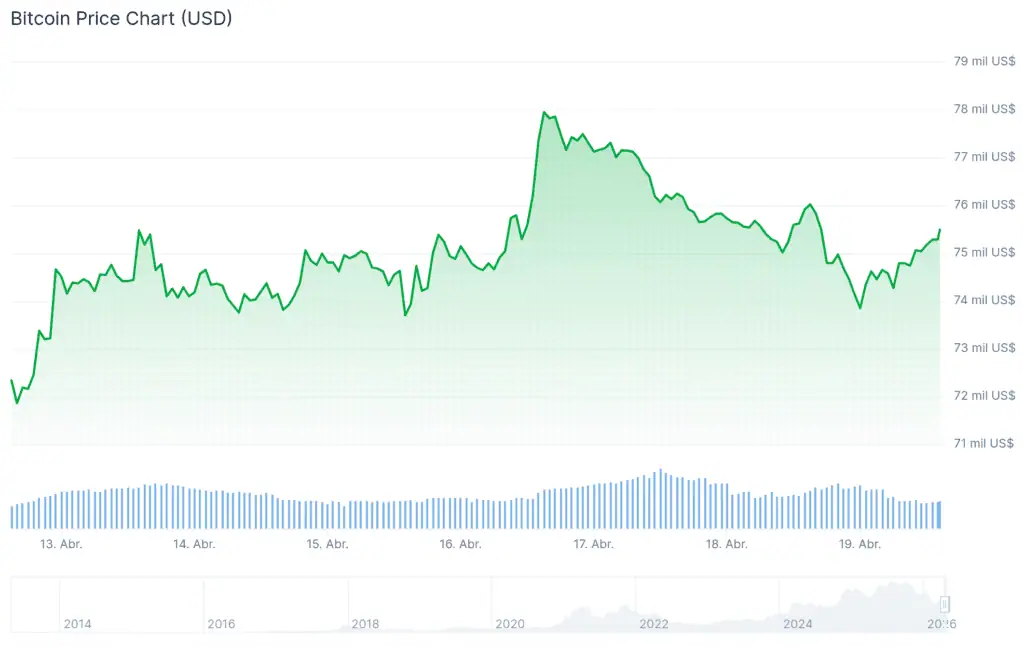
Source: CoinGecko
MiCA could bring Bitcoin back to $100.000
While the United States defines the cost of capital, the European Union is preparing for a structural change with the full implementation of the MiCA (Markets in Crypto-Assets) law el July 1, 2026This legal framework is not just another regulation; it is the filter that will separate robust protocols from those with deficient capital standards. The date in question marks the official end of the "transition period" or grace period, also called grandfatheringthroughout the European Union.
For Bitcoin, the full implementation of this regulation represents a market cleansing opportunity. By forcing weaker players out and concentrating activity on regulated platforms, liquidity becomes more predictable and less susceptible to manipulation by offshore entities.
Statements from legal experts and technical analysts suggest that MiCA will attract a new wave of institutional capital that has so far remained on the sidelines due to a lack of legal clarity. With clear rules of the game in Europe, asset managers will be able to integrate Bitcoin into diversified portfolios with greater protection against counterparty risk.
Analysts they observe in this possible concentration of liquidity in regulated actors the next major catalyst for the cryptocurrency, which could push its price towards $100.000 per unitprovided that Bitcoin can firmly maintain support at $75.200 in the months to come.
Trade Bitcoin todayOutlook 2026: Where is the flow of capital headed?
The outlook for the second half of 2026 points to a particularly active period for cryptocurrency investors. All indications suggest that if liquidity begins to expand following the FOMC meeting and the European regulatory framework moves toward stronger support for institutional custody, Bitcoin could enter a phase of bullish consolidation with greater stability and upward momentum. In parallel, various analyses indicate that the market is moving beyond the impact of geopolitical risks, including conflicts in strategic areas such as [the text abruptly ends here]. Strait of Hormuz, to focus more clearly on macroeconomic factors.
Looking ahead to the coming months, attention is shifting from sharp short-term movements to the cryptocurrency's ability to withstand complex scenarios. Bitcoin's behavior in the face of adverse global news will be crucial in gauging its resilience. Maintaining its position above $74.000 amid energy tensions and uncertain Federal Reserve decisions would reinforce its status as an increasingly independent asset within the financial system.
This regulatory calendar provides a clear guide to the process the market is undergoing. April is presented as a month of observation focused on the Fed's decisions. May demands adaptation to changes in leadership and context. And finally, June and July open the door to taking advantage of a new stage marked by the full implementation of MiCA, which promises to offer a more structured and secure environment for the growth of the crypto ecosystem.
 Certificate
Cryptocurrency Technical Analysis Course
Medium levelIn this training we have Iván González, a professional expert in investments and cryptocurrencies, to teach you how the market works and how prices affect the behavior of investors.