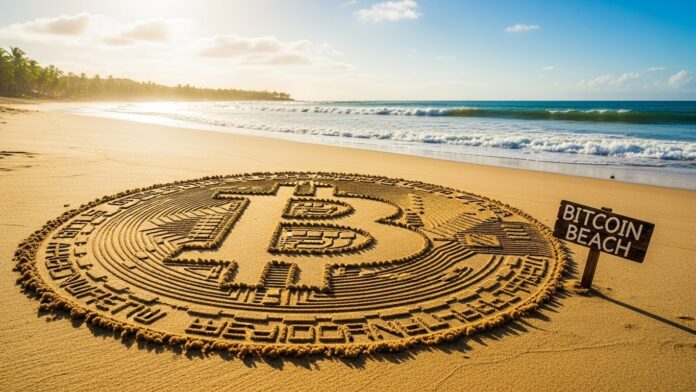
El Salvador leads the adoption of Bitcoin in terms of use, while La Cajita Kitchen becomes the first restaurant in the country to create a store of value denominated in BTC.
The narrative surrounding the global acceptance of cryptocurrencies often focuses on Wall Street trading volumes, but recent data suggests that true financial integration is happening far from the skyscrapers of New York. New academic research has shed light on the depth of digital asset use in Latin America, revealing that Bitcoin's penetration in Salvadoran society is significantly deeper than in the world's largest economy.
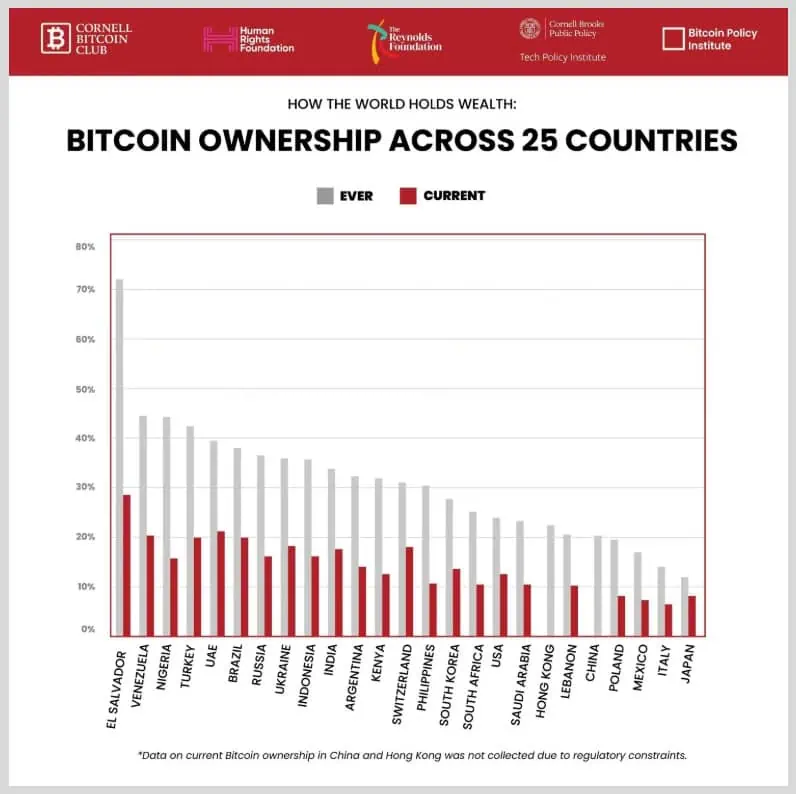
According to a study conducted by students at Cornell University, entitled "Who Actually Owns Bitcoin?, Bitcoin adoption in El Salvador exceeds that in the United States by a ratio of three to one.
The findings from the American university detail that a 72% of citizens surveyed in El Salvador They stated that they had owned Bitcoin at some point, a figure that contrasts sharply with the 24% reported among American respondents.
For the researchers, this percentage difference underscores how the legal tender status Bitcoin and the government policies implemented under Nayib Bukele's administration have normalized access to this technology, transforming it from a distant speculative asset into an everyday tool for a large part of the population. While in the United States the regulatory debate continues to create friction for the average user, in the Central American country, infrastructure and financial education have allowed almost three-quarters of the population to interact with the digital ecosystem.
Buy Bitcoin: a strategic reserve for your futureRegulation defines the future of everyday Bitcoin use
According to study In question, the regulatory environment profoundly influences how individuals and businesses adopt and interact with Bitcoin and other cryptocurrencies.
In countries like El Salvador, where the legal framework provides security and clarity, the integration of digital assets into daily life has progressed far beyond mere technological curiosity. The legal certainty offered by the country allows users, from small businesses to individual consumers, to trade with the leading cryptocurrency without fear of unexpected tax obstacles or legal uncertainties that often stifle innovation in other regions.
For university researchers, this reality is directly reflected in the ability of small businesses to implement advanced treasury strategies using Bitcoin. Adoption in El Salvador, with 72% of the population having had contact with the digital currency, indicates that the educational and technological barrier that limits cryptocurrency penetration in many other places has been overcome. Thus, Bitcoin becomes a useful tool for to protect oneself from volatility of traditional marketsmoving away from the role of a mere speculative object to become a pragmatic financial resource.
Source: Cornell Bitcoin Club, Human Rights Foundation, Bitcoin Policy Institute and allies.
This contrast becomes even more apparent when comparing Bitcoin adoption in El Salvador with that of the United States and other economies, where cryptocurrency accumulation tends to be concentrated in investment funds or retirement plans managed by third parties. The researchers highlighted that, in El Salvador, Access to BTC is direct and for everyday use..
Furthermore, the research data not only reflect differences in the scale of adoption, but also differences in the approach to use, since one favors financial speculation and the other promotes practical utility and economic freedom for ordinary people.
Follow El Salvador: Use BTC with Bit2Me CardFurthermore, global patterns show uneven Bitcoin adoption driven by factors such as trust, identity, and access. In most of the countries that participated in the research, Bitcoin owners are typically men between 30 and 44 years old who work in the private sectorSimilarly, the difference in ownership levels is notable. According to the study, while 88% of people in Japan have never owned Bitcoin, in El Salvador that percentage is only 28%, reflecting the direct impact of cryptocurrency regulation and education.
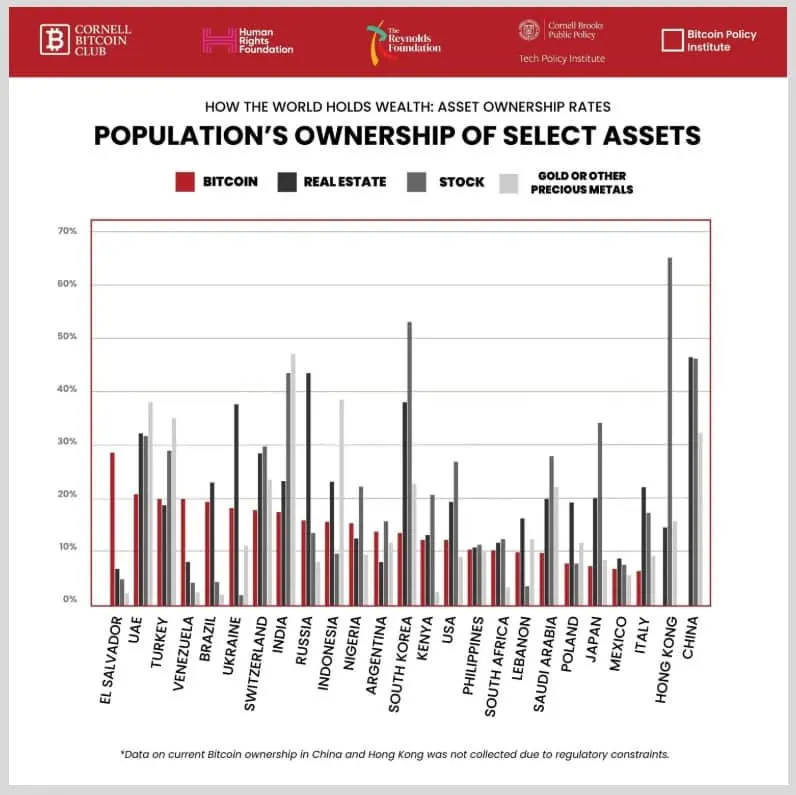
On the other hand, countries with economic instability such as Venezuela, Nigeria, or Turkey show high ownership of crypto assets despite regulatory challenges, suggesting that necessity and capital controls also drive the adoption of digital assets.
Source: Cornell Bitcoin Club, Human Rights Foundation, Bitcoin Policy Institute and allies.
One interesting finding from this research is that, in almost every country, more people have owned Bitcoin at some point than currently own it, with the exception of seven specific countries. This may suggest that while general interest in cryptocurrencies remains high, active use and long-term holding face obstacles ranging from volatility to regulatory and technological issues.
In summary, clear and favorable regulation can be decisive in transforming Bitcoin from an asset for the few into an accessible and functional tool for the majority, opening up new economic and financial opportunities for the population.
Buy BTC in seconds with Bit2MeBitcoin: from means of payment to corporate treasury
Bitcoin's increasing social penetration has begun to generate an evolution in the behavior of local merchants, who are moving from simply accepting payments to more sophisticated financial strategies. The epicenter of this transformation is once again El Zonte, the coastal community known worldwide for being the birthplace of the Bitcoin movement in the country.
In this scenario, the restaurant The Little Kitchen Box has marked a milestone in the financial management of small and medium-sized enterprises by formally announcing the purchase of Bitcoin for its corporate balance sheet.
This establishment's decision goes beyond the daily practice of collecting payments in satoshis—the smallest unit of Bitcoin. By choosing to accumulate the digital asset as part of its equity, the restaurant becomes the first of its kind in El Salvador to publicly announce a cryptocurrency-based treasury strategy.
Max Keiser, financial advisor to the Salvadoran government and member of the National Bitcoin Office (ONBTC), highlighted the importance of this movement, noting that it is the First official case of a Salvadoran restaurant establishing a strategic store of value in Bitcoin.
The stated objective of the restaurant owners is clear and responds to a tangible economic need that seeks to protect the working capital and profits of the business against the erosion of purchasing power caused by fiduciary inflation.
According to experts, this financial maneuver replicates, on a microscale, the corporate strategies popularized by giant companies in international stock markets, such as Strategy, but adapted to the realities of El Salvador's real economy. By holding surplus funds in Bitcoin instead of immediately converting them to dollars, traders are betting on long-term appreciation and the sovereignty over their own funds, eliminating banking intermediaries for the storage of their generated wealth.
Trade Bitcoin seamlessly on Bit2MeIn short, the widespread ownership of Bitcoin in El Salvador defies external criticism that often labels the country's recognition and legalization of Bitcoin as a failed experiment. On the contrary, the 72% statistic indicates a deep integration that is unlikely to be reversed.
As more local businesses see the results of holding a treasury in cryptocurrencies, the strategic reserve model is likely to be replicated in other sectors, creating an increasingly robust internal circular economy that is less dependent on external inflationary pressures.
 Certificate
Basic Bitcoin Course
Basic levelStart from scratch in Bitcoin in a clear, easy, safe and quick way. This course is specially designed for beginners practically know nothing about Bitcoin.