
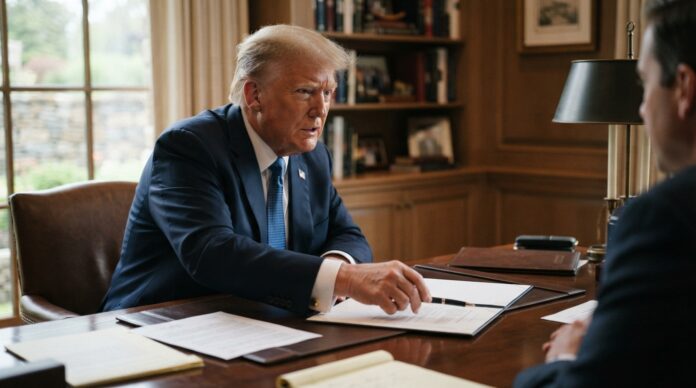
President Donald Trump has agreed to expand conflict-of-interest regulations to secure the necessary votes in the U.S. Senate for the Clarity Act. This last-minute agreement aims to unlock one of the most anticipated pieces of legislation regulating digital assets in the country, marking a turning point in financial policy.
The ethical agreement that drives the Clarity Act
In a decisive move for the future of financial legislation in the United States, it has been confirmed that the current president has accepted nearly 80% of a stricter ethical proposal linked to the Clarity Act. This consensus comes just before a crucial vote in the Senate, where a lack of support threatened to stall the bill's progress.
The incorporated ethics clauses include stricter restrictions on personal investments and disclosure of cryptocurrency holdings by senior government officials and legislators. By making concessions on most of these points, the aim is to allay bipartisan concerns about potential conflicts of interest in policymaking that directly impacts the decentralized finance sector.
With this commitment on the table, the path is clear for a decisive legislative debate that could redefine the regulatory framework of the crypto ecosystem in the United States for years to come.
Investing in cryptoassets is not fully regulated, may not be suitable for retail investors due to high volatility and there is a risk of losing all invested amounts.
Generative artificial intelligence tools were used to create this article.