

Fifteen years after his passing, we explore why Satoshi Nakamoto's disappearance was not an abandonment, but the masterstroke that guaranteed Bitcoin's decentralization and global success.
El April 23th 2011 This moment is marked in the crypto world's history as the time when the creator of Bitcoin opted for his definitive voluntary retirement. Through a brief communication addressed to the developers at that time, the anonymous programmer, known to the world by the pseudonym of Satoshi NakamotoHe assured that the project was in good hands before fading into the shadows of the digital world.
Fifteen years after that event, what at the time might have been interpreted as an abandonment is now recognized as the most brilliant strategic decision in the history of modern computing. The absence of a central figure allowed the Bitcoin blockchain technology It ceased to be the experiment of an individual and transformed into a public infrastructure of global reach. By eliminating the possibility of a leader being pressured, corrupted, or venerated, the Bitcoin network found its true essence in absolute neutrality.
Buy Bitcoin today at Bit2MeThe disappearance that protected the neutrality of the Bitcoin protocol
When a system aims to change how the world understands money, the existence of a human control point represents a critical vulnerability. Over the years, the industry has widely debated how Satoshi Nakamoto's silence prevented the network from suffering the personality cult that often plagues technological projects.
Analysts and experts have emphasized that the departure of Bitcoin's creator was the necessary catalyst for the protocol to reach a state of real decentralizationIf Satoshi had remained active—or if his identity were known—every technical decision or change in the code would have been interpreted as a direct order, diminishing the value of the consensus mechanism that sustains the blockchain today.
This forced transition to a bossless model compelled the community to mature rapidly in order to assume full responsibility for software maintenance.
On April 23, 2011, Satoshi sent a private email to Mike Hearn saying: "I've moved on to other things. It's in good hands with Gavin and everyone."Two days later, on April 26, he sent another private email to Gavin AndresenIn that message, he expressed his desire not to be seen as a "mysterious and shadowy figure" and handed over the key to Bitcoin's alert system, thus delegating full control of the project to the community. This message is now considered his final and definitive communication.
The power of anonymity in Bitcoin
The unknown identity of Satoshi Nakamoto is one of Bitcoin's strongest pillars. Beyond the mystery, his anonymity protects the protocol's operation from any attempt at external control. Without a visible figure to pressure, no institution has the ability to directly intervene in the protocol's rules or modify its behavior.
Furthermore, Bitcoin's original design remains relevant thanks to this absence of central leadership. The rules are defined by code and consensus, which keeps the network aligned with mathematical principles rather than human decisions. This approach has allowed Bitcoin to function stably even in environments where institutions inspire little trust.
In various countries with unstable economies, this independence has opened up a viable alternative. People find in Bitcoin technology a tool that operates without intermediaries and with clear rules for everyone. The blockchain infrastructure supports this system by offering a transparent, verifiable, and accessible ledger, where every transaction can be publicly audited.
Thus, Bitcoin's prominence lies not in individuals or entities, but in the open and immutable code.
The impact of technological sovereignty in the 21st century
Satoshi's departure in 2011 opened a path that is now understood as digital financial sovereigntyFrom that moment on, the network was entrusted to a global community that took on the challenge of keeping it active, transparent, and constantly evolving. This decision confirmed that a monetary system can operate without a central authority, sustained by shared and verifiable rules.
In 2026, this vision is amplified by the growth in cryptocurrency use and the development of second-layer solutions. These tools enable faster and less expensive transaction processing, bringing this technology closer to everyday life and outperforming several traditional settlement systems in efficiency.
Furthermore, the idea that the network is in good hands is reflected in its diverse infrastructure. Thousands of nodes distributed around the world support its operation, using different energy sources and adapting to local contexts. This decentralization strengthens its stability and ensures that it continues to operate even in the face of regional disruptions.
Today, blockchain extends far beyond digital currency. Its use in registries, voting, and supply chains demonstrates that its true value lies in ensuring reliable information. More than a single figure, the story revolves around a technology that drives global collaboration without intermediaries.
Access Bitcoin easily hereThe legacy of a system that belongs to everyone
Satoshi Nakamoto's true genius lay not only in creating the code, but also in his ability to step back and allow Bitcoin to survive without a leader. By fading away, he transformed a personal project into a global and neutral protocol that does not respond to human whims or political pressures.
In 2026, this absence translates into an impregnable network where trust is not placed in institutional promises, but in auditable mathematics and an infrastructure spread across the planet that guarantees total sovereignty to its users.
Today, blockchain technology has transcended finance to become the gold standard for digital transparency, successfully applied in industries ranging from property registration to international logistics. By operating under immutable rules and a predictable monetary policy, the Bitcoin protocol has demonstrated that organic growth, free from intermediaries and hierarchies, is far more resilient than any centralized model. In short, it is the triumph of an idea set in digital stone that, 15 years later, belongs to everyone.
 Certificate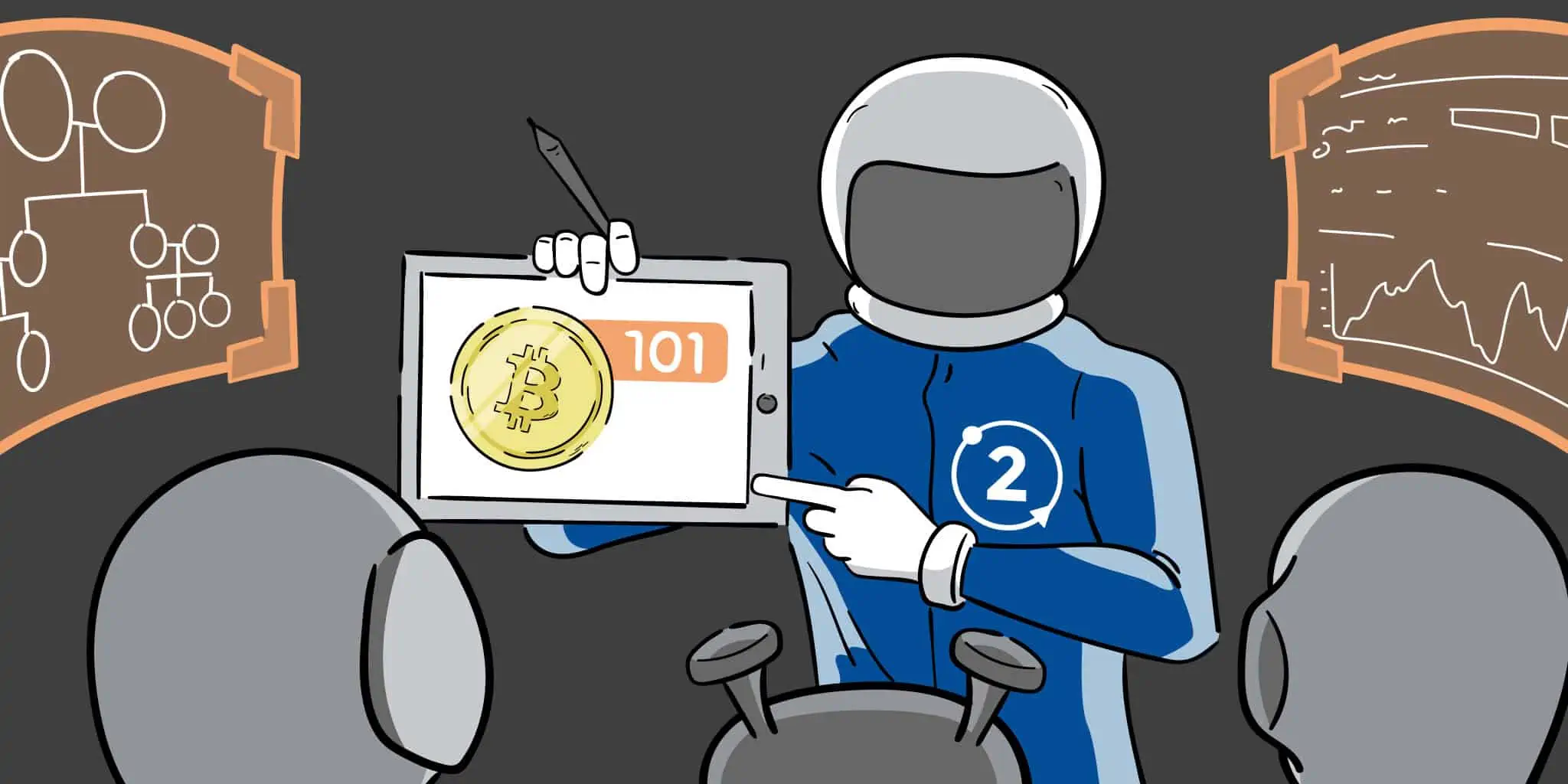
Bitcoin 101 Course
Medium levelIn Bit101Me Academy's Bitcoin 2 Course you can continue your crypto education and learn what Bitcoin is, where it comes from and how to obtain it.